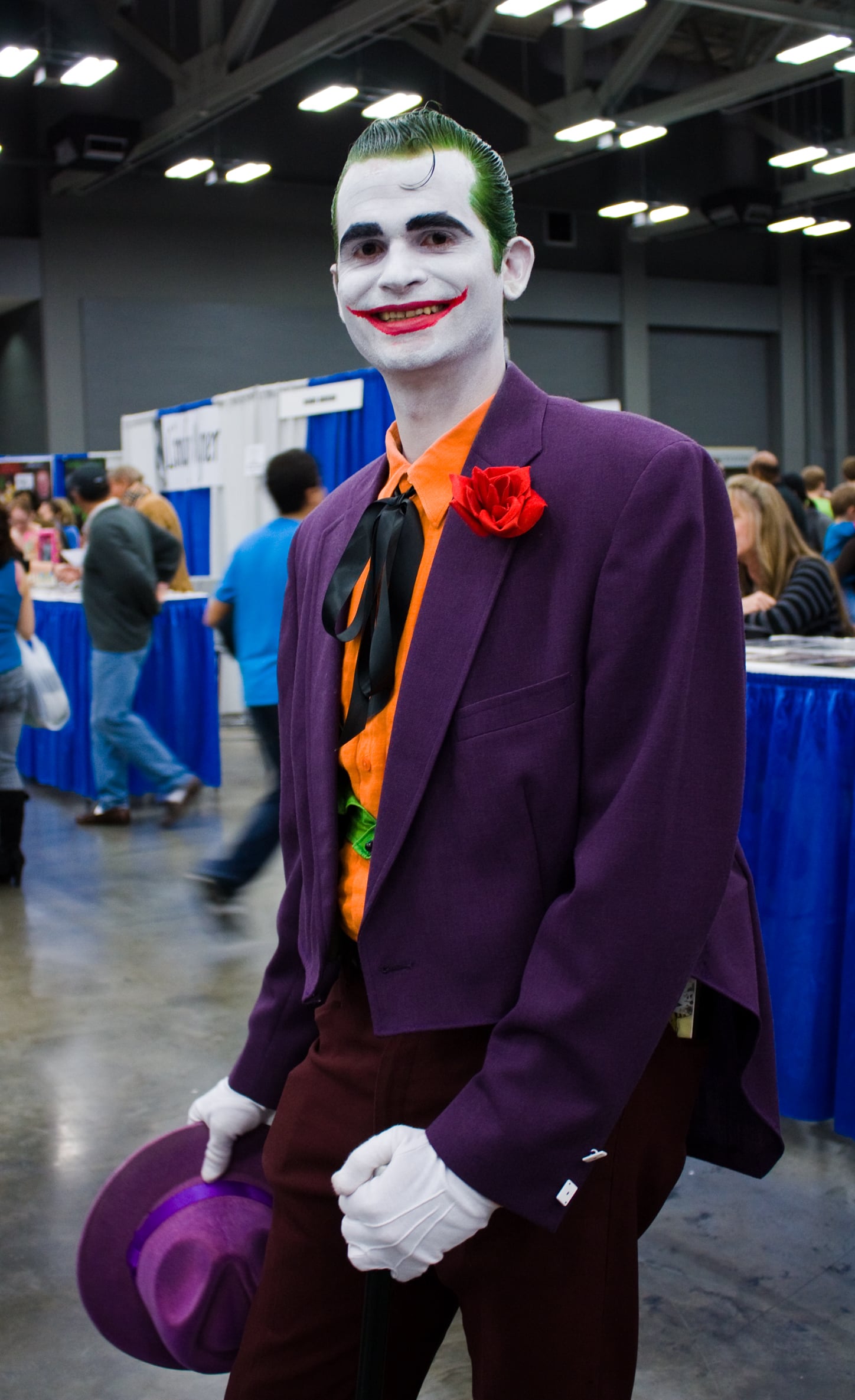

ANNECY, FRANCE — When Batman is murdered in DC’s first-ever anime series, the Joker does not celebrate. He investigates.
That premise — the Clown Prince of Crime turned reluctant detective — is the central tension of “Joker: Laugh Riot,” the most unexpected announcement from DC Studios and Warner Bros. Animation’s debut joint showcase at the Annecy International Animated Film Festival. It is a show built on the proposition that the Joker’s entire identity was always a reflection of the man he was constructed to oppose. With Batman gone, what is a Joker?
The Annecy showcase marked the first time DC Studios and Warner Bros. Animation have appeared together at the annual French animation festival, and the choice of venue was itself a statement. San Diego Comic-Con, long the default launchpad for DC properties, was bypassed in favor of an industry audience — animators, international buyers, festival programmers — who view the medium as art rather than franchise extension.
“Joker: Laugh Riot” will be produced in partnership with Sola Entertainment, a Japanese animation studio, and directed by Yasuhiro Aoki. Jim Krieg, a veteran of Warner Bros. Animation productions, serves as executive producer. No voice cast has been announced, and no release date or platform has been confirmed. The collaboration between Warner Animation and a Japanese studio signals that DC is not simply producing an animated series with anime visual influences — it is building something inside the actual anime industry infrastructure, with Japanese creative leadership in the director’s chair.
The second announced series, “Absolute Batman,” brings Scott Snyder directly into the room as showrunner and executive producer. Snyder’s “Absolute Batman” comic run — a reimagining that strips the character of inherited wealth and places him in a working-class context — has sold more than six million copies since its launch, making it one of the bestselling DC titles in recent memory. Nick Dragotta, whose visual work defined the book’s aesthetic, joins as a producer on the animated adaptation. The Hollywood Reporter first reported the series details from the Annecy presentation.
What Snyder built in the comic was less a reinvention of Batman’s mythology than a structural interrogation of it. The inherited-billionaire origin story, which underpins nearly every major screen adaptation from Tim Burton’s version through Christopher Nolan’s and into more recent iterations, is precisely what “Absolute Batman” removes. The Gotham of this version is not a city that produces a masked vigilante because one wealthy family lost a child in an alley — it is a city where someone with nothing decides to become something. The animated series enters production carrying that premise and the commercial proof that audiences want it.

The third announcement, “Krypto,” is the most opaque of the three. The series is created by C.H. Greenblatt, best known for his work on animated properties where tone tends toward warmth over spectacle. No plot details, platform, or timeline were disclosed at Annecy, suggesting it is the furthest from production readiness of the three titles.
DC Studios’ decision to anchor its Annecy presentation around anime reflects an awareness of where superhero storytelling’s most interesting creative decade may be unfolding. The peak theatrical moment for live-action superhero films has passed its clearest commercial markers. Where the energy has moved is into animation — and specifically into the serialized, visually ambitious animation that the anime industry produces at scale. Franchises that once seemed too niche for mainstream theatrical release now routinely outperform Hollywood tentpoles in specific demographics. DC’s first anime is not a concession to that shift; it reads as an attempt to lead it.
“Joker: Laugh Riot” carries the most to lose and, if it works, the most to prove. An anime series in which the Joker is the protagonist — investigating the death of the man whose existence gave the Joker’s existence structure — is either a genuinely serious piece of storytelling or a concept that collapses under the weight of its own ambition. Aoki’s direction and Sola Entertainment’s production infrastructure will determine which. Deadline noted that all three series remain without confirmed platform homes.
What none of the three shows have announced is where any of them will air. Max, Warner Bros. Discovery’s streaming platform, is the presumed home for DC animated content given the parent-company alignment, but no deal was publicly confirmed at Annecy. The absence of platform announcements, combined with the absence of voice casts and release dates across all three shows, means the Annecy showcase was a creative positioning exercise more than a launch event. DC and Warner Bros. Animation told the international animation industry what they are building. They did not say when audiences outside that room would watch it.
The timing carries its own context. DC Studios recently saw its theatrical reboot strategy produce encouraging signals — the new DC Universe framework has been finding its footing with general audiences, as Eastern Herald’s coverage of the Supergirl release reported. Animated content, historically treated as a secondary track within the DC portfolio, is now being brought inside the same strategic tent as the theatrical slate. The Annecy showcase — DC’s first — is the most visible indication of that shift.
Three shows. No platforms. No release windows. No voice casts. What Annecy produced was not a schedule — it was a signal about where DC Studios believes the next several years of storytelling are going to matter most.