
NEW YORK – For three years, central banks in China, Turkey, and Poland bought gold as if the monetary order were being renegotiated. This week, the trade started coming apart.
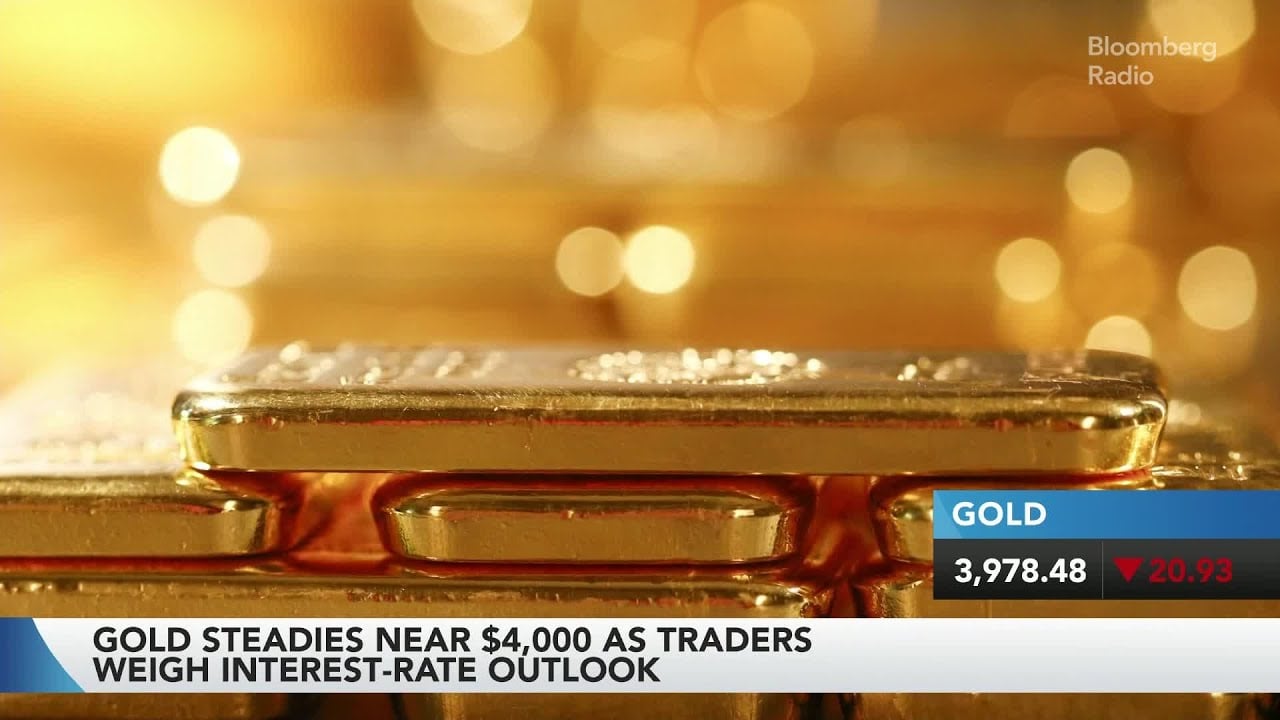
Spot gold settled near $3,972 a troy ounce on Friday, extending a 29% decline from the January 2026 record of $5,608 and marking the first sustained close below $4,000 since November 2025. The breach erased all of gold’s 2026 gains in four sessions. The forces that produced it are not complicated: one is monetary, one is geopolitical, and both arrived in the same week.
The monetary pressure originated with the May personal consumption expenditures reading that pushed US inflation to a three-year high. At 4.1% year-over-year, the PCE index reached levels last seen in April 2023. Federal Reserve Chair Kevin Warsh held the benchmark rate at a range of 3.5% to 3.75% at the June 17 FOMC meeting for the fourth consecutive session, but the projections released alongside the hold were pointed: nine of 18 Federal Open Market Committee members indicated a rate hike before year-end, nudging the median rate projection to 3.8%. The dollar climbed to a one-year high. Real yields on Treasury inflation-protected securities rose, raising the opportunity cost of holding an asset that earns nothing. Markets were pricing roughly 68% odds of a September hike, according to CME FedWatch data, by the time the PCE reading landed Thursday.
Gold and the dollar have moved in opposite directions for a generation. When real yields run negative or near zero, holding an asset that pays nothing costs little. When they rise, as they have since June 17, the calculation reverses quickly for funds managing against benchmarks. The dollar’s current strength compounds that reversal: gold priced in dollars becomes more expensive for buyers in other currencies when the dollar appreciates, reducing demand precisely when the monetary argument for owning it weakens.
The geopolitical pressure came via Truth Social. President Trump clarified the terms of the US-Iran ceasefire framework last week, confirming that no tolls or charges would apply to Strait of Hormuz shipping and that released Iranian assets would be directed exclusively to US agricultural purchases. The language removed whatever ambiguity had persisted about the accord’s scope, and commodity markets responded as they had throughout the ceasefire negotiations: by selling the war premium. Crude fell for a fourth consecutive session with Brent touching $73, and Goldman Sachs cut its fourth-quarter Brent target to $80 from $90. Gold absorbed the same logic: the risk premium built into bullion since the first US strike on Iranian nuclear facilities was no longer supportable at the same valuation once a ceasefire framework was in place.
The two forces converging in the same week turned a defense of the $4,000 level, which gold had held since late 2025, into a rout. Bloomberg reported on June 24 that the metal was finding some stability near the breach point, though stabilization below a prior support level is not a recovery.

What complicates any clean read of the decline is who is still buying. China posted its highest monthly gold imports since March 2024 in May, according to data compiled by Bloomberg, a figure that cuts against the narrative of a trade in structural retreat. Central banks in emerging markets, a cohort that extended the gold bull market through 2023 and 2024 by absorbing selling from Western funds as real yields rose, appear to be treating the move below $4,000 as a buying opportunity rather than a signal of trend change. The distance between that sovereign behavior and the rate-sensitive selling from larger asset managers is the unresolved argument inside gold’s current price.
The bull run that the breach appears to be ending traced from mid-2022. When the Federal Reserve began its post-pandemic hiking cycle, a cohort of buyers emerged who expected persistent dollar debasement from government deficit spending at scale. The thesis survived a period of rising real yields in 2023 because central banks, particularly those diversifying reserve holdings away from dollar-denominated assets, filled the demand gap that rate-sensitive Western investors vacated. The trade then accelerated sharply through 2025 as the Iran-Israel war added a war-premium layer to the existing monetary and reserve-diversification demand.
The January record of $5,608 compounded three distinct sources of buying: dollar-debasement hedging, war-premium demand, and inflation-hedging from retail and institutional buyers who interpreted the Federal Reserve’s earlier hesitation to tighten as a sign that it had lost its nerve. The May PCE report and the ceasefire have now removed two of the three legs simultaneously. The war premium has drained. The inflation-hedge logic has weakened as Warsh signals that the institution is prepared to hike rather than wait out supply-driven inflation. What remains is reserve-manager demand from central banks, but that cohort alone did not build the January record, and it is unlikely to recover it unassisted.
The uncertainty that structural gold bulls are watching is not monetary. It is diplomatic. The Iran-US ceasefire is supposed to inaugurate nuclear negotiations that have not yet begun. Those talks start from positions that three months of military conflict did not bridge: Iran maintains the right to domestic enrichment; Washington demanded the elimination of that capacity before the conflict began. If talks collapse, gold’s war premium does not rebuild gradually. The metal would gap higher in a single session. The $4,000 level, which functioned as a floor for seven months, now functions as resistance. Whether it is reclaimed depends less on what Warsh decides about interest rates than on what happens when negotiators meet across a table, and whether both governments conclude that the terms that ended the war can survive the terms required to prevent the next one.