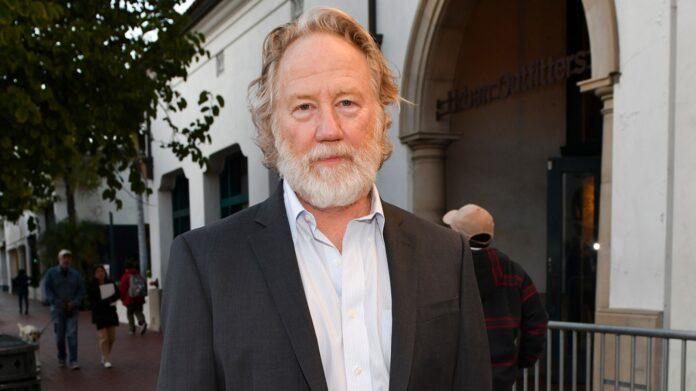

SEOUL – Between 2003 and 2022, Choi Min-sik did not appear in a Korean drama series. What he did instead: Oldboy, I Saw the Devil, The Admiral: Roaring Currents, Exhuma. On Friday, the actor who spent two decades defining what Korean cinema could reach is arriving on Netflix for the first time, with a six-episode psychological thriller adapted from a celebrated Spanish play. The break from television is over. The small screen, it turns out, is now the size of a continent.
Notes from the Last Row premieres today across all Netflix markets, directed by Kim Gyu-tae and based on Juan Mayorga’s stage play El chico de la última fila, known in English as The Boy in the Last Row. The source material has already crossed languages once before: French director François Ozon adapted it as In the House in 2012, a film that earned Ozon the Best Screenplay prize at San Sebastián. The Korean version shifts the setting, the gender of one central figure, and the stakes. It keeps the core architecture: a teacher who cannot stop reading the work of a student who cannot stop watching a family that is not his own.
Choi Min-sik plays the literature professor at the center of the series, a man whose failure to become a writer is quiet and complete. His student, played by a cast the show has kept carefully unannounced before premiere, is submitting weekly journal assignments that begin as observations and gradually become something more troubling: entries that reconstruct conversations the student could not have overheard, scenes the student could not have witnessed. The professor keeps asking for more. The line between mentorship and complicity disappears across six episodes.
Yunjin Kim, whom international audiences will recognize from her eight-season run on Lost as Sun Kwon, plays the wife of the family being watched. It is the most prominent Korean-language role Kim has taken since returning to Korean productions after her American television career, and it was constructed with her specifically in mind, according to production materials released this week. Kim told Netflix press that the series attracted her because it asks what it costs to be known, not famous but genuinely seen, and whether being seen without consent is ever neutral.
Director Kim Gyu-tae brings a precise visual language to the material. He made his name on Korean cable television with series that used restricted framing: tight interiors, limited eyelines, compositions that felt one wall too small, as a psychological device rather than a budgetary constraint. Notes from the Last Row applies that method to a premise that is fundamentally about what is inside the frame and what is left out of it. The surveillance of the family is rendered not with wide-angle dread but with close, almost tender attention, which is what makes it disturbing.

Netflix has built its Korean prestige catalogue through a consistent logic: adaptation of existing literary or theatrical work, A-list Korean cast, international co-production infrastructure, and simultaneous global release rather than staggered regional rollout. Squid Game, My Mister, and Mask Girl each followed some version of that pattern. Notes from the Last Row fits the template precisely. The difference is the scale of the name at the top of the cast. Choi Min-sik is not simply a Korean film star; he is the specific Korean film star whose work introduced the country’s cinema to a generation of international viewers who had never previously sought it out.
The show lands on a Friday unusually stacked with prestige television. The Bear’s final season dropped all eight episodes on FX and Hulu earlier this week with a perfect Rotten Tomatoes score, closing out one of the most decorated runs in Emmy comedy history; a summit Notes from the Last Row arrives beside rather than against. The two series share nothing in genre, tone, or geography, but they are competing for the same kind of viewer: someone willing to commit to dense, formally demanding television that treats discomfort as a feature.
Literary adaptation has become the dominant mode of prestige film and television in 2026. Focus Features debuted the first trailer for Georgia Oakley’s Sense and Sensibility earlier this month, with Daisy Edgar-Jones set for a U.S. release in October, and Amazon’s adaptation of Colm Tóibín’s The Master is in post-production. Notes from the Last Row joins that wave while also belonging to a smaller and more specific tradition: theatrical work that survives translation not by preserving its staginess but by converting it entirely into cinematic language. Mayorga’s play is, on the page, a series of monologues and contested descriptions. The Kim Gyu-tae version is pure image.
Whether Choi Min-sik’s Netflix debut will reach the viewership figures the platform needs to commission a second season (Notes from the Last Row is structured as a limited series but leaves the door open) is not a question the next 48 hours will answer. Netflix releases viewership data in 28-day windows; the industry will have a preliminary read in late July. What the platform has already accomplished is the premiere itself: the first Korean series in which Choi Min-sik headlines, released to every market on the same day, at a moment when Korean content is no longer a niche category on the service but one of its core offerings.
Mayorga’s play ends with the teacher still waiting. The Korean adaptation does not confirm whether it will be kinder than the source. That question, like the student’s journals, is not yet finished.