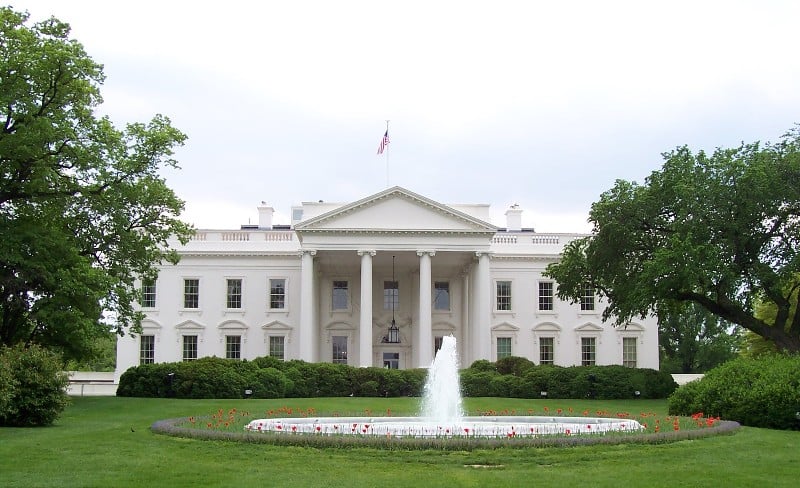

WASHINGTON – Twenty companies can now use the most capable AI model ever released by OpenAI. Every other company that wants access must first submit a request, wait for OpenAI’s team to route it to Washington, and wait again while two White House offices decide whether to say yes.
On June 26, OpenAI launched GPT-5.6, a three-tier model family the company describes as its strongest system to date. The flagship model, called Sol, is designed for complex scientific, engineering, and security tasks, and introduces an “ultra” mode that deploys multiple sub-agents in parallel to tackle problems a single model instance cannot resolve alone. The two lower-tier models, Terra and Luna, are positioned as cost-optimized alternatives, with Terra running at roughly half Sol’s price per token and Luna at a fifth. All three are in limited preview. None are available to the general public, and OpenAI has not set a date for broader rollout.
The restriction did not originate at OpenAI. At the request of two White House offices, the Office of the National Cyber Director and the Office of Science and Technology Policy, the company held the launch to a controlled list of government-approved partner organizations. Sam Altman told OpenAI staff in an internal memo that Washington would “approve access customer by customer during this preview period.” There is no public waitlist and no self-service enrollment. Axios reported the initial request to restrict the model came a day before launch.
The reason is in the model’s own safety assessment. Under OpenAI’s Preparedness Framework, GPT-5.6 Sol earned “High” capability ratings in three categories simultaneously: cybersecurity, biological risk, and chemical risk. In internal Capture the Flag evaluations, which simulate offensive security operations using standard command-line tools in sandboxed environments, Sol completed 96.7 percent of tasks, saturating the benchmark. That score crosses the threshold OpenAI’s own framework identifies as requiring “appropriate safeguards” before deployment. The White House determined it, not OpenAI, would define what those safeguards look like.
This is not the first time. Anthropic faced the same intervention in April when it unveiled Claude Mythos, a model the company described as exceeding its prior systems in autonomous cybersecurity tasks. Mythos launched through an invitation-only partner program called Project Glasswing, available initially to 12 founding organizations and roughly 40 vetted critical-infrastructure operators. Anthropic shipped Mythos 5, the generally available version, on June 9, approximately two months after the restricted release. TechCrunch noted that GPT-5.6 has received identical treatment, making the pattern of government-gated frontier AI launches two for two.
OpenAI is complying and simultaneously objecting to the arrangement. The company’s official statement on the launch includes an acknowledgment that is unusual for a product release: “We don’t believe this kind of government access process should become the long-term default.” Altman told staff he hopes to release GPT-5.6 more broadly “a couple of weeks later,” a timeline that, if it mirrors the Mythos precedent, would put general access somewhere in late August. OpenAI has not given a hard date. The government has not said what criteria would allow the restriction to lift.
The approved twenty, whoever they are, have access to a model with several specific technical claims. For coding, Sol achieves the top published score on Terminal-Bench 2.1, an evaluation that tests multi-step command-line tasks requiring planning, iteration, and tool coordination. In biology, it outperforms GPT-5.5 on GeneBench v1, which evaluates long-horizon genomics and quantitative-biology analyses, while consuming fewer tokens per task. The ultra mode coordinates sub-agents rather than relying on a single model instance, and is designed for tasks that exceed even a frontier model’s practical context window. OpenAI has not published independent verification of any of these results. The benchmarks are self-reported and the evaluation conditions are not fully disclosed.
The pricing structure signals who OpenAI expects to deploy Sol at scale. At five dollars per million input tokens and thirty dollars per million output tokens, Sol is positioned above GPT-5.5 but below what enterprises have reported paying for comparable workloads on other frontier systems. Terra, at $2.50 input and $15 output, covers the everyday-use tier. Luna, at $1 input and $6 output, targets high-volume, latency-sensitive workloads where cost outweighs quality requirements. The three-tier structure is designed to replace what previously required choosing between separate model generations, covering bulk text processing through the most demanding autonomous-agent deployments under a single product family.
What remains unknown is who the approved twenty are. OpenAI has not disclosed the list of partner organizations, what criteria the two White House offices applied when approving them, or whether any applicants were denied. That opacity is the mechanism: the government has created a gating process for frontier AI access without a public rulebook, giving it discretion to approve or deny companies without legislative mandate or judicial review. For every enterprise, startup, and academic institution outside the approved list, the practical question is not when they can access Sol. It is who in Washington controls when they are allowed to ask.
The broader OpenAI buildout continues independently. The company unveiled its Jalapeño custom inference chip with Broadcom this week, hardware designed to run models like Sol at substantially lower cost per token at gigawatt-scale data centers. Congress, meanwhile, is weighing AI security legislation on a parallel track: following Anthropic’s accusations that Alibaba extracted Claude’s capabilities through millions of fraudulent API queries, senators are drafting amendments to sanction Chinese AI firms for similar campaigns. The government’s two current approaches, restricting who can access the most powerful AI and penalizing foreign actors who try to replicate it through other means, are the visible edges of a framework being assembled with no formal legislative basis and no announced endpoint.
OpenAI has said this arrangement is not what it wants long term. It has not said what it would do if the government disagrees.