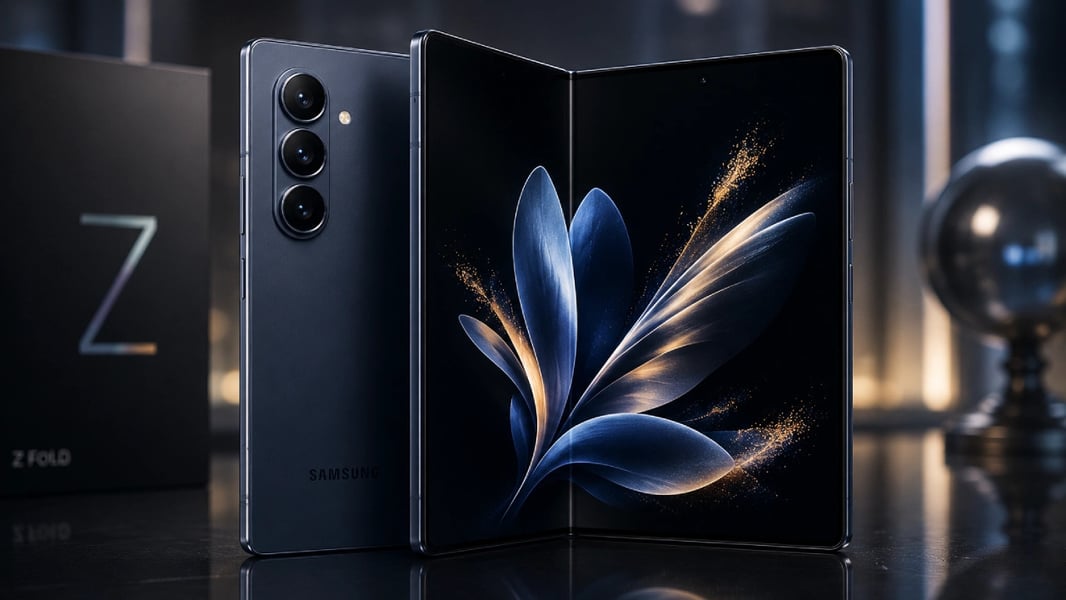

SEOUL – Samsung has a problem that no amount of security protocols or supplier NDAs can solve anymore. With less than a month to go before the company’s Galaxy Unpacked event, the Galaxy Z Fold 8 has been leaked so thoroughly that the July unveiling risks feeling like a formality.
The latest round of disclosures, aggregated across supply chain sources and regulatory filings this week, paints a near-complete picture of Samsung’s next flagship foldable: a 200MP main camera, a 5,000mAh battery, the Snapdragon 8 Elite Gen 5 for Galaxy processor, up to 16GB of RAM, and a starting price that begins at $1,999 and climbs past $2,500 for the top-tier configuration. Samsung’s Unpacked event is expected on July 26 in London, with pre-orders opening the same day and shipments following in early August.
What makes this generation different from the incremental updates that defined the Fold 5, 6, and 7 is the scale of the camera overhaul. The ultrawide lens jumps from 12MP to 50MP, a leap so large it would be headline news on a traditional slab phone, let alone a foldable where camera performance has historically been compromised by the hinge mechanism and internal space constraints. The 200MP main sensor, paired with a 10MP 3x telephoto, suggests Samsung is done accepting the premise that foldables must sacrifice imaging quality for the privilege of bending in half.
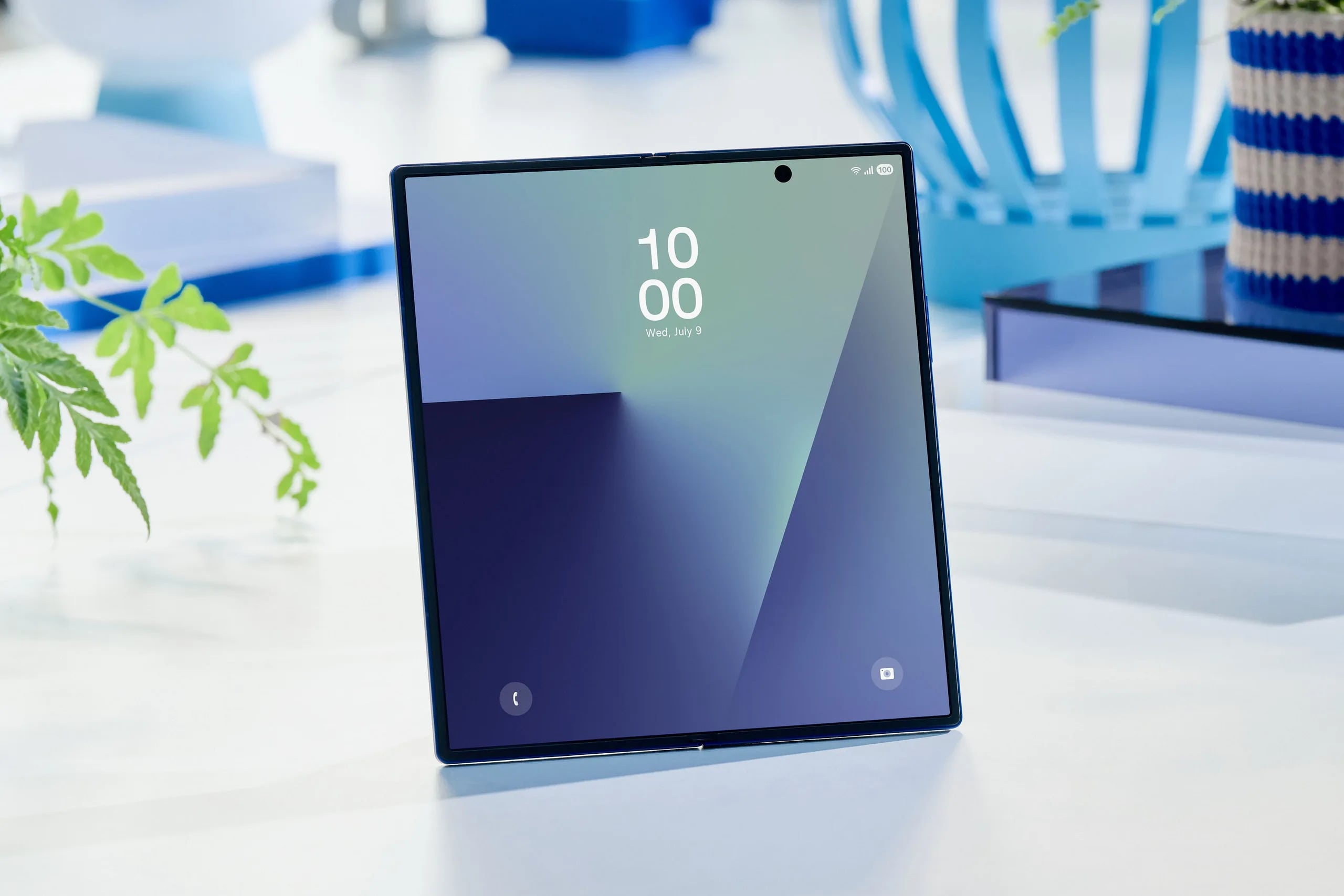
The battery tells a similar story. At 5,000mAh with 45W wired charging, the Z Fold 8 closes a gap that Samsung’s competitors, particularly Honor with its Magic V6 and its record-setting battery capacity, have been exploiting for two generations. The Z Fold 7 shipped with a 4,400mAh cell and 25W charging, numbers that felt dated the day they were announced. Samsung appears to have heard that criticism clearly enough.
The display specifications are less dramatic but still meaningful. An 8-inch LTPO OLED inner screen with a peak brightness near 2,600 nits sits behind what Samsung is expected to call Gorilla Glass Ceramic 2 on the 6.5-inch cover display. The 120Hz refresh rate is standard at this tier. What matters more is the durability claim: Samsung has historically struggled to convince buyers that a $2,000 phone with a crease down the middle will survive two years of daily use. Stronger cover glass and improved hinge engineering are the kind of upgrades that do not make spec sheets exciting but determine whether someone actually buys the device.
Then there is the Fold 8 Wide. Samsung is expected to announce a wider-format variant alongside the standard model, featuring a 7.6-inch inner display with a 4:3 aspect ratio that creates something closer to a compact tablet when unfolded. The Wide model addresses a legitimate complaint about Samsung’s book-style foldables: the tall, narrow inner screen that has always felt like a compromise between phone portability and tablet utility without fully delivering either. Whether a wider format solves that tension or simply creates a new one, with a device too large for comfortable one-handed use and too small for serious productivity, is something Samsung will need to demonstrate in person.
The competitive backdrop makes the Z Fold 8 launch feel more consequential than its predecessors. Apple quietly briefed developers at WWDC on building apps for flexible displays, a signal so clear that the only remaining question about a foldable iPhone is when, not whether. Google’s Pixel Fold line is maturing. Honor, Xiaomi, and Oppo have been producing foldables that match or exceed Samsung’s specs at significantly lower prices in markets across Asia and Europe. Samsung created the mainstream foldable category with the original Galaxy Fold in 2019, but the advantage of being first has been eroding steadily as competitors catch up on hardware and undercut on price.
The pricing structure reflects that pressure in an unexpected way. At $1,999 for the base 256GB model, Samsung is holding the line from the Z Fold 7’s launch price. But the 512GB tier is expected to push past $2,300, and the 1TB variant could approach $2,700. Those upper-tier prices place the Z Fold 8 in competition not with other phones but with laptops, tablets, and the growing category of AI-powered devices that are redefining what a portable computing device is supposed to be. Samsung’s implicit argument is that a foldable phone can replace both a phone and a tablet. At $2,700, that argument needs to be airtight.
The Unpacked event itself is shaping up to be Samsung’s most ambitious hardware showcase in years. Alongside the Fold 8 and Fold 8 Wide, the company is expected to unveil the Galaxy Z Flip 8, the Galaxy Watch 9, and a pair of AI-powered smart glasses that would represent Samsung’s first serious entry into the wearable display category. London as a venue, rather than Samsung’s traditional rotation between San Francisco, New York, and Seoul, signals that the company is targeting European buyers and regulators with equal intensity.
For all the hardware muscle the Z Fold 8 appears to bring, the leak cycle has exposed something Samsung probably did not want visible: the degree to which foldable phones remain a niche product trying to justify mainstream pricing. Foldables account for roughly 2 percent of global smartphone shipments, according to IDC’s most recent estimates. Samsung commands the largest share of that sliver, but commanding 60 percent of a small market is a different achievement than commanding 60 percent of a large one. The Z Fold 8’s spec sheet reads like Samsung’s strongest case yet that foldables deserve to be taken seriously. The price tag reads like an acknowledgment that only a fraction of buyers will agree.
The July event will reveal whatever details the leakers have not already surfaced, which at this point may amount to the exact shade of the new colorways and the precise choreography of the stage presentation. Samsung’s hardware team has built what appears to be a genuinely impressive device. Samsung’s security team has failed to keep any of it secret. Whether buyers care more about the specs or the price is the one thing that has not leaked yet.