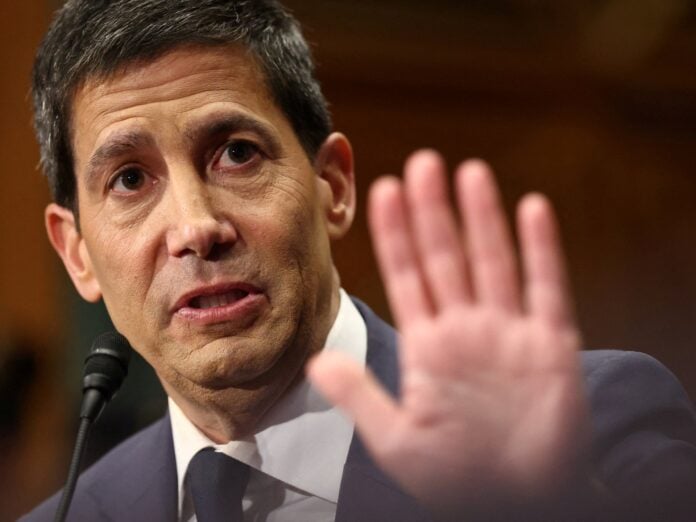

SEOUL – Finance Minister Koo Yun-cheol stood before the National Assembly on Wednesday and apologized. He had come to explain why South Korea’s stock market had just erased $2.18 trillion in value across two trading sessions – and why his ministry had approved the single-stock leveraged exchange-traded fund products that his own regulators now acknowledge were the accelerant.
The apology was itself a form of market data. It told investors what the Finance Ministry had not been willing to say before the crash: that the products approved to let retail traders take leveraged bets on individual companies had been constructed without adequate stress-testing for what a sharp move in three or four major holdings would do simultaneously to more than one million margin accounts.
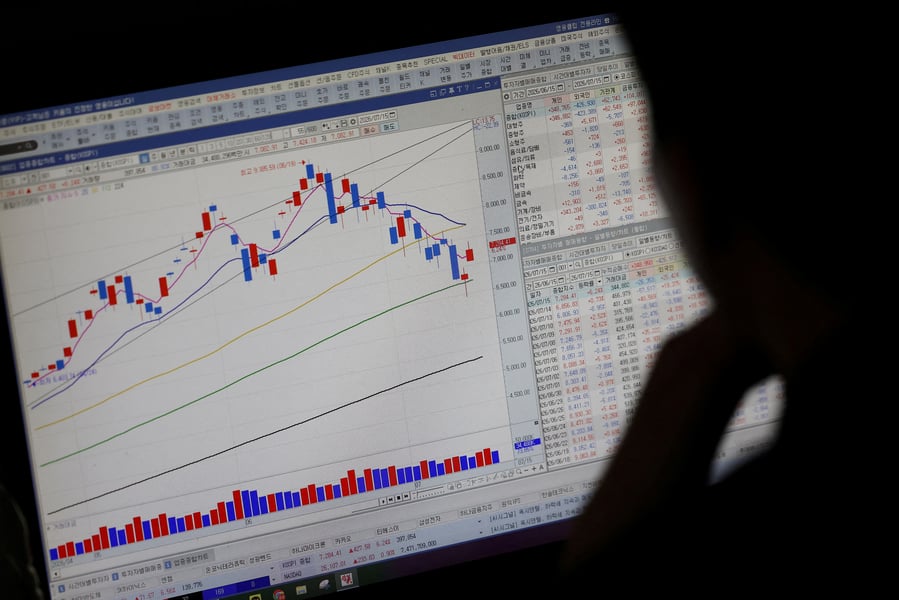
South Korea’s KOSPI index dropped roughly 11% on Tuesday and an additional 6% on Wednesday, falling as deep as 12.6% intraday before partially recovering. The combined decline of approximately 16% across two sessions wiped nearly $2.18 trillion in market value and pushed the index roughly 40% below the record it had reached just one month earlier. At its June 2026 peak, South Korean equities had surged 300% from their April 2025 trough, making the KOSPI the world’s best-performing major market. That record is being unwound session by session.
The proximate cause was an earnings result. SK Hynix Corp. (000660.KS), the South Korean chipmaker that had been trading at a premium built on AI memory demand, reported quarterly results that fell short of what analysts had priced in. The disappointment was specific – a signal that the AI memory trade’s most aggressive assumptions were not arriving on schedule. But the market’s reaction was not contained. It spread through every name to which retail traders had applied leverage, because in South Korea’s equity market, the largest positions and the largest margin balances are concentrated in the same cluster of semiconductor and technology stocks.
Jon Withaar at Pictet Asset Management described Wednesday to Al Jazeera as showing “definite signs of panic and forced unwind in Asia technology today, not only on the long side, but also on the short side.” The short side matters: the same leveraged ETF infrastructure that let retail traders buy with amplification also permits bearish positioning. When forced selling on the long side creates downward momentum, short-side leverage can extend the move before any floor appears.
South Korea’s retail investors, known domestically as “개미” – “ants,” a term that carries both affection and condescension in Korean financial culture – account for an unusually high share of daily KOSPI trading volume relative to institutional peers. The structural reason is not enthusiasm for markets in the abstract. Seoul apartments average roughly 14 years of salary for a recent graduate, a ratio that has made housing wealth functionally inaccessible to anyone without inherited capital. The stock market, with margin loan products increasingly accessible through smartphone brokerage apps, became the only available alternative for capital accumulation at scale. The leveraged ETF products the Finance Minister apologized for were designed to give those investors faster access to the upside. The downside traveled the same route.
Margin loan balances on the KOSPI hit a record 38.63 trillion won in late June. By mid-July, as AI momentum faded, those balances had already begun unwinding through forced liquidations. The Financial Services Commission had moved to ban new single-stock leveraged ETF listings before this week, after more than 1.2 million South Korean margin accounts hit liquidation thresholds in July and approximately 360,000 were forcibly closed by their brokers. Wednesday’s measures went further: individual investment caps would limit any single investor’s leveraged exposure to a defined percentage of total portfolio value, trading costs on certain products would increase, and new retail buyers would be required to complete simulated trading periods before accessing real leverage.
Frank Benzimra at Societe Generale put the crash’s mechanics plainly: “If you look at what is falling in the market, it has been the stocks in which you have the most leverage.” Samsung Electronics (005930.KS) and SK Hynix together accounted for an outsized share of the more than 27 trillion won in KOSPI margin debt outstanding before this week’s deleveraging. When both fell simultaneously, brokers issued margin calls across a significant portion of the market. The sales required to meet those calls pushed prices lower. Lower prices triggered more margin calls. That cycle played out over days rather than weeks because digital brokerage platforms execute liquidations faster than floor traders ever could.
The damage was not contained at the Korean border. The Philadelphia Semiconductor Index entered official bear market territory on Wednesday as Samsung and SK Hynix each fell more than 15%, showing how thoroughly the Korean retail panic transmitted into global chip stocks. The channel ran both ways: US semiconductor weakness in afternoon trading fed back into overnight Asian sentiment, tightening the loop between Korean leverage and American tech valuations.
South Korea’s market had already experienced circuit breakers and sharp corrections earlier this year. When the KOSPI tripped its circuit breaker in June during a convergence of geopolitical shocks, the index recovered within days – reinforcing, for retail holders, the conviction that leverage was an appropriate size of bet on the dip. That conviction proved durable right up until the dip did not recover.
The government is also preparing a broader legal framework for emergency market stabilization, though the timeline and scope of that framework remain unspecified. The FSC has not defined what threshold would trigger its deployment. The measures announced Wednesday are a significant escalation from the new-listing ban that preceded this week’s crash; whether they are sufficient to prevent a third successive day of forced liquidations depends on how much of the remaining estimated 34 trillion won in margin balances can be absorbed without another sharp move.
What the crash does not yet tell markets: at what price level foreign institutional investors find the KOSPI attractive enough to provide a technical floor, and what the SK Hynix result actually portends for AI memory demand in the second half of 2026. The index remains up 41.5% in dollar terms year-to-date – a figure that reflects the extraordinary first-half rally as much as the scale of the collapse since June. Whether the gap between that year-to-date gain and the 40% peak-to-trough loss represents residual overvaluation or the beginning of a recovery is a question the Finance Minister’s apology, and the market’s reaction to it, left open.