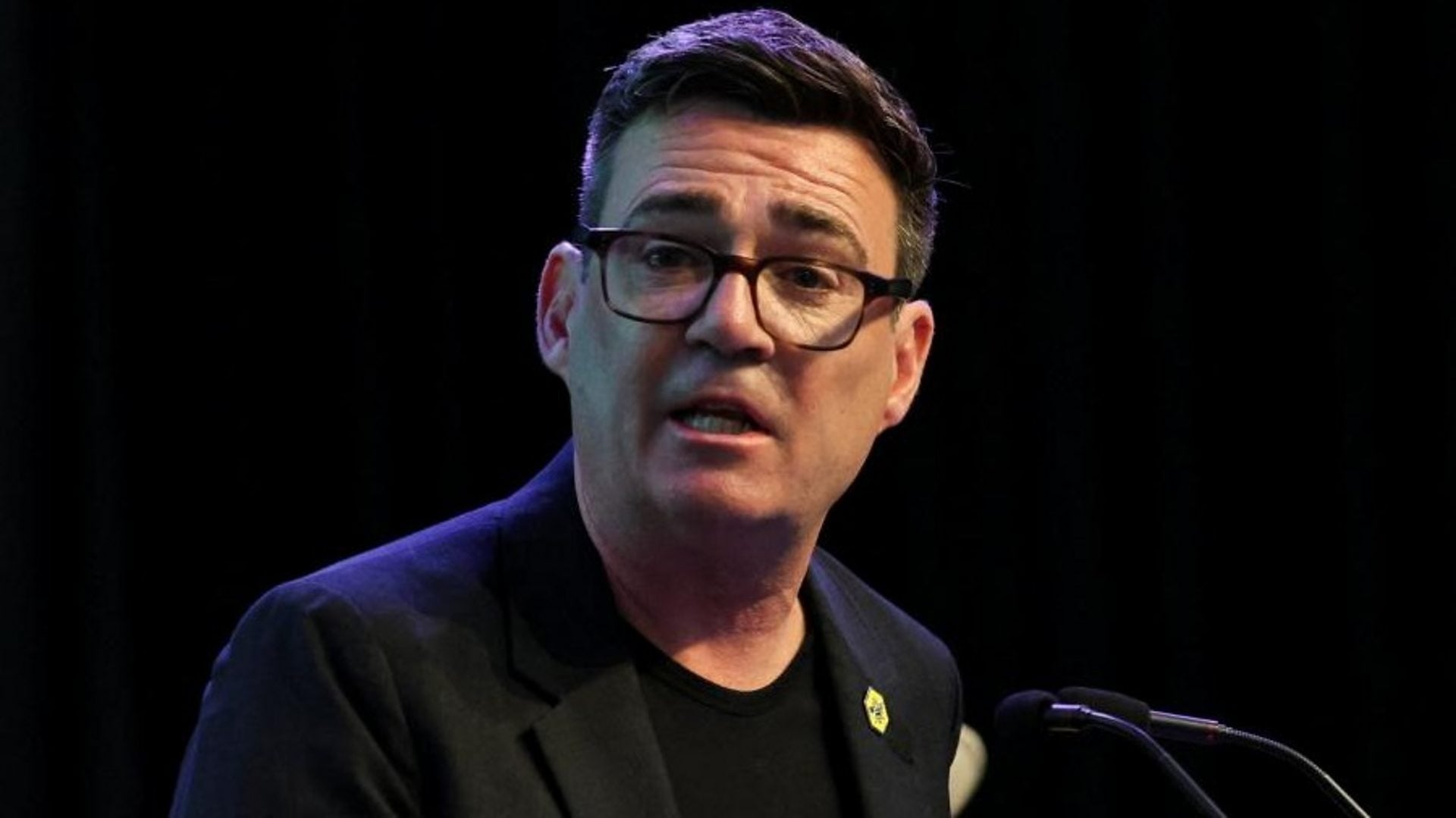

MANCHESTER – Andy Burnham spoke at the People’s History Museum on Saturday not quite as a candidate but already something closer to a prime minister in waiting, and the distinction was not lost on anyone who has watched the Labour Party spend the previous six days canvassing the field and finding it empty.
Keir Starmer resigned June 22, three weeks after local elections delivered the worst results for a governing party in recent British political memory. Wes Streeting, the health secretary whose profile had made him the natural leadership alternative, stood aside and endorsed Burnham. Bridget Phillipson declined. Pat McFadden declined. Al Carns, the defence minister who resigned in June, has not ruled out a run – but has not declared one. More than 200 Labour MPs are reported to have formally backed Burnham, against the 81-vote threshold required to enter the contest. The field, as of Sunday morning, contains one serious candidate.
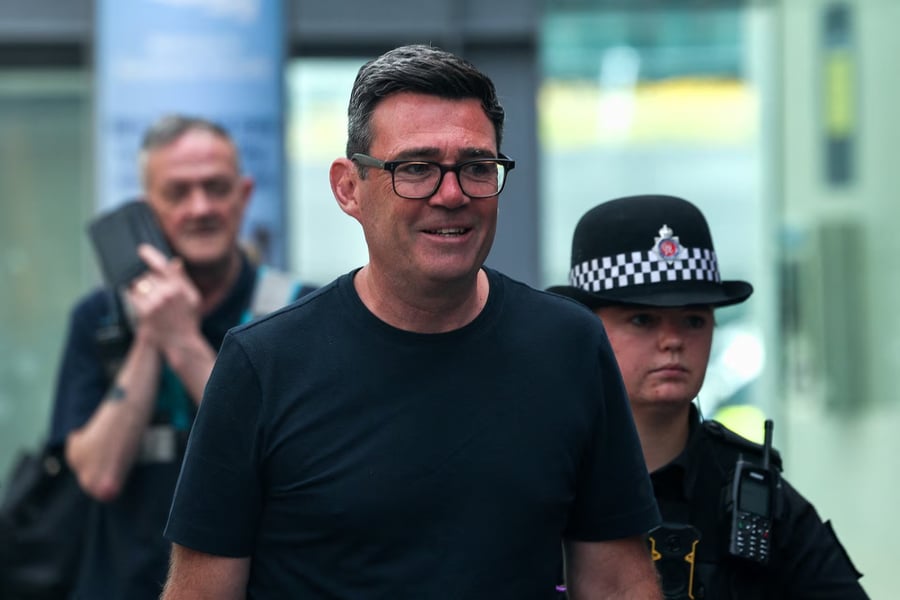
That candidate delivered a nearly hour-long speech he called “No. 10 in the North.” What he proposed was relocating part of the operational base of British government to Manchester – offices, staff, decisional presence – making it, in his words, “the biggest shift of power from Whitehall in modern times.” The proposal was also a bet: that Labour’s collapse in its heartlands was not an accident of Starmer’s particular style or personality but a structural problem built into the geography of power itself, and that moving some of Downing Street’s functions 200 miles north would signal, in tangible terms, that a Burnham government understood where it had gone wrong.
He framed it as a “circuit-breaker.” Not a plan, not a fix – a circuit-breaker. The word choice was deliberate. Burnham has spent nine years running Greater Manchester from a position of relative political shelter, watching three Conservative governments and one Labour government struggle with the central coordination problems of the British state while he built a public transport network from scratch and ran a homelessness programme that has attracted national notice. His pitch, implicit throughout the speech, is that governing works when it is close to the people being governed. Three terms as Mayor since 2017, the Bee Network launched in September 2023, an approval rating at 65% in a country where approval ratings do not generally hover – these are the evidence he is offering.
“Good growth in every postcode,” he said. “Not just in the places that have always grown.”
The policy architecture he described is substantial. Housing and welfare administration would be devolved to regional mayors. Thirty-nine billion pounds in existing housing funding would be redirected entirely toward social homes. Energy, water, and transport infrastructure would come under public control. A “buying British” commitment across government procurement would apply. Post-16 education – sixth forms, further education, apprenticeships – would move to regional oversight. Taken together, it is not a minor recalibration of Starmer-era policy. It is a structural argument about how the British state should be organised, and it was delivered on Saturday to an audience that includes the people who will vote on whether to make him leader before those policies face any test at all.
ITV reported that Burnham returned to Parliament only ten days ago, winning the Makerfield by-election on June 18 with 54.8% of the vote – a mandatory step back into Commons life he had to take before seeking the leadership. He did not return to fanfare. He returned to a party in the process of clearing the field around him.
The critics have been heard, if not yet answered. Reform UK dismissed the proposal as “just more devolution.” The Liberal Democrats, whose 2024 gains came in part at Labour’s direct expense, issued a statement saying there is “a short window to turn this around” – a formulation that registers scepticism without quite committing to opposition. UnHerd published a piece headlined “The folly of a No. 10 in the North,” questioning whether the constitutional mechanics of a split prime ministerial operation are workable at all. None of those objections have, as of this weekend, produced a candidate willing to put them to Burnham directly in a debate.
YouGov polling published this month put Burnham at 43% as the preferable prime minister against 23% for Nigel Farage, with a net favourability of negative four – the highest of any British politician currently being measured. The number is simultaneously a gauge of how damaged the political landscape has become and how much open space exists for someone who has not yet been tested at the national level. Running Greater Manchester is not running the country. The Bee Network is not the National Health Service. What a “No. 10 in the North” would actually look like when it encounters a hostile Treasury, a sceptical civil service, and a Whitehall apparatus built over centuries around Westminster proximity – these are questions the speech raised rather than resolved.
The timeline will clarify some of this. Nominations open July 9 and close July 16. If Burnham remains the only candidate above the 81-MP threshold when nominations close, the special Labour conference scheduled for July 17 would confirm him without a member ballot. If Carns or another candidate enters, the contest moves to a full membership vote running August 6 to 27. The party that spent three years under Starmer promising discipline and stability is now moving, with some urgency, toward the single thing it could find on which it could agree.
Whether “No. 10 in the North” survives contact with Whitehall is a question for later. For now, the more pressing question is whether anyone will stand up to ask it.