
LONDON — For the millions of British viewers who spent four series in the company of Margo Leadbetter, the character was not someone they were meant to admire. She was the neighbour who disapproved of Tom Good’s self-sufficiency project, who confused snobbery with standard-setting, and who suffered every indignity with a wounded magnificence that audiences watched, week after week, with something approaching love. Dame Penelope Keith, who made Margo irreplaceable, died on Sunday. She was 86.
Her death was confirmed by news outlets including CTV News, citing an announcement from her family and representatives. No cause of death was publicly stated at the time of this report. Keith had been one of Britain’s most honoured sitcom performers: a BAFTA winner across several roles, appointed Officer of the Order of the British Empire in 2006 and Dame Commander in 2014, and the central figure in two BBC programmes that still hold places among the most-watched in the network’s history.
The Good Life, which ran on BBC One from 1975 to 1978, placed Keith alongside Richard Briers, Felicity Kendal, and Paul Eddington in a Surbiton semi-detached that had divided itself, literally and philosophically, into two households. On one side of the garden fence, Tom and Barbara Good had abandoned conventional careers to grow their own food and keep their own livestock. On the other, Margo and Jerry Leadbetter maintained the life their neighbours had abandoned: the commuter jobs, the dinner parties, the permanent anxiety about what the street thought of them.
Margo was written as the comedy foil. What Keith did with the part was more complicated. She played Margo’s snobbery as a genuine belief system rather than a pose, which meant the character had internal logic even when she was wrong about everything. Viewers laughed at her certainties without entirely dismissing them, which required a precision of tone that Keith maintained across 28 episodes without audible effort. She won the BAFTA Television Award for Best Light Entertainment Performance for the role. It was not the last time the industry would take note.
To the Manor Born, the series that followed on BBC One from 1979 to 1981, was written specifically for her by Peter Spence. She played Audrey fforbes-Hamilton, the widow of a country estate’s squire, forced to sell the manor house to a Czech immigrant businessman named Richard DeVere, played by Peter Bowles, and then watch him take possession while she retreated to the estate’s lodge. The final episode was watched by more than 21 million viewers, one of the highest-rated broadcasts in BBC history, and the show was revived for a one-off special in 2007.
Her career before and beyond those two roles was substantially wider than her television fame suggested. She trained at the Webber Douglas Academy of Dramatic Art and built a stage career before television found her, performing in productions including The Norman Conquests by Alan Ayckbourn, various West End runs, and classical repertoire. She was also associated, through later television projects and touring theatre, with audiences who knew her primarily from the sitcoms but found, when they saw her on stage, something technically different from what they had expected.
She received BAFTA recognition multiple times across her career, and the breadth of the awards reflected the industry’s understanding that she had not, as some sitcom performers do, become the character she had played most successfully. She was identifiable as Margo Leadbetter and as Audrey fforbes-Hamilton without being reducible to either. That distinction between being known for a character and being confined by one is not available to every actor who takes on an iconic television role.
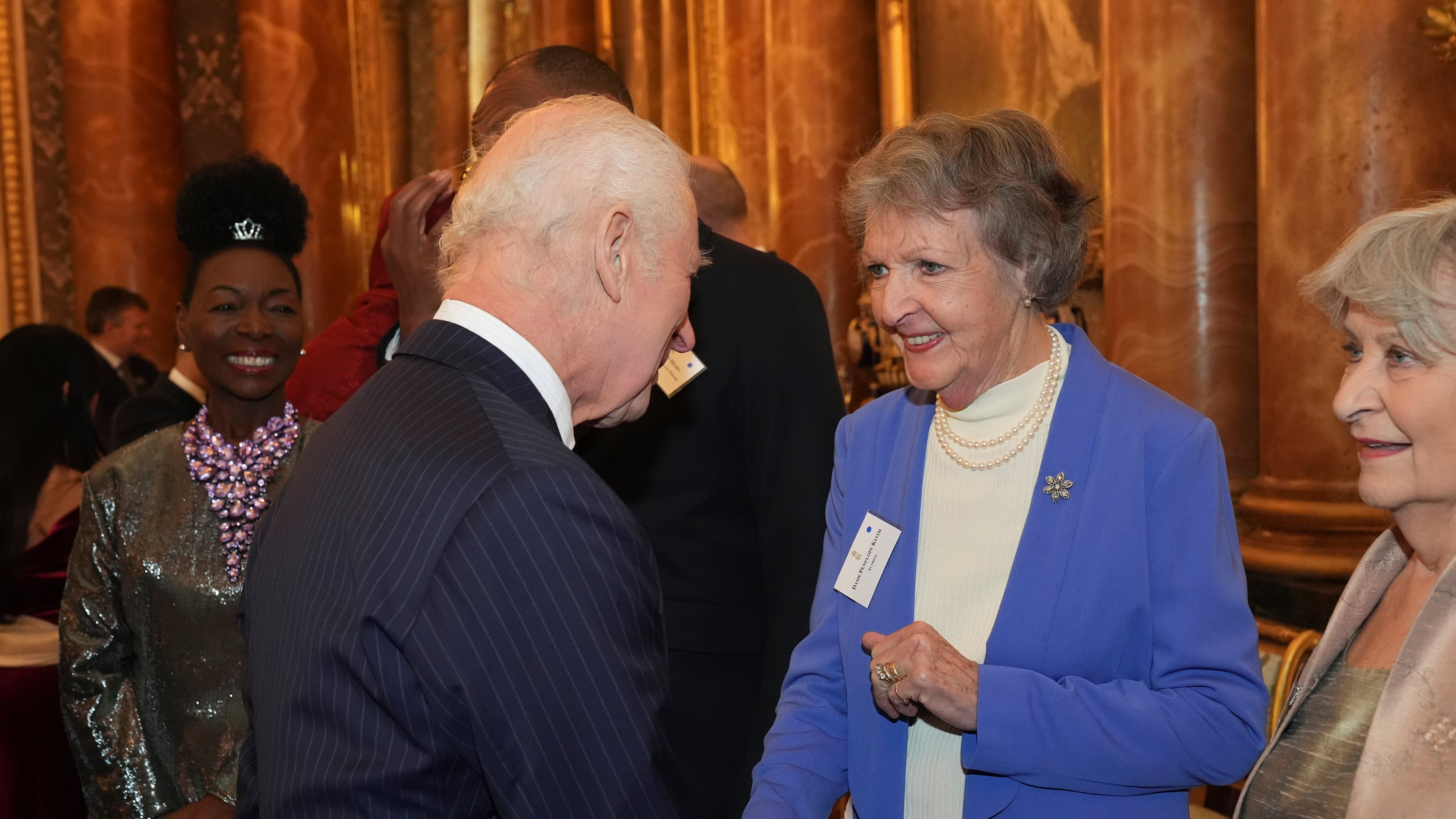
She was appointed OBE in 2006 for services to drama and charitable activity. The DBE followed in 2014. She served as High Sheriff of Surrey, a ceremonial appointment, and later as Lord-Lieutenant of the county, a role involving sustained community engagement and regular interaction with the royal household. She appeared at Buckingham Palace in November 2024, meeting King Charles III in one of her final recorded public appearances, a moment that suggested her connection to the public life of the country had continued well past the end of her most active television years.
She married Rodney Timson in 1978. The couple had two adopted sons. She gave comparatively few interviews across her career, and those she did give rarely ventured into personal territory, a professional discretion she maintained as consistently as any of her comic performances.
Her death comes as the entertainment world has been absorbing several significant losses in recent days. Victor Willis, the Village People’s founding lead singer and co-writer of “Y.M.C.A.”, died June 30 at 74, and Danny Glover disclosed publicly this week that he has been living with Alzheimer’s disease. No statement from the BBC, which broadcast Keith’s most important work, had been made available to international press as of this report. What she made, across eight years and two sitcoms, is available still: the precise vowels, the managed posture, the ability to play wounded dignity as its own form of comedy, with an assurance that only looks effortless because the effort was entirely concealed.
Related Posts