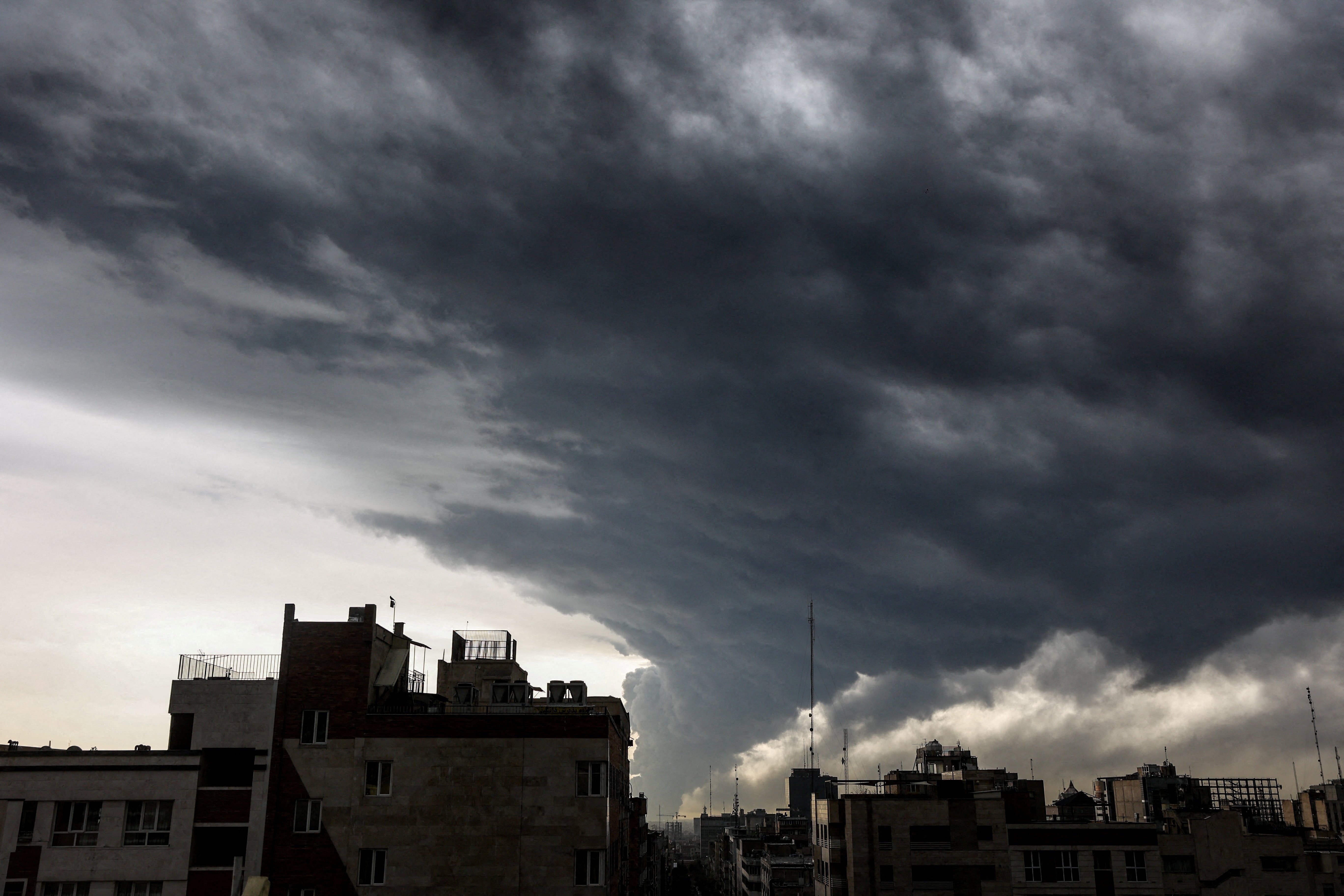

DOHA — Fatemeh Mohajerani, the Iranian government spokeswoman, told Russia’s RIA Novosti in mid-April what everyone at the negotiating table already knew but no one had put on record: the bill was $270 billion. Oil storage depots in Tehran and the province of Alborz, bombed in March. The Tehran refinery in the south of the capital. The Shahran fuel depot. Sixty civilian aircraft, twenty of them completely destroyed. Steel plants, aluminum factories, bridges, railway networks, power stations, water desalination facilities, hospitals, schools, research centers. The war lasted four months. The accounting is going to last much longer.
The draft memorandum of understanding, reported by The New York Times in late May, found an answer to Iran’s demand and Trump’s political inability to pay it: a $300 billion “international investment fund.” Not reparations. Not compensation. An investment, in the language of real estate men sent to settle a war.
The gap between those two framings is not a technicality. It is the central unresolved tension in every round of talks since Doha began. Iran needs the $270 billion to mean accountability—evidence, for a domestic audience that watched its Supreme Leader buried after a US-Israeli strike and its oil sector light up like a refinery fire, that the agreement was worth the cost. Trump needs the same money to mean opportunity, not liability. The word “reparations” has a specific political toxicity for him. He spent years attacking the Obama administration’s $400 million Iran settlement as “ransom.” Any deal that formally acknowledged American responsibility for the damage would give his critics the same weapon.
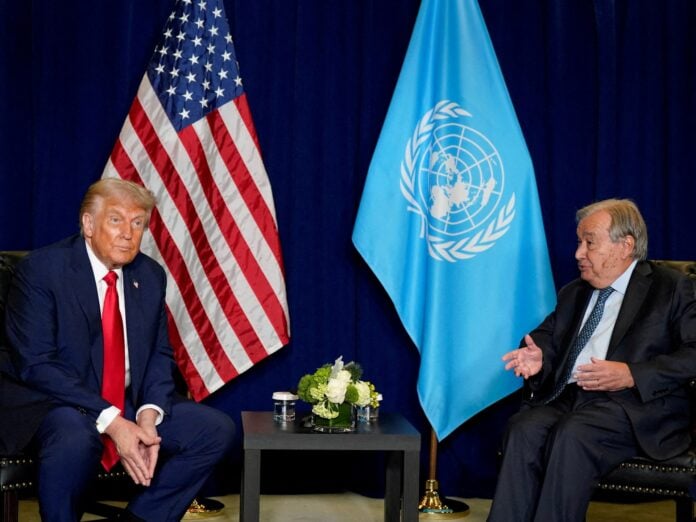
So Steve Witkoff and Jared Kushner, Trump’s envoys to Doha and both real estate investors with no prior diplomatic portfolios, developed a mechanism designed to bridge that gap by obscuring it. Rather than direct payment, the $300 billion reconstruction fund would operate as market access: Iran’s oil sector, holding the world’s fourth-largest crude reserves at approximately 208 billion barrels, would open to American energy companies through joint ventures once sanctions lifted. The theoretical value of that access, compounded over years, becomes Iran’s reconstruction. Nobody in Washington writes a reparations check. Nobody in Tehran has to publicly accept a deal that bypasses their war damages claim.
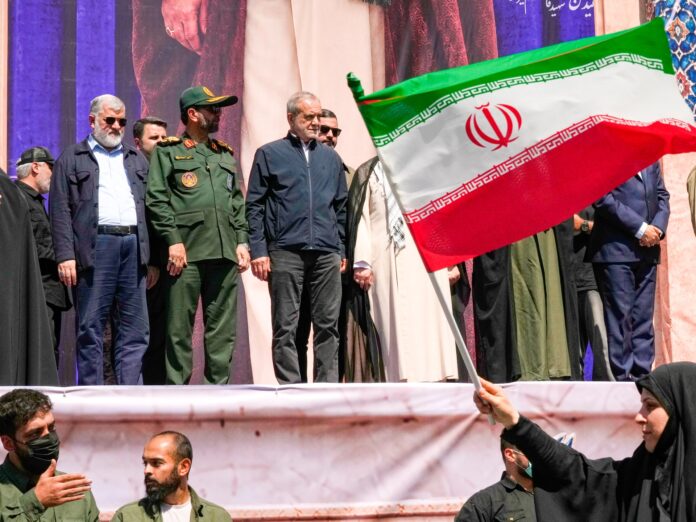
Whether the Iranian government will accept that framing is, diplomatically speaking, an open question. Whether the hardline factions inside Iran’s political establishment will accept it is closer to answered. Mahmoud Nabavian, a hardline lawmaker on parliament’s National Security and Foreign Policy Committee, leaked three letters on state television in late June—correspondence from Supreme Leader Mojtaba Khamenei dated April 5, April 19, and May 24—in which Khamenei objected to any memorandum that did not formally recognize Iran’s right to enrich uranium and explicitly demanded exclusive Iranian management of the Strait of Hormuz, rejecting the shared Oman framework that was then under discussion. The Iranian Broadcasting Corporation announced legal proceedings against Nabavian for disclosing classified documents. Its director general resigned.
The letters matter because of timing. Mojtaba Khamenei wrote them as Supreme Leader—he assumed the position in March following his father’s assassination—and the MoU was signed after he wrote them. His stated opposition did not stop the signing. What he told his deputy and President Pezeshkian, according to reporting on the episode, was that he held “a different view, as a matter of principle” but granted permission as a concession to the presidency. That is a delicate political arrangement: the Supreme Leader on record opposing the deal’s core terms, the government proceeding anyway, and a parliamentary faction now broadcasting the contradiction to state television audiences across Iran.
Iran also sent its reparations demand in a separate direction. The UN ambassador submitted letters to Saudi Arabia, the UAE, Qatar, Bahrain, and Kuwait, accusing each country of hosting the infrastructure that enabled US and Israeli strikes. None of those governments has publicly responded. Iran separately put the demand for Gulf state compensation at the table in Pakistan-hosted preliminary talks earlier this year.
The Doha talks that concluded July 2—the session that produced the Gharibabadi breach channel and advanced the $6 billion frozen-assets arrangement—did not touch the $300 billion question. The $6 billion in frozen funds is a discrete, narrow mechanism: money from Iranian oil sales already completed before the war, held in foreign accounts, now being released in tranches for humanitarian goods. The reconstruction fund is a different order of magnitude and a different order of political difficulty. Gharibabadi’s team focused on implementation of what had already been agreed. The bigger number was not on the agenda.
Mojtaba Khamenei’s first public statement as Supreme Leader suggested the reparations framing is not one Iran will quietly abandon. He warned, according to analysts at the Soufan Center, that “we will seek compensation for the war through any possible means” and that if refused, Iran would “take” assets or “destroy” them. The Washington Institute for Near East Policy assessed his likely foreign policy posture as “defiant consolidation”—reliance on the IRGC, asymmetric tools, and what they called his “raw, vengeful feelings” from reportedly losing family members in the strike that killed his father.
The next round of talks cannot begin before July 10, when burial ceremonies for the elder Khamenei conclude in Mashhad. That pause applies to the nuclear file, the Hormuz framework, the breach channel—and to the reconstruction fund, which has not yet been formally tabled as a distinct negotiating item in Doha.
What the semantic dispute over “reparations” versus “investment fund” ultimately reflects is a harder problem. Iran is asking the United States to acknowledge that the bombing damaged something that must be repaired. The Trump administration is asking Iran to treat American oil companies entering its market as the equivalent of that acknowledgment. Those two propositions may be compatible in practice, over decades of investment and revenue. They are not compatible in political language, which is where both governments must sell the deal to audiences that lost something real in the war.
What no one in the Doha talks has yet said publicly is what the $300 billion figure is actually based on. Iran’s $270 billion estimate came without a methodology attached—Mohajerani did not provide a breakdown. The US’s $300 billion response came from a real estate valuation of oil-sector access, not a damage assessment. The two numbers are close enough to suggest agreement. The processes that produced them have nothing in common.