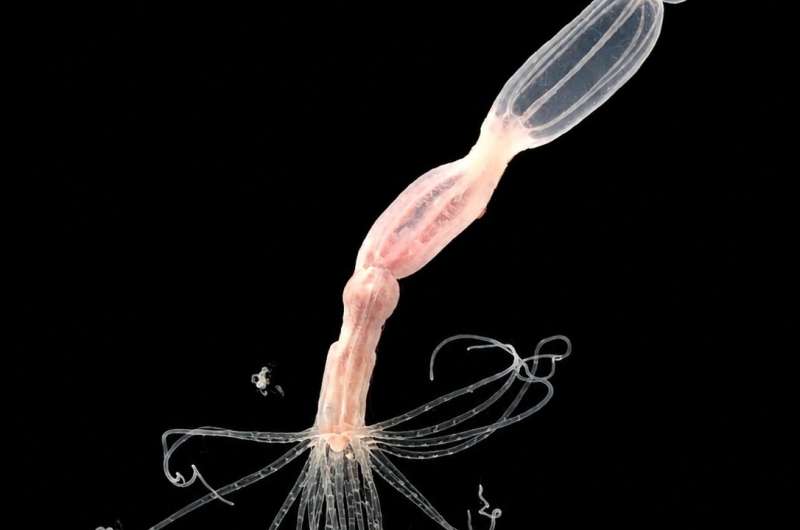

JERUSALEM — For decades, the working model of antiviral immunity in animals came down to a simple equation: viral invasion triggers proteins that switch on the immune system, which then clears the infection. A sea anemone the length of a fingernail has just overturned that picture.
A study published in Nature Ecology & Evolution shows that Nematostella vectensis, a small coastal sea anemone used widely in evolutionary biology research, fights viral infections not by activating its immune system but by depending on a protein that keeps it intentionally suppressed. That suppression, it turns out, is the mechanism of survival.
The finding disrupts a core assumption about animal immunity: that all animals inherited some version of the same antiviral architecture. If sea anemones, which diverged from the vertebrate lineage more than 550 million years ago, are using a suppressive protein to manage viral infection rather than an activating one, then the diversity of antiviral strategies across the animal kingdom is wider than immunologists have assumed.
The protein is named CARDIB, an abbreviation for CARD Inhibitor Binding protein. It closely resembles MAVS, a critical antiviral signalling molecule in humans. When a cell detects a virus, MAVS acts as the trigger that launches an immune response. Everything about CARDIB’s structure suggested it would function the same way. It did not.
“Everything about CARDIB suggested it should function like MAVS,” said Yehu Moran, a professor in the Department of Ecology, Evolution and Behavior at the Hebrew University of Jerusalem who led the research. “Instead, we discovered that it does the exact opposite.”
Moran’s team, working with collaborators at the University of North Carolina at Charlotte, used CRISPR gene-editing tools to remove CARDIB from sea anemone genomes and then observed what happened when the animals were exposed to viruses. Sea anemones without CARDIB became dramatically more susceptible to infection. Viruses multiplied faster. Antiviral defenses failed. Removing the molecule that was supposed to suppress immunity left the animals considerably worse at fighting off disease.
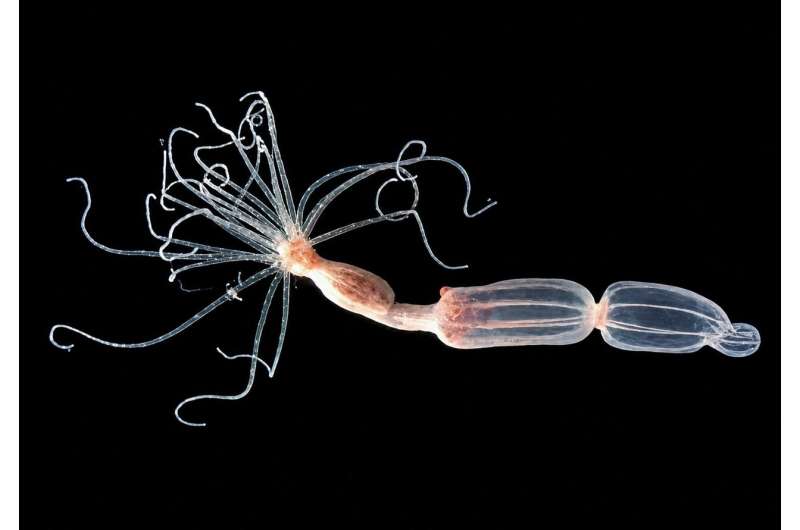
Ton Sharoni, the doctoral candidate who led much of the experimental work, described the outcome as deeply disorienting. “The results were completely counterintuitive,” he said. “Although CARDIB acts as a brake on the immune system under normal conditions, that brake turns out to be essential for mounting an effective antiviral response.”
To test whether the finding held outside a laboratory setting, the researchers moved their experiments into outdoor marine mesocosms in South Carolina, controlled pools designed to replicate natural coastal environments with real pathogen exposure and ambient viral loads. Sea anemones lacking CARDIB accumulated substantially more viruses than unmodified animals in the same conditions. The outdoor results matched the laboratory results without meaningful deviation.
That validation matters for how seriously to take the mechanism. Much of what is understood about invertebrate immunity comes from in-vitro work that may not capture how immune systems behave under ecological pressure. The mesocosm experiments provide external confirmation that the CARDIB effect is not a laboratory artifact but a real functional relationship between the protein and an animal’s ability to survive viral exposure in the wild.
What CARDIB is doing at the molecular level remains incompletely understood. The study establishes clearly that removing it impairs antiviral defense. The mechanism by which its normal suppressive activity produces a protective outcome is the next layer of investigation. Whether CARDIB regulates the timing of an immune response, prevents runaway inflammatory damage, or achieves its protective function through another pathway is not yet resolved, and the paper does not address that question directly.
The evolutionary significance is more immediate. The standard model of animal immunity, shaped largely by vertebrate research and a small number of well-studied invertebrate organisms, holds that a conserved core antiviral pathway runs through the animal kingdom. That pathway broadly relies on proteins that activate interferon-like signalling when viral genetic material is detected. CARDIB has the structural signature of such a protein and performs the functional opposite of what that signature predicted. It is a suppressor that looks like an activator, and removing it causes the very vulnerability it appeared designed to prevent.
The pattern has a counterpart in very different biology. Researchers at Tel Aviv University reported this week that macrophages that clear dead cancer cells are reprogrammed by tumors to promote tumor growth instead of fighting it, another case of immune cells operating counter to their apparent design. The sea anemone and macrophage findings come from entirely different domains of biology, but both point to the same underlying complexity: the function of an immune molecule cannot be read reliably from its structure alone.
Whether CARDIB-like proteins exist in other invertebrate lineages is an open question. Invertebrates represent the vast majority of animal species, and the molecular details of how most of them handle viral infection remain largely uncharacterised. If counter-intuitive suppression mechanisms are widespread rather than specific to sea anemones, the existing picture of animal antiviral immunity may require considerably more revision than a single study can initiate.
The research was conducted by the Hebrew University of Jerusalem in collaboration with the University of North Carolina at Charlotte. The paper appears in Nature Ecology & Evolution.