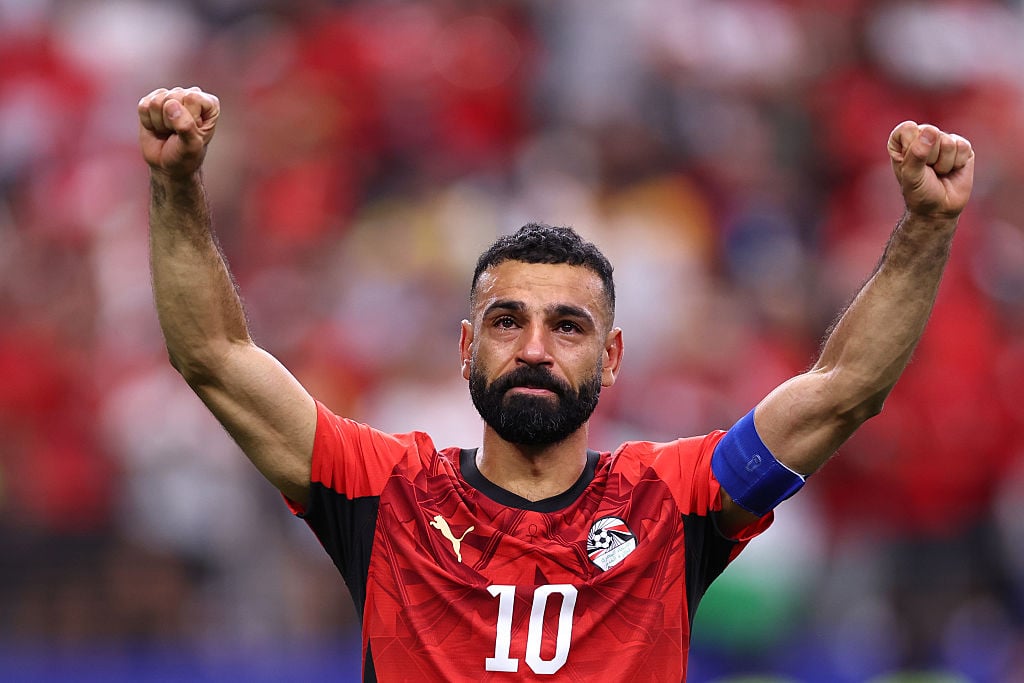

DALLAS — The hamstring had kept Mohamed Salah off the training pitch for days and restricted him to a peripheral role through nearly two hours of football that could have ended Egypt’s tournament without the captain ever truly arriving. When the penalty shootout came and his moment demanded composure above all else, Salah placed the ball, took four steps, and chipped a Panenka straight down the centre as Mat Ryan dived left. “If someone was going to do it,” he said afterward, “it was going to be me.”
Egypt beat Australia 4-2 in a penalty shootout after a 1-1 draw through extra time on Friday at AT&T Stadium in Dallas, advancing to the World Cup Round of 16 for the first time in the nation’s history. Egypt had not won a single knockout match across any previous World Cup appearance, with their last tournament coming in Italy 1990. That changed in Texas, decided by spot kicks.
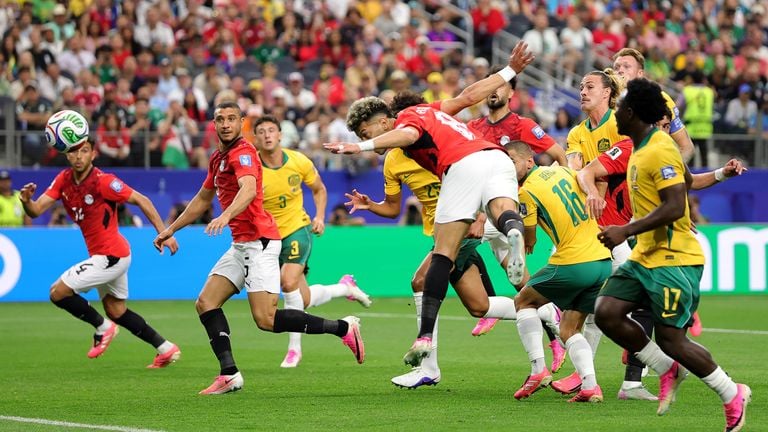
Emam Ashour gave Egypt the lead in the 13th minute with a header that suggested the Pharaohs would spend the evening converting pressure into goals with similar efficiency. They could not. Australia recovered their shape and began carrying the ball forward with greater confidence as the match progressed, backed by the pace of their wide players and a willingness to run at Egypt’s defensive line. The crowd inside AT&T Stadium, divided between green-and-gold and Egyptian red, shifted with the Socceroos as the opening half gave way to a second that the Australians had been waiting for.
Mohamed Hany deflected a cross into his own net in the 55th minute, and Australia were level. The match offered nothing more to separate them. Cristian Volpato had bent a shot off the outside of the crossbar for Australia in the early exchanges, and Omar Marmoush squandered a clear second-half chance for Egypt that might have made the final 30 minutes academic. Neither side could finish what they started, and 90 minutes resolved nothing.
Patrick Beach, Australia’s goalkeeper, made the save that deserved to change the outcome: a stop in the dying seconds of added time that forced extra time and kept Australia’s hopes alive. Thirty more minutes brought tension on both sides and no goals. The decision shifted to the penalty spot.
In the 119th minute, with the shootout inevitable, Australia manager Tony Popovic replaced Beach with Mat Ryan, a substitution calculated to swing the odds. Ryan is one of the most experienced goalkeepers at this tournament. He did not stop a single Egyptian penalty.
Harry Souttar blazed Australia’s first attempt over the crossbar. Egypt converted theirs. Salah stepped up and chipped his Panenka, the ball floating through the centre of the goal while Ryan’s dive took him left. Lucas Herrington struck the crossbar with Australia’s third attempt. Two misses in four penalties is a deficit no team recovers from in a shootout. Hossam Abdelmaguid, largely inconspicuous throughout 120 minutes, stepped forward to score Egypt’s fourth and final penalty and send the Pharaohs through. As Al Jazeera reported, it was Egypt’s first-ever World Cup knockout stage victory.
Egypt is a football-obsessed nation of more than 105 million people, yet their relationship with the World Cup has been defined by absence. The Pharaohs qualified for Italy 1990, their last appearance before this summer, and exited in the group stage without advancing. A generation of Egyptian supporters grew up watching other nations move through knockout rounds that Egypt was never granted the chance to reach. Friday settled that account.
When a nation has never won a World Cup knockout match, the word historic gets applied to a lot of moments that ultimately fall short. This was the actual moment. The Egyptian players sprinted to the fans gathered behind one goal at AT&T Stadium, a celebration proportionate not to a round-of-32 result but to the 36 years of World Cup knockout absence it ended.
Salah is 34 years old. The 2030 World Cup, to be held across Morocco, Spain, and Portugal, would arrive when he is 37. The question of Salah’s hamstring fitness had dominated the buildup to the Dallas fixture, and his peripheral role through 120 minutes suggested those concerns were not unfounded. The Panenka was not showboating. It was a choice made in the full knowledge of what a miss would mean for him, for his team, and for a country watching from thousands of miles away.
Australia have made progress at this tournament but carry a familiar wound. The Socceroos had never won a World Cup knockout match until Germany 2006, when they reached the quarterfinals under Guus Hiddink, and they lost on penalties to Argentina in Qatar 2022. Their exit in Dallas extended a pattern of near misses that has defined Socceroos tournament football across two decades.
Egypt now faces either Argentina or Cape Verde in the Round of 16 on Tuesday in Atlanta. Messi’s Argentina, as Sky Sports noted, have been among the tournament’s dominant forces through the group stage, and Egypt’s hamstrung captain will need four days to approach full fitness for whatever comes next.
His Panenka, at least, suggested he has not come this far to stop now.