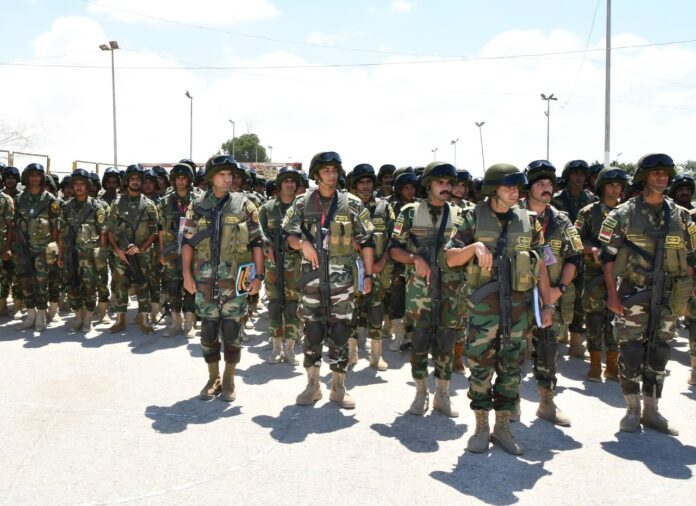

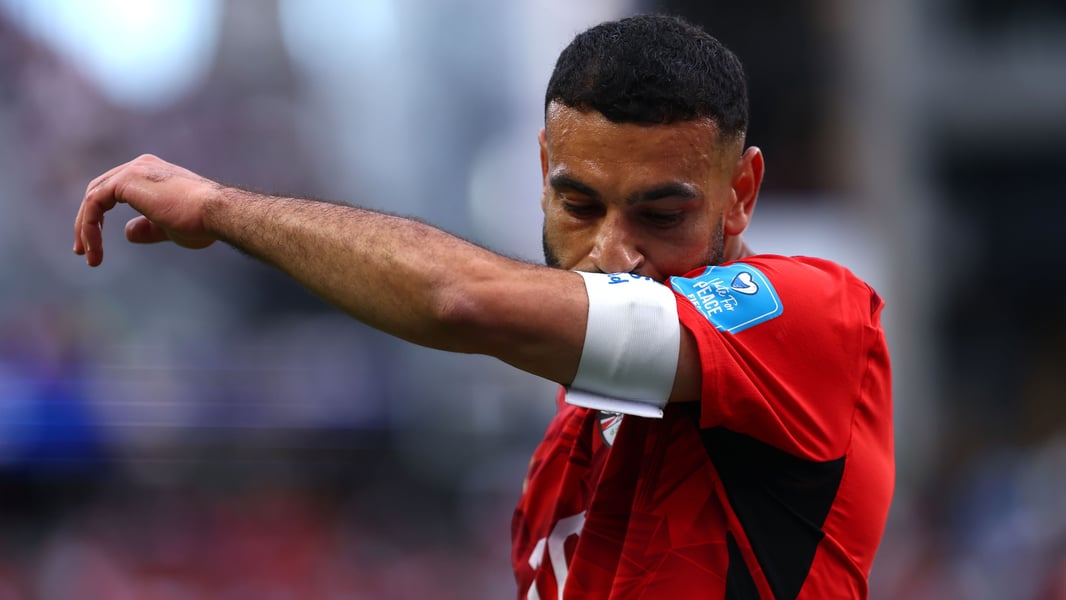
DALLAS — At some point Thursday, in a team hotel near AT&T Stadium, the question Egypt’s entire knockout campaign depends on will get an answer that nobody outside the camp has yet been given. Hossam Hassan will assess Mohamed Salah’s hamstring, speak with the medical staff, and decide whether the player who carried Egypt to their first-ever World Cup group stage win is fit to start against Australia on Friday. That decision, more than anything on either team’s training pitch this week, is what the Round of 32 in Dallas will turn on.
Salah came off in Egypt’s final group match against Iran with a bandaged leg and visible discomfort. Scans subsequently confirmed a hamstring strain. The Egyptian Football Association began treatment and issued a statement of deliberate vagueness: Salah would be assessed before the match. His coach told reporters he had spoken to the captain and that “God willing it’s a minor injury,” phrasing coaches deliver about their most important players that does not necessarily correspond to what the physiotherapy report says.
This matters beyond the obvious reason. In the group stage, a fit Salah produced a goal and two assists, more direct goal involvement than any outfield player on either of these two squads managed across their three group matches. Egypt’s broader attack, Omar Marmoush and Trézéguet aside, functions at a different ceiling when Salah is operating freely. Australia’s entire defensive plan, built around the organization of Harry Souttar and a backline that conceded only twice in the group stage, is calibrated to limit Salah’s influence. A Salah at three-quarter speed changes those calculations meaningfully. A Salah watching from the bench changes them entirely.
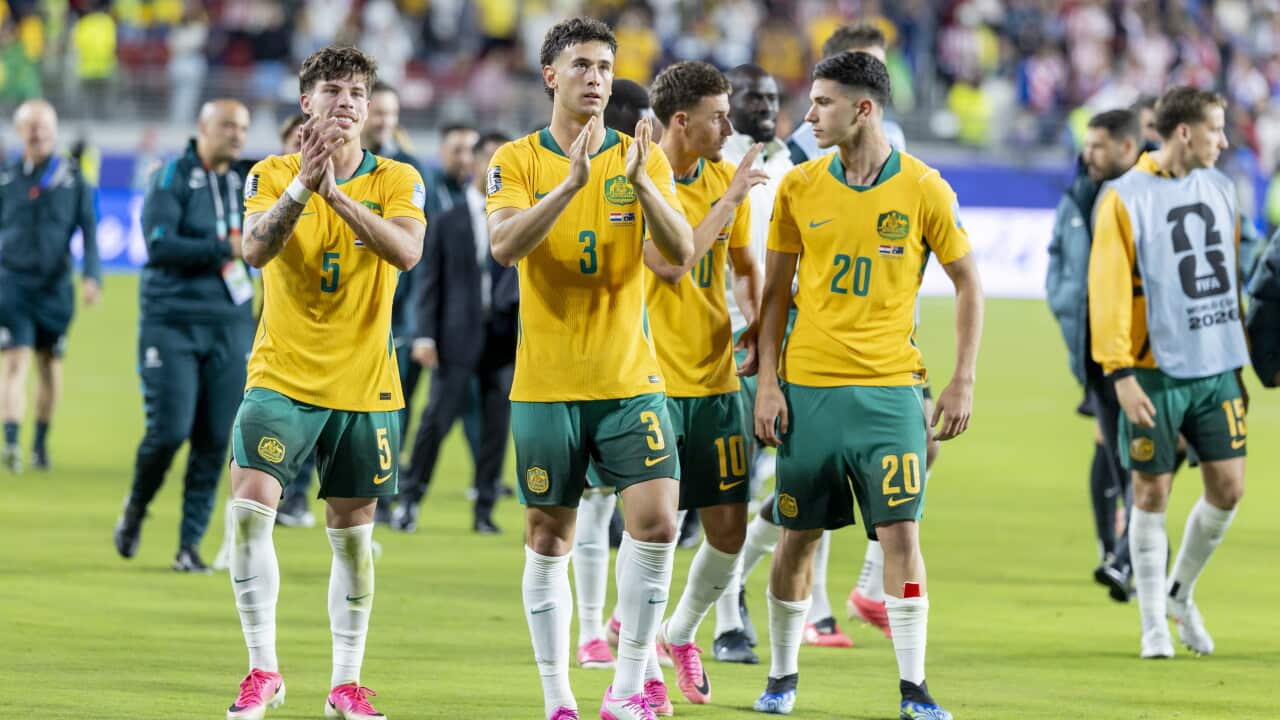
For Australia, the weight of Friday is separate from the Salah question. The Socceroos have never won a World Cup knockout match. Not once. They reached the quarterfinal in Germany in 2006, in Tim Cahill’s era, under Guus Hiddink, and were eliminated by a Fabio Grosso penalty against Italy. They lost on penalties to Argentina in Qatar in 2022. Every other World Cup appearance has ended in the group stage. Seventeen players in the current squad are making their World Cup debut at this tournament, which means there is no inherited weight and no prior generation who came to this stage and lost that these players carry into AT&T Stadium.
Egypt’s historical position is, in a specific way, even more stark. Their 1990 World Cup appearance ended in the group stage. Their 1934 appearance did too. The group stage win over New Zealand was the first World Cup victory in the country’s history. What Friday represents, regardless of Salah’s fitness, is something the Egyptian Football Association has been attempting to reach for decades. This is their maiden knockout game. Hossam Hassan’s side got here on five points, with draws against Belgium and Iran bookending that New Zealand win, managing Salah’s workload through the group phase in a way that suddenly has become relevant to what happens next.
Jackson Irvine and Connor Metcalfe have anchored Australia’s midfield throughout the tournament. Their 2-0 win over Türkiye in the opener showed the counterattacking shape that Tony Popovic has built: organized defensive pressing, quick transitions, Mathew Leckie on the right as a constant threat. The 2-0 loss to the United States showed the limitation: Australia struggles to absorb sustained high-tempo pressure when their defensive structure is compressed. But their qualification on four points, including the draw with Paraguay, confirms a team that is efficient rather than flamboyant, difficult to play through, unlikely to overwhelm anyone in an open game. Seventeen debutants making their first tournament appearance tends to produce caution over ambition when games get tight.
The parallel to what Canada faced Thursday against Morocco is partial but real: another team from the Americas bracket that advanced behind defensive organization and individual moments of quality, trying to beat a North African opponent with far more World Cup experience. Canada have Alphonso Davies to provide the creative dimension Australia lacks at that level. Whether defensive organization is enough when the opposition is disciplined is the question both matches will answer in sequence.
The winner faces either Argentina or Cabo Verde in the Round of 16. For Argentina, that fixture would be expected. For Australia or Egypt, it would represent territory neither has entered at a modern World Cup. Australia would arrive there as the first Socceroos team to win a knockout game in 20 years. Egypt would arrive as the first Egyptian team to reach the quarterfinals in the country’s football history. Neither outcome is certain. Neither is likely. The match in Dallas is the kind of fixture the tournament produces to resolve exactly that kind of question.
No lineup, no word on Salah, no certainty. All of that comes Friday morning. Everything else about this match, from the defensive setups to the historical stakes, the bracket implications, is already known. The one variable that is not is whether Egypt’s most important player will be at full speed or managing minutes. Australia is quietly hopeful about the answer. Egypt is quietly hoping they will not need to know.