
WASHINGTON — The first American child born after January 1, 2025, became eligible on Friday for a government investment account worth $1,000. Whether that child’s family can put it to meaningful use is a separate question from whether they received it.
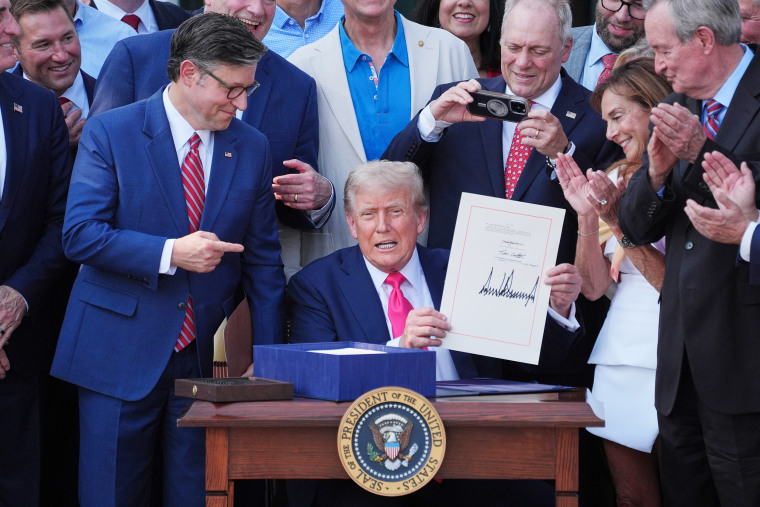
President Trump signed the Trump Accounts program into law as part of the Republican reconciliation bill that passed along party lines earlier this year. The same legislation cut Medicaid eligibility, imposed work requirements on recipients of SNAP food assistance, and directed the savings toward, among other things, a new investment vehicle for newborns that the White House describes as generational wealth-building. The July 4 rollout featured pledges from some of the wealthiest individuals in American business. The Dell family committed $6.25 billion, structured to reach children in zip codes with median household incomes below $150,000. Ray Dalio pledged $75 million. Sanjay Mehrotra, chief executive of Micron Technology, committed $250 million. JPMorgan Chase and Bank of America announced they would match employees’ Trump Account contributions by $1,000 each. Uber, Intel, IBM, Nvidia, and the restaurant chain Steak ‘n Shake signed participation agreements.
The mechanics of the accounts are as follows: every child born in the United States between January 1, 2025, and December 31, 2028, receives a one-time government deposit of $1,000, invested automatically in equity index funds. Parents may contribute up to $2,500 of pretax income annually, with a total household cap of $5,000 per year. Fees are limited to 0.10 percent of assets. The funds are locked until the beneficiary turns 18, at which point they may be withdrawn for education, the purchase of a first home, or the launch of a business.
At a 7 percent annual return, which the White House offered as an illustrative projection, a child who receives only the $1,000 government deposit and no additional contributions would hold approximately $3,570 by the age of 18. Trump described the program as “giving them ownership of America’s future.” The presentation at the White House did not address what compound growth over 18 years looks like for a child whose family lost Medicaid coverage during that same period, or the documented relationship between early-childhood health and nutrition access and the cognitive and physical development that determines how effectively an 18-year-old can deploy a brokerage account.
The contradiction at the center of the program is not subtle. The families least likely to supplement the government’s $1,000 deposit with their own annual contributions are the same families most likely to be affected by the Medicaid and SNAP cuts that financed the program’s creation. A household that loses food assistance cannot redirect those resources toward an investment account. A child without consistent healthcare access during childhood does not benefit from investment compounding in any way that offsets what health insecurity costs a developing child in the years before they can access the account.
The corporate pledges announced Friday are private capital, not additional government money. The Dell family’s $6.25 billion, the commitments from Dalio and Mehrotra, and the employer-matching programs from JPMorgan and Bank of America are all directed through the accounts toward children whose parents cannot supplement the government deposit. The mechanics of how that private capital reaches specific accounts, and the precise criteria by which children qualify for supplemental contributions, were not specified in Friday’s announcement. The Treasury Department is expected to release enrollment guidance in the coming weeks.
The Republican bill that created Trump Accounts had a contentious passage through Congress. Negotiations in the House produced weeks of gridlock over the depth of the Medicaid cuts necessary to finance the package’s spending provisions. Those disagreements were resolved by accepting cuts more extensive than some moderate Republicans had initially sought. The Trump Accounts provision was among the bill’s headline features, offered alongside broader framing of tax reduction and spending discipline as the package’s political identity.
The July 4 ceremony was deliberately constructed. Billionaires from technology and finance standing with the president on Independence Day, pledging billions to a program that gives every American newborn a market stake, carried a specific political argument: that wealth accumulation is a civic project, equity market access a democratic inheritance rather than a class-determined outcome. By early Saturday, 600,000 families had accessed the enrollment website, according to administration figures released on the night of the launch.
Children born between January 1, 2025, and the bill’s signing date are retroactively eligible. No guidance has been issued yet on how families of children already born in that window complete the enrollment process for their existing children. The Treasury Department said details would follow. Whether any state-level supplemental programs will be established to layer additional contributions on top of the federal deposit is also unclear.
What the program does not address is the structural question its design implicitly raises. A $1,000 government investment at birth, accessible at 18, is a measurable and real benefit. It is also substantially smaller than what a family loses in healthcare and nutritional support over an 18-year childhood when those supports are removed by the same legislation. The administration’s presentation of this trade as generosity toward America’s children is notable for what remains, as of Friday evening, unasked.