
WIMBLEDON – Three times this season Aryna Sabalenka had a problem in the second set and solved it. Sunday on Centre Court, when the score held level through eight service games and pushed toward a tiebreak, the problem looked familiar. The solution was not there.
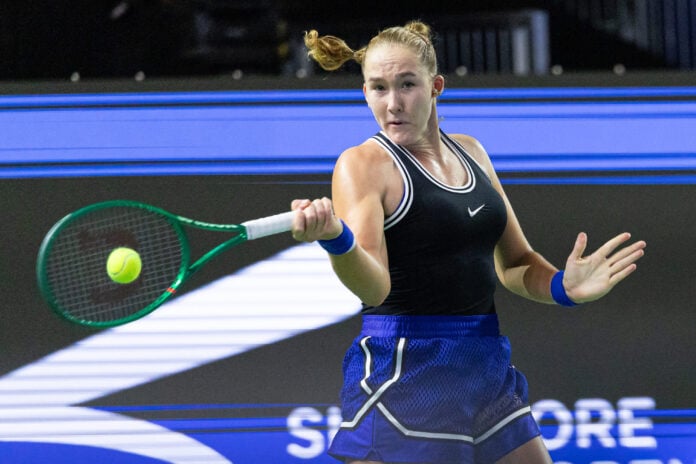
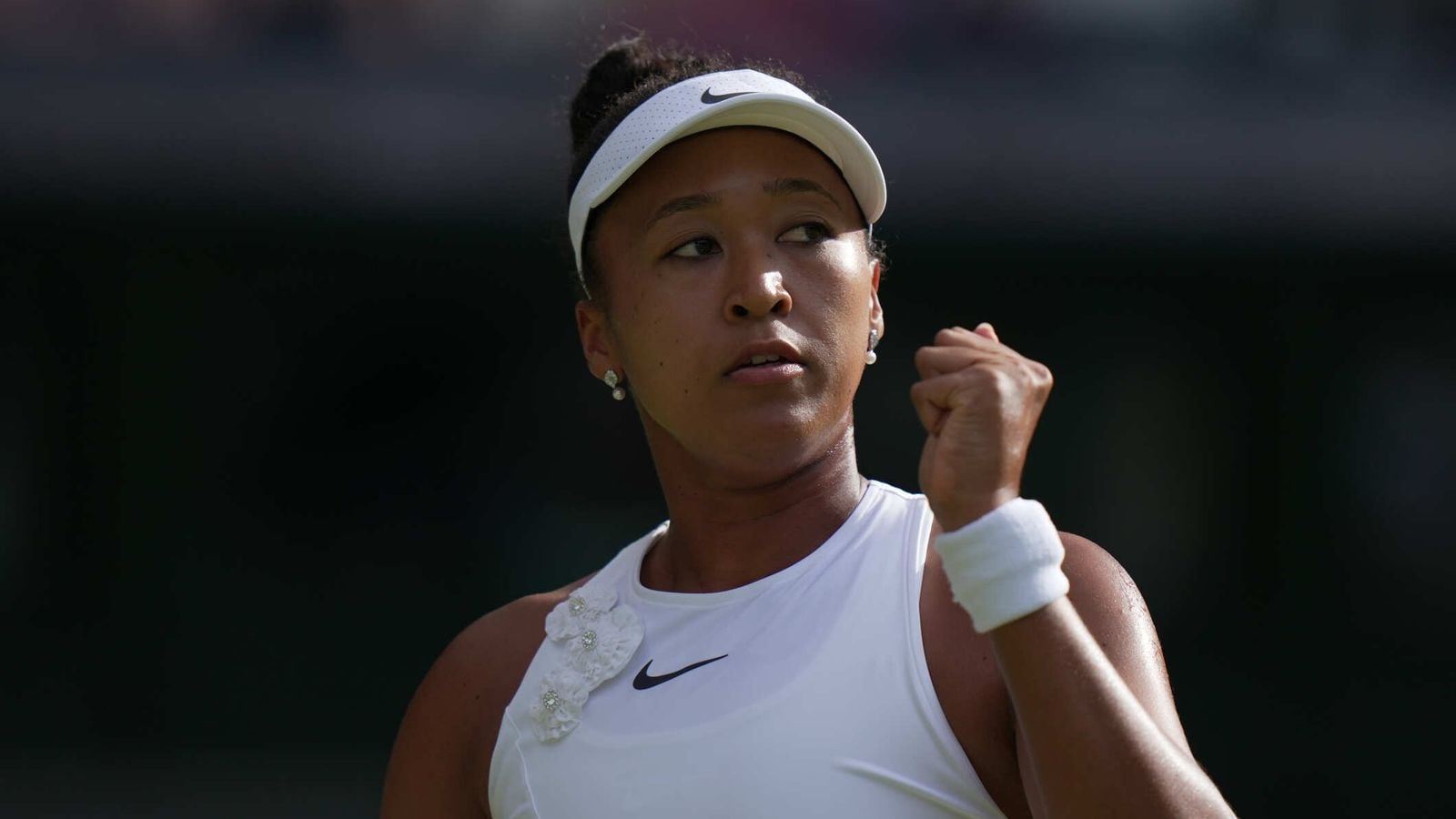
Naomi Osaka beat the world No. 1 6-2, 7-6(2) in one hour and 28 minutes, reaching her first Wimbledon quarterfinal in six appearances at the All England Club and ending what the WTA confirmed as the longest Grand Slam tiebreak winning streak in the Open era: 21 consecutive tiebreaks, a sequence Sabalenka had built without interruption since Roland Garros 2023.
The tiebreak settled things with a directness that bordered on statement-making. Osaka won it 7-2. Sabalenka double-faulted twice, pushed two forehands wide, and found no way back. “She overpowered me,” Sabalenka said. “My level was really low today, plus she was feeling her best.” The numbers from the rest of the match did not support that self-assessment as the fuller story. Sabalenka was in trouble long before those twelve points were played.
Osaka broke Sabalenka’s serve five consecutive times in the first set, a stretch of precision from the baseline that Sabalenka’s return game could not answer. The first set lasted 32 minutes and ended 6-2. On the warmest afternoon of the tournament yet, Osaka’s flat groundstrokes moved faster through the dry air, the court playing quicker than Sabalenka typically prefers. Whatever the conditions contributed, the first set looked as if Osaka had already won it in warmup.
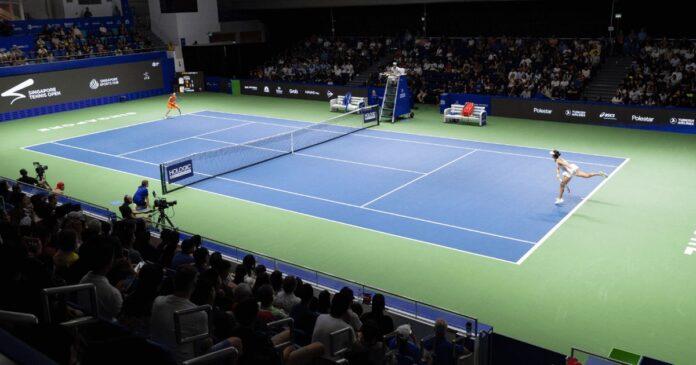
The second set straightened into competition. Both players held through eight service games, the Centre Court crowd settling into the knowledge of what the tiebreak would decide. Sabalenka had not lost one at a Grand Slam in three years. The streak had come to function less as a footnote than as a quiet assurance that in the moments which most often determine tight matches, the world No. 1 would come out the other side. Osaka had never beaten her in one.
She won it 7-2 without trailing.
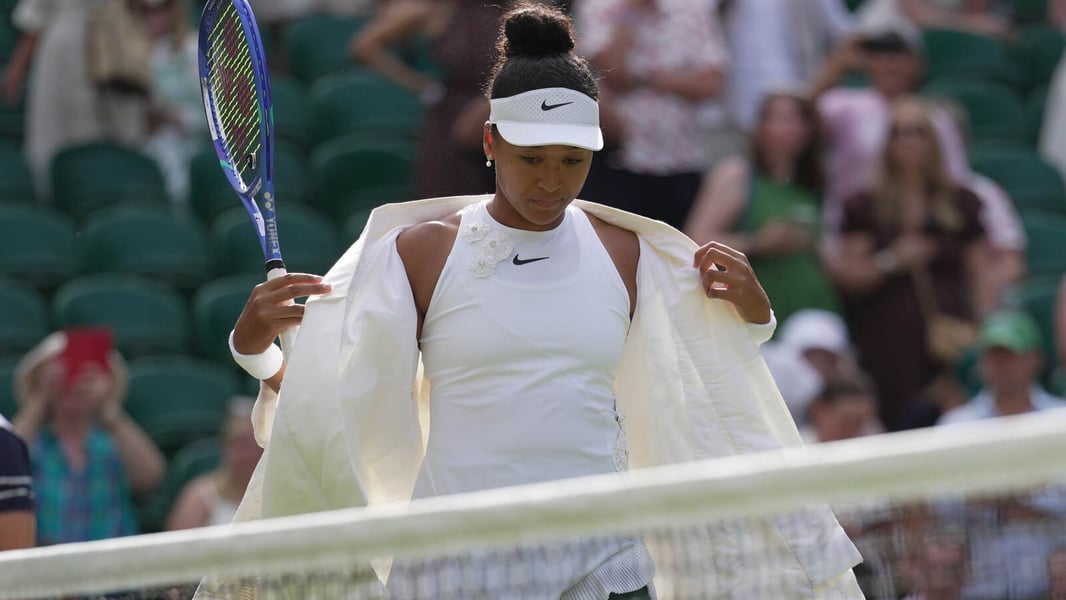
“I lost to her three times in a row,” Osaka said. “That really sucked. I wanted to have the opportunity to overturn that.” The three losses had come across Melbourne, Miami, and Roland Garros, the last of them at the French Open last month. Osaka brought that sequence into a draw at which she had never previously advanced past the third round.
What changed on grass is the part of this result that matters most for the week ahead. Osaka arrived at Wimbledon with eight wins and one loss on the surface in 2026, the best grass-court season of her career. She had reached the Bad Homburg final the week before arriving at SW19, her first grass-court final, and had not dropped a set through four matches there. The surface that once figured as her least reliable had become, by July, the one she trusted most. “For me, this court is so special,” she said of Centre Court. “This is the first match I’ve won on this court. It means a lot.”
She becomes the third Japanese woman to reach the Wimbledon singles quarterfinals in the Open era, following Kimiko Date and Ai Sugiyama. The broader context of the draw is more dramatic than that lineage. All three top seeds have been eliminated. No previous champion remains in the women’s field. Barbora Krejcikova, the defending title-holder, fell to Karolina Muchova on the same afternoon Osaka and Sabalenka played. A first-time Wimbledon women’s champion is now confirmed for the ninth consecutive year; the draw has no other outcome left.
For Sabalenka, the loss settles into a Wimbledon pattern her record at other majors does not predict. She has never won the title on grass, and her results at the All England Club have not matched the consistency she brings to hard courts and clay. After her French Open exit, she spoke publicly about moments of wanting to walk away from tennis before reconsidering, a transparency unusual in elite competition and difficult to square with a result like Sunday’s. Whether that weighs on her preparation for the grass swing is something she has not addressed and may not.
Novak Djokovic, working through his own record pursuit on the men’s side of the draw, had described this Wimbledon as a fortnight still full of unresolved questions. Osaka stepped onto Centre Court on Sunday with three unanswered losses against the same opponent and resolved one of them cleanly.
Her quarterfinal opponent is No. 10 Karolina Muchova, a player she has never defeated in a Grand Slam setting. That gap has an obvious relevance to the week ahead. ESPN reported Muchova had just eliminated Krejcikova in three sets, making Tuesday’s quarterfinal a meeting between two players who dispatched seeded opponents on the same afternoon. “It’s been a long time since I’ve had so much fun on the court,” Osaka said, “and to do it here, it really means a lot.”
What comes next, whether the quarterfinal answers the Muchova question or opens a new one, is not yet settled. The streak is. Twenty-one consecutive Grand Slam tiebreaks ended in twelve points on a warm Sunday afternoon. Sabalenka left without one, and Osaka walked into a Wimbledon quarterfinal for the first time.