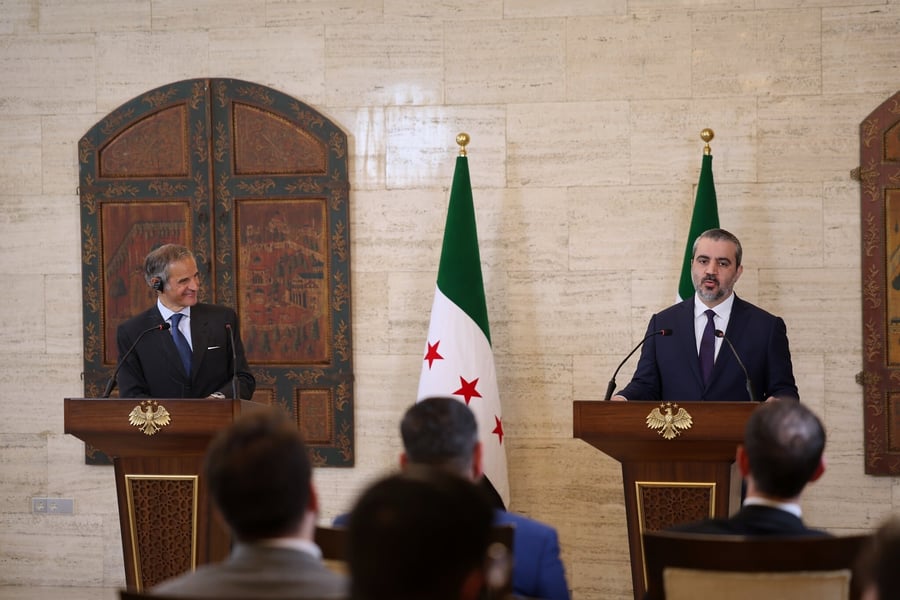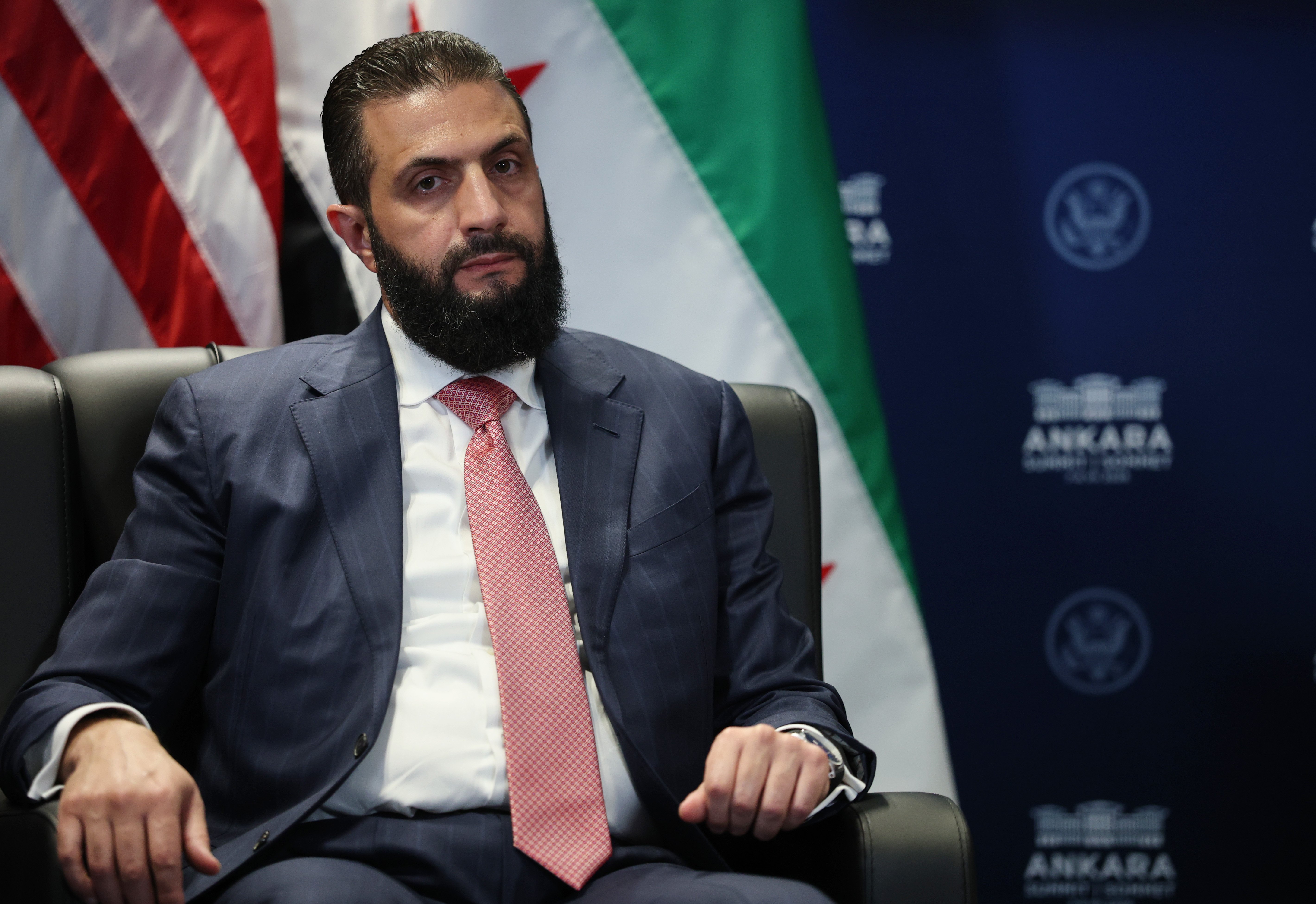

DAMASCUS – Seven months after the fall of Bashar al-Assad and more than a decade after his government’s chemical attack on Ghouta, Syria has recovered a narrow measure of international standing. The Organisation for the Prohibition of Chemical Weapons announced Thursday that it has restored Syria’s voting rights within the body, citing concrete steps taken by the government of President Ahmed al-Sharaa toward fulfilling Syria’s obligations under the Chemical Weapons Convention.
The restoration is procedurally limited but directionally significant. Syria’s rights had been suspended since 2021 – not as a symbolic sanction but as a formal institutional consequence of the previous government’s documented failure to comply with the Convention, its use of chemical agents against civilians, and its deliberate misrepresentation of its stockpile to international inspectors. For more than four years, Damascus sat at the OPCW table without a vote on matters ranging from verification protocols to accountability decisions.
Syria joined the OPCW in 2013 under unusual circumstances. The Assad government’s use of sarin in the Ghouta suburb of Damascus in August of that year killed hundreds of civilians in one of the largest chemical weapons attacks since the Cold War. The attack brought US military action within days of being authorized before a Russian-brokered diplomatic agreement redirected the crisis: Assad would declare his chemical weapons stockpile, accede to the Chemical Weapons Convention, and submit to international destruction of his declared agents.
The agreement was complied with selectively. Syria turned over the declared portion of its stockpile, which was destroyed aboard the US vessel Cape Ray in international waters in 2014. What OPCW inspectors subsequently established was that the declaration was incomplete – the Assad government had withheld significant quantities of undeclared agents, including sarin and chlorine, which it continued to use in military operations against civilian populations in subsequent years.
The OPCW’s investigation and attribution process documented these violations across the remainder of the civil war. By 2021, the organization’s membership voted to formally suspend Syria’s rights, removing Damascus from governance decisions at the moment the body was most actively investigating Syrian chemical weapons conduct.
The new Syrian government that emerged after Assad’s rapid fall in December 2024 inherited both the suspension and the underlying obligation. US sanctions on Syria were suspended in November 2025 following al-Sharaa’s visit to the White House, creating the diplomatic and economic space for Damascus to engage more openly with international institutions. At the OPCW, that engagement translated into facilitated verification activities and the beginning of destruction of identified chemical weapon remnants still present on Syrian territory.
OPCW Director-General Fernando Arias described the decision as reflecting “tangible progress achieved through continued cooperation and constructive engagement between the Technical Secretariat and the Syrian Arab Republic.” The phrasing was careful – “concrete steps” and “tangible progress” describe a trajectory, not an arrival. The OPCW has not declared Syria’s chemical weapons obligations fulfilled; it has determined that the new government is moving in the right direction.
A Damascus cafe bombing in early July that killed nine people near Syria’s Palace of Justice highlighted the security fragility that runs alongside al-Sharaa’s diplomatic progress. Syria’s reconstruction is proceeding against a backdrop of ongoing instability, and the government’s ability to cooperate with OPCW inspectors in some parts of the country does not automatically extend to areas where security conditions remain difficult.
The outstanding questions from the OPCW’s perspective remain substantial. Whether the Assad government declared the full extent of its chemical weapons program – or whether undisclosed caches exist – has not been definitively resolved. The OPCW’s investigations into specific incidents of chemical weapons use between 2013 and 2024 are ongoing. Accountability for the officials and commanders responsible for ordering those attacks has not been referred to any functioning judicial mechanism.
For Syria’s new government, the OPCW decision serves a function that extends beyond voting rights. Al-Sharaa has constructed his international legitimacy substantially through the demonstration that Syria under his administration behaves differently toward international institutions than it did under Assad. Cooperation with OPCW inspectors, where Assad obstructed them, is central to that construction. Thursday’s restoration of voting rights is the institution’s acknowledgment that the construction has produced measurable results.
Whether that acknowledgment translates into broader momentum – accelerated reconstruction financing, resumed diplomatic relations with states that broke with Damascus over the chemical weapons issue, or integration into regional economic frameworks – is not guaranteed by this decision alone. It is one data point in a rehabilitation process that remains incomplete.
The OPCW’s decision also carries implications for how the organization handles future cases of member state non-compliance. Syria’s reinstatement after a suspension of roughly five years – and following a change of government rather than compliance by the same government – creates a precedent of sorts: that a new administration willing to cooperate can recover standing its predecessor forfeited. What will not resolve from this decision: the fate of those who ordered chemical attacks under the previous government; whether Syria’s full chemical weapons program has been disclosed; and accountability for the hundreds of thousands of Syrians killed in a conflict in which chemical weapons were one component of a much larger campaign of mass violence.
Related Posts