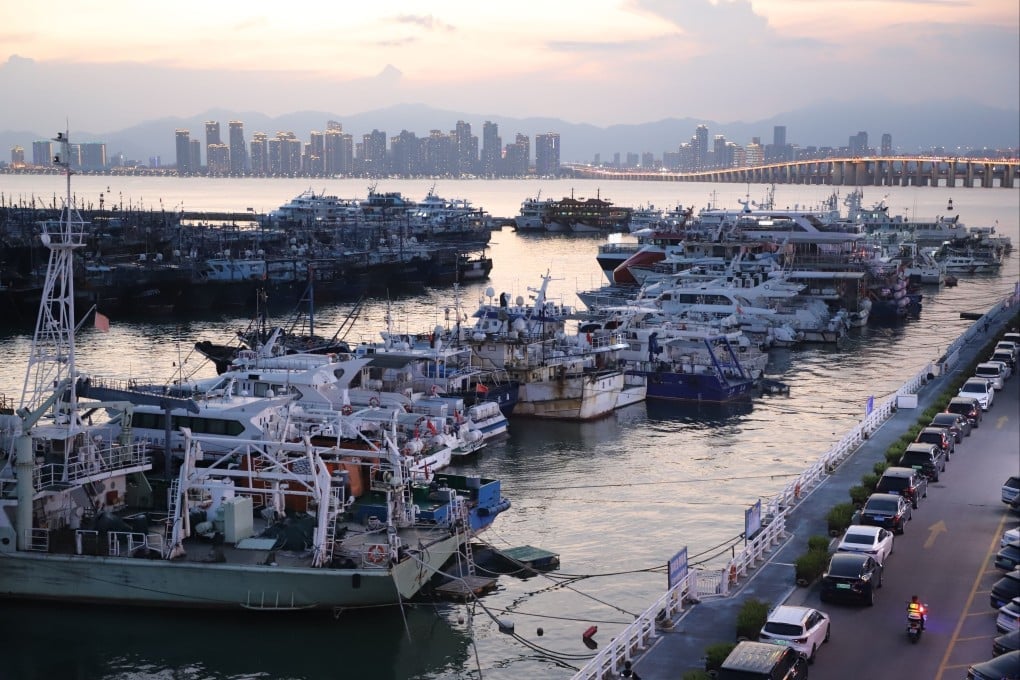

BEIJING – Typhoon Bavi regained severe typhoon strength at midnight Friday and was tracking northwest toward China’s southeastern coast, with landfall forecast between the cities of Fuqing in Fujian Province and Wenling in Zhejiang Province on Saturday evening. Flights and trains from coastal cities were cancelled as emergency response agencies activated mass evacuation protocols across the two provinces.
Wind speeds of up to 45 metres per second accompanied the storm as it moved at approximately 35 kilometres per hour. The National Meteorological Centre placed the storm’s centre roughly 540 kilometres from the Fujian-Zhejiang border as of Friday morning, with the system expected to turn north-northwestward and gradually weaken after making landfall.
Chinese Vice Premier Zhang Guoqing convened a disaster coordination meeting in Nanning on Thursday, addressing the State Flood Control and Drought Relief Headquarters. Zhang called for early warnings to be issued ahead of extreme rainfall, for defective reservoirs to be drained in advance, and for elderly residents, children, pregnant women, disabled individuals, and those in flood-prone areas to be evacuated quickly. The meeting’s directives pointed toward the broader flooding risk that typhoons typically bring to Fujian and Zhejiang’s river basins, in addition to coastal wind damage.
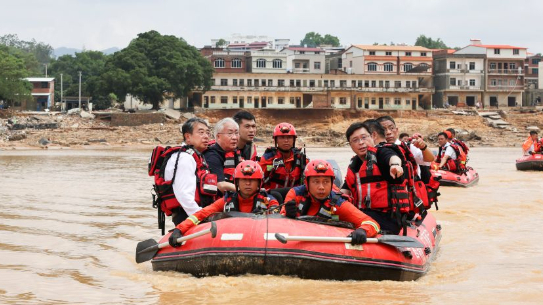
Thousands of local volunteers in Fujian and Zhejiang provinces were placed on 24-hour standby. The East China Sea Rescue Bureau positioned vessels and crews for emergency deployment. Power grid repair crews were mobilised in anticipation of outages. Emergency services and firefighters received deployment orders, and coastal fishing vessels were required to return to port.
The typhoon is the ninth named storm of the Pacific typhoon season and carries more energy than many of its predecessors in recent weeks. Bavi had weakened earlier in its path but re-intensified as elevated sea surface temperatures allowed it to gather energy before its approach toward the coast. The re-intensification caught forecasters’ attention because the storm’s wind speed at landfall now exceeds what had initially been projected, according to South China Morning Post.
China’s eastern coastline has been monitored closely for typhoon approaches since Zhejiang and Fujian provinces host significant agricultural land, industrial infrastructure, and several mid-sized cities that have grown substantially over the past two decades. The resulting mix of modern urban development and coastal terrain creates specific flood and structural vulnerability that emergency planners prioritise during typhoon seasons.
Typhoons striking Fujian and Zhejiang carry risks that extend inland because of terrain that channels storm surges into river systems and forces heavy rainfall into valleys where it accumulates faster than drainage systems can handle. Zhang’s specific instruction to pre-drain defective reservoirs reflected awareness that rainfall accumulation, not just wind, is the primary threat once a storm is onshore. Reservoirs in both provinces were inspected and some were partially drained in the days before the expected landfall.
Taiwan and Japan braced for conditions from the same system. Taiwan’s Central Weather Bureau issued warnings for outlying islands as Bavi moved through waters east of the island. The storm’s track toward the Chinese mainland reduced the direct exposure of Japan’s Ryukyu islands, though swell conditions remained elevated. China’s assertive management of adjacent waters, including disputes over the South China Sea fishing rights, creates a backdrop in which maritime emergency coordination involves overlapping jurisdictions. East China Sea Rescue Bureau vessels were nonetheless pre-positioned regardless of those tensions.
Preliminary evacuations were proceeding in Fuqing and coastal districts of Zhejiang as of Friday morning, according to provincial emergency management bureaus. The State Flood Control headquarters in Beijing was in active session. No casualty figures had been reported; the storm had not yet made landfall. Professional rescue teams were deployed in advance and positioned for immediate mobilisation once the storm came ashore.
The broader pattern of the 2026 Pacific typhoon season has produced storms of varying intensity, with some systems dissipating before reaching land and others re-intensifying in the South China Sea after initial weakening. Bavi’s ability to regain severe typhoon strength before landfall meant Chinese emergency planners were working from a more serious threat profile than they had twenty-four hours earlier. As Xinhua reported, Zhang Guoqing’s directive for officials to remain at their posts and take full personal responsibility for disaster prevention represents a standard high-alert posture that Chinese authorities deploy when conditions warrant extraordinary coordination across provincial lines.
The storm’s forecast path and the government’s pre-positioned resources suggested that Saturday evening would be the critical window. Whether Bavi maintains its severe typhoon intensity all the way to the coast or weakens before landfall remained subject to revision as the storm moved. No ceasefire or diplomatic dimension complicates this particular emergency, but the scale of China’s response, tens of thousands of volunteers, navy-adjacent rescue vessels, central government oversight, reflects the operational seriousness with which the country treats typhoon seasons that arrive, as this one did, stronger than forecast.