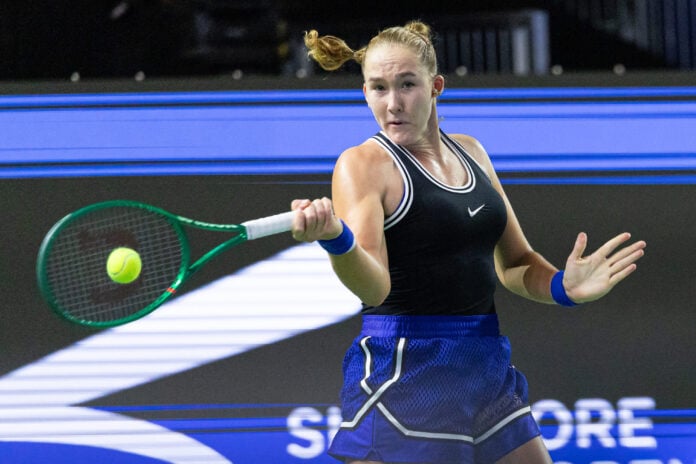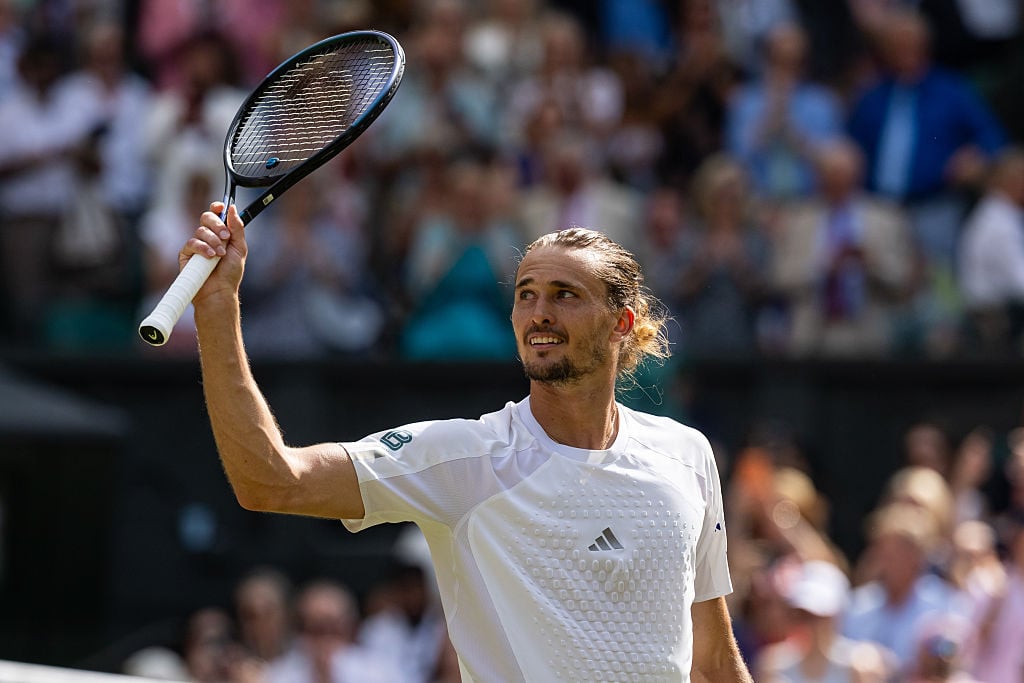

LONDON – The tiebreak score that opened Friday’s semifinal told the match’s essential story before an hour had elapsed. Arthur Fery, the 23-year-old British wildcard whose run to a Wimbledon semifinal had turned him into a national sporting story, won zero of the seven points needed to beat Alexander Zverev in the first set tiebreak. The German eventually won 7-6, 6-2, 6-4, and the three-set scoreline is gentler on Fery than the experience of Centre Court was.
Zverev will meet Jannik Sinner in Sunday’s final, a meeting that, on its records and recent form, represents the highest-quality Wimbledon men’s decider in years. The Italian world number one defeated Novak Djokovic in straight sets in his own semifinal this week, ending the seven-time champion’s bid for a 25th Grand Slam title and setting up a final between the sport’s two best players.
The achievement Zverev secured on Friday was historically significant independent of that final. He has now appeared in finals at all four major tournaments, joining only 12 other men in the professional era to have done so. He broke through in Paris this year, winning the French Open against Flavio Cobolli and ending a run of three consecutive Grand Slam final losses that had defined a decade of near-misses. Paris settled one persistent question about Zverev. A different one surfaces at Wimbledon: can he win on the surface that has historically been his most difficult?
“This Grand Slam’s always been the one I struggle with,” Zverev said after the semifinal, “and now all of a sudden, I’m in the final of Wimbledon, so I’m incredibly happy.” The candor was unusual from a player practiced in managing expectation before a final.
Fery’s match statistics tell a more complicated story than the three sets suggest. He competed through the first set, pushing Zverev to seven games before the tiebreak arrived. Then he won zero of seven tiebreak points. The gap between Zverev’s experience across five Grand Slam finals and Fery’s first major semifinal appearance became legible in the second and third sets, where the German dropped one service game across the entire afternoon. According to Al Jazeera, it was a performance that confirmed Zverev as the dominant player of the fortnight ahead of Sunday’s final.
Centre Court spent the match wanting Fery to win. The crowd was almost entirely behind the British wildcard, who was attempting something achieved once in the professional era: Goran Ivanisevic won Wimbledon as a wildcard in 2001, one of the most celebrated upsets in the tournament’s modern history. Fery was not going to match Ivanisevic’s result on Friday. He was, until the tiebreak confirmed the distance between them, making the crowd believe he might reach the final.
“I know that 99.99 percent of the stadium wanted Arthur to win, but it was still such an incredible atmosphere,” Zverev said. He added that Fery would “be a senior citizen on our tour” given the career ahead of the 23-year-old, and that his Wimbledon semifinal run signaled a sustained future in the sport rather than a single exceptional week. That reading of Fery’s trajectory is probably correct. His ability to win five matches on grass as a wildcard, through the draw’s middle rounds against opponents with far more experience on the surface, suggested a player who will be difficult to stop once he has accumulated the experience to match his technique.
Germany has been waiting for a Wimbledon men’s champion since Boris Becker and Michael Stich traded the title in the late 1980s and early 1990s. Becker won three times; Stich once. Steffi Graf won seven women’s Wimbledon titles in that same era. Zverev’s generation of German tennis has not produced a major champion until this year’s French Open, and adding Wimbledon to his Paris title within weeks would constitute a result that few predicted when the grass season began.
The obstacle is Sinner, who enters Sunday’s final having lost once at Wimbledon since turning professional and who has beaten Zverev in the biggest matches they have shared in recent seasons. Sinner’s movement on grass is exceptional. His serving improved to the point where he dropped nothing against Djokovic in the semifinal, creating pressure that requires an entire set to alleviate. Zverev will need to serve as cleanly as he did against Fery on Friday, and will need to solve Sinner’s returns in a way that their previous encounters suggest is challenging.
Zverev’s route through the Wimbledon draw included wins over seeded players who presented different technical problems on grass, confirming that his serve-and-forehand game, always better suited to clay and hard courts, has adapted sufficiently to threaten on this surface. His serve statistics this fortnight, specifically points won on first serve, have been among the highest of any player in the draw. Against Fery on Friday, he did not face a single break point in the second or third sets. Whether that level of execution holds against Sinner’s more sophisticated return game will determine most of what follows on Sunday.
Five Grand Slam finals have given Zverev the data on what he does well under this specific pressure. One title has given him the knowledge that he can close a major when it matters. Whether that converts at Wimbledon, on a surface that has historically complicated his game, against an opponent of Sinner’s quality, is what Sunday’s final will decide. The grass at the All England Club plays slightly slower than most grass courts, which should suit both players and reduce the risk of a short, serve-dominated match. What follows between the sport’s two best players on the game’s most storied court is the Wimbledon final that the tournament has been building toward all fortnight.