
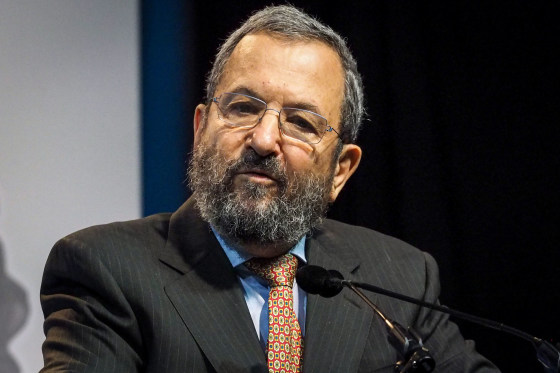
WASHINGTON — The staff had a name for it. When Ehud Barak — a former Israeli prime minister who had also served as his country’s defense minister — stayed at Jeffrey Epstein’s Manhattan apartment, Epstein’s personal assistants referred to it in emails as “Ehud’s apartment.” A June 2019 message from Barak’s wife arranging a stay, timed weeks before Epstein’s arrest on federal sex-trafficking charges, was among the three million pages of files the Justice Department released in January 2026. It was not among the most explosive things those pages contained.
The files document a relationship that deepened long after Epstein’s 2008 guilty plea for soliciting prostitution from a minor — the moment when many of his associates, publicly at least, say they ended contact. Barak did not. Emails, visitor logs, and financial records in the DOJ release trace the two men’s entanglement through shared investments, political funding, and private conversations at Epstein’s properties from roughly 2013 through 2019.
Among the material: recordings made inside Epstein’s townhouse in which Barak can be heard describing Benjamin Netanyahu — his rival and Israel’s current prime minister — as “a criminal.” Netanyahu was not in contact with Epstein and is not alleged to have any relationship with him. His office told Israeli media that Barak’s private comments to a convicted sex offender were not something the prime minister intended to respond to.
The shared investments are documented in more detail. In 2015, entities linked to Barak co-invested with Epstein’s Southern Trust company in Carbyne, an Israeli start-up then called Reporty that developed emergency-response software. The pairing was not publicly disclosed at the time. Separately, Epstein provided funding for Barak’s nonprofit, Achrayut Leumit — National Responsibility in Hebrew — which Barak had established for a political comeback effort. In a 2017 message to Epstein, Barak described the funding as necessary for “saving the Jewish state.”
The files also place a member of Barak’s inner circle inside Epstein’s residence. Yoni Koren, a former Israeli military intelligence officer who served as a senior aide to Barak, appears in the documents not as a peripheral contact but as someone who stayed in Epstein’s Manhattan apartment and whose cancer treatment was partially funded through Epstein’s financial arrangements. Koren’s appearance in the files adds a layer the former prime minister has not directly addressed: his closest professional associates were inside the same network.
Epstein also operated as a political connector for Barak. In 2018, he arranged introductions between the former prime minister and Steve Bannon, then a close adviser to Donald Trump who was attempting to deepen his engagement in Israeli political circles. Separately, correspondence in the files shows Epstein and Barak discussing what the documents describe as “gigantic” consultancy payments funneled to former British Prime Minister Tony Blair through arrangements Epstein was tracking.
The Israeli government itself appears in the files in a specific role. Security personnel were installed at Epstein’s Manhattan apartment — not by Epstein’s own team but by Israeli state authorities — to protect Barak during his stays. That arrangement, reported by Al Jazeera in February 2026, placed Israeli government resources inside a residence owned by a man who had already pleaded guilty to sex crimes against a minor. The Israeli government did not comment publicly on the reporting.
Former Foreign Minister Avigdor Liberman’s name also surfaces in the released files, in connection with an official Israeli government delegation to Ivory Coast in June 2014. Liberman has not been accused of any wrongdoing in connection with Epstein.
Barak has said he never witnessed or participated in any inappropriate conduct and that he cut all ties with Epstein in 2019 once the reinvestigation began. “I am responsible for all my actions and decisions,” he told Israeli media in February, “and there is definitely room to ask if there wasn’t room for more in-depth judgment on my part.” He has not been accused of any sexual misconduct.
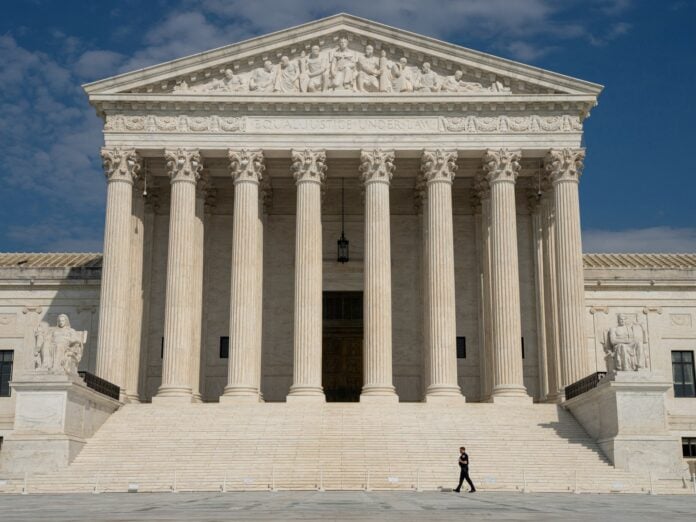
What remains legally contested is what else is in the documents. Federal Judge Emmet Sullivan ordered the Justice Department by July 2 to unredact names from eight email exchanges in the files and from a 2007 draft federal indictment against Epstein. That indictment listed co-conspirators — four of five names in that section remain blacked out. The DOJ missed its court-ordered deadline, defended every redaction, and announced it would appeal. The appeal is pending.
Netanyahu’s public assessment — that Barak’s documented entanglement with Epstein proves there was no state intelligence relationship — may be correct. What the files have not settled, for the courts or for the public, is whose names are still behind the black marks.