
ANKARA — Recep Tayyip Erdogan has been promised F-35s. Receiving them is a more complicated matter.
A Turkish government source told RIA Novosti on Monday that Ankara’s path back to the Lockheed Martin fifth-generation fighter program runs through at least two distinct pieces of American law and a mandatory 90-day Congressional review that no executive decision can shorten. The statement, issued as both governments described negotiations continuing at political and technical levels, identifies Congress, not the White House, as the decisive variable in whether Turkey actually returns to the program it was expelled from in 2019.
Political discussion around Turkey’s potential reinstatement has centered on the Countering America’s Adversaries Through Sanctions Act, or CAATSA, the legislation under which the United States imposed sanctions on Turkey’s defense procurement agency after Ankara acquired Russian S-400 air defense systems. The source said a decision to lift those sanctions “does not in itself mean Turkey’s automatic return to the F-35 program.” Restrictions on Turkish participation are also written into the National Defense Authorization Act, a separate piece of legislation requiring Congressional action independent of any executive relief from CAATSA.
The sequencing matters. Before the administration can notify Congress of its intent to lift CAATSA sanctions, it must first certify that Turkey no longer owns the S-400 systems it acquired seven years ago. That certification is not procedural. It requires Turkey to have actually disposed of, dismantled, or otherwise removed the Russian air defense equipment. Ankara has not publicly confirmed it has taken that step or plans to, and the decision carries its own implications for Turkey’s relationship with Moscow.
Once a certification is submitted, a 90-day Congressional review period begins. Provided no objection is raised, the administration would be legally cleared to lift the CAATSA sanctions and formally initiate Turkey’s return. “Only after this procedure is completed will the Trump administration be able to lift the CAATSA sanctions and officially launch the process of Turkey’s return to the F-35 program,” the source said. Even on an optimistic reading, with certification submitted this summer and no Congressional hold, formal reinstatement could not begin before late 2026.
Turkey was removed from the F-35 program in July 2019 after accepting delivery of the S-400, a Russian-built air defense system NATO allies argued was incompatible with the alliance’s technology-sharing framework. The specific concern was that Russian technicians operating the S-400 radar near F-35 flight operations could gather data on the jet’s radar signature, an intelligence dividend of direct value to Moscow. Ankara called its exclusion unjust and has sought readmission consistently since.
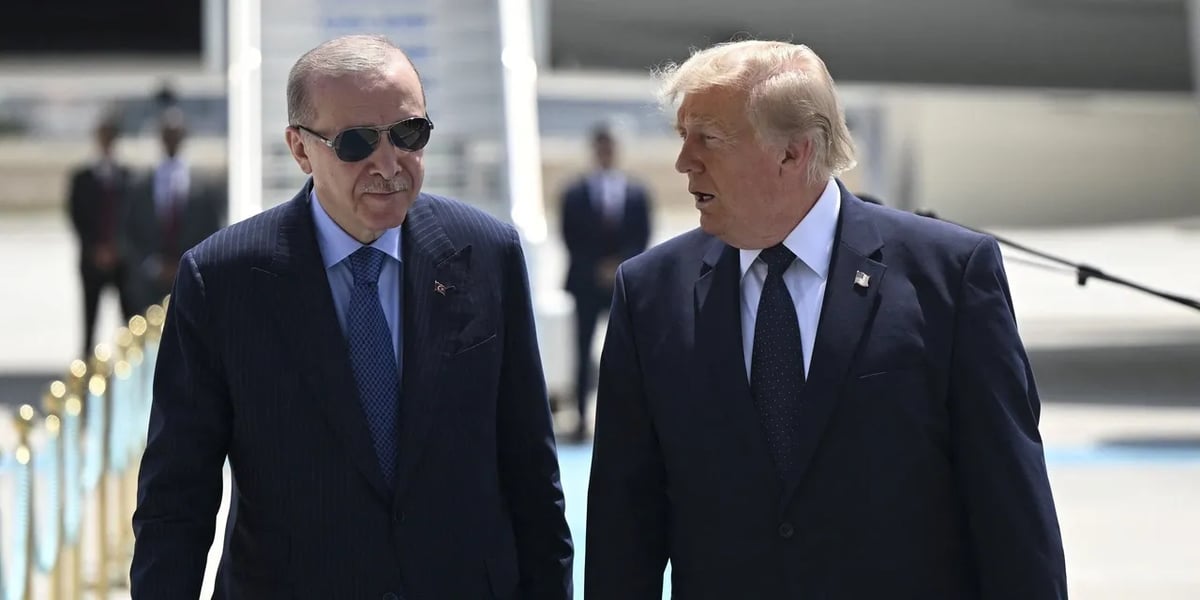
The Ankara NATO summit in early July gave the issue renewed political energy. Erdogan entered the gathering with substantial leverage, pressing Trump directly on the F-35 question as host nation and as a NATO member the alliance cannot readily lose. Days after the summit, Erdogan said publicly he had received a promise that the jets would come. Trump, asked separately, said he had not yet made up his mind about selling them to Turkey.
That gap between Erdogan’s account and Trump’s is a recurring feature of the bilateral relationship. Turkish political announcements have often run ahead of American legislative reality, and the Monday source statement reads as a corrective from within Ankara’s own government: the legal and technical groundwork has not caught up with the political statements.
The Ankara summit produced a broad set of commitments on Ukraine and defense spending, but Turkey’s bilateral demands on the F-35 were largely deferred rather than resolved. “Negotiations between Turkey and the US are continuing at the political and technical levels,” the source said. “With political will on both sides, Ankara’s return to the F-35 program remains entirely achievable, though it is not yet possible to specify a concrete timeline.”
What the statement leaves unresolved is whether Turkey has committed to disposing of the S-400 systems, the prerequisite for the NDAA certification that would start the Congressional clock. Ankara accepted the hardware in 2019 but reportedly never integrated it into active operations under sustained American pressure. Whether the systems remain in storage, have been made inoperable, or are subject to a separate negotiation with Russia has not been publicly disclosed, and no Turkish official has indicated which path Ankara intends to take.