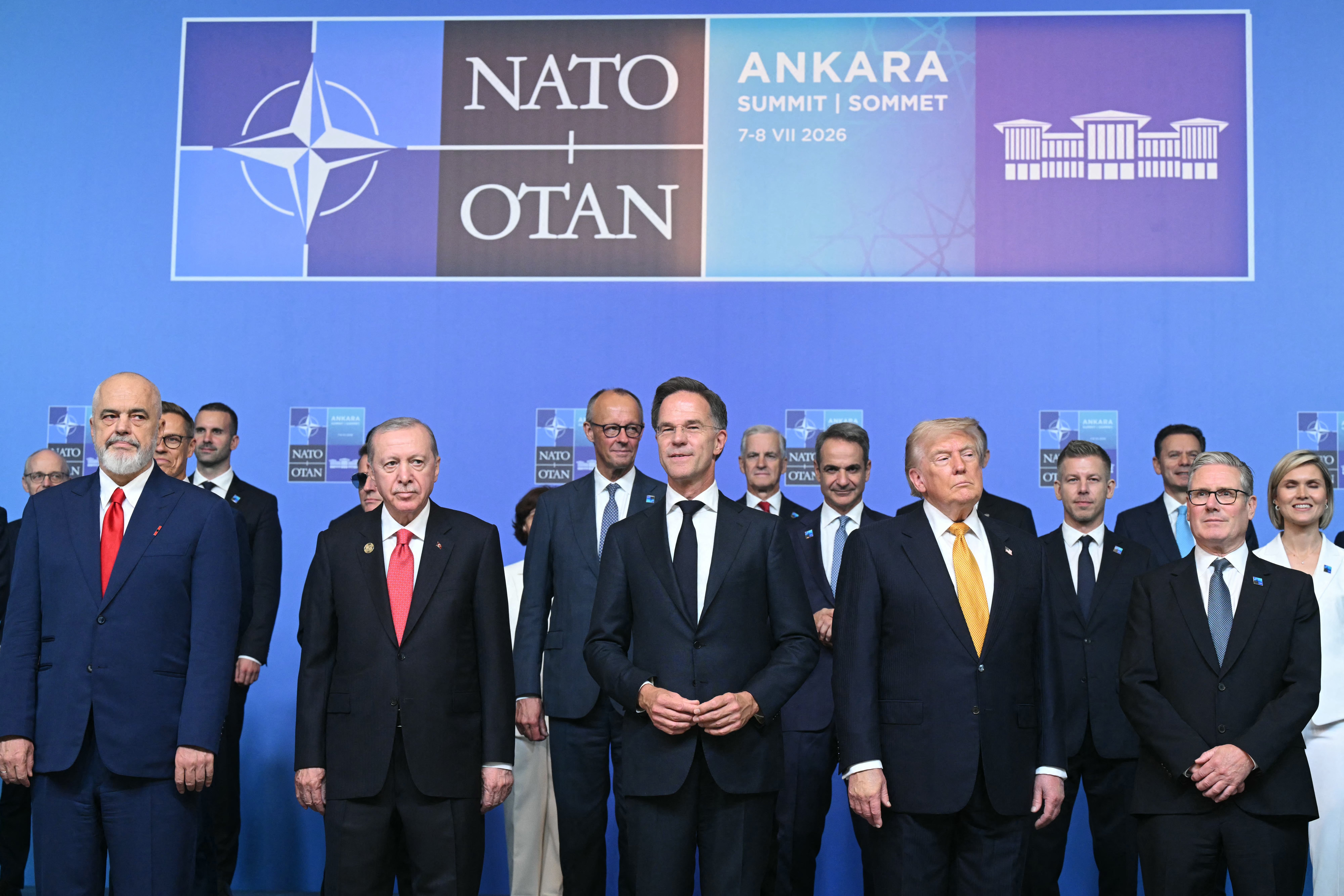

ANKARA – The North Atlantic Treaty Organization concluded two days of meetings in Ankara on Wednesday with a pledge of 70 billion euros in assistance to Ukraine, a public trade embargo against a founding member, and a declaration from the alliance’s most powerful member that the gathering had been marked by “incredible unity.” All three things are simultaneously true, which is NATO’s current condition.
Volodymyr Zelensky left Turkey having secured what his government described as the most substantial financial commitment to Ukraine in the conflict’s history. The 32-member alliance announced new procurements totaling more than $50 billion alongside the headline 70 billion euro pledge, a number that will be administered through existing NATO mechanisms and disbursed to Ukrainian armed forces over the coming months. The commitment reflects an acknowledgment that the alliance is sustaining a prolonged conflict rather than facilitating a near-term settlement, Al Jazeera reported.
Donald Trump was at the summit and called it “amazing.” Speaking to reporters before departing Ankara, the US president described the atmosphere inside the meeting room as one of “unity, like incredible love.” Twelve hours earlier, Trump had issued a public directive ordering Treasury Secretary Scott Bessent to halt all trade with Spain, including visits, describing the country as “a wasted cause” in front of NATO’s secretary general. “Spain is a wasted cause. We don’t want to do any trade business with Spain anymore,” Trump said. Bessent responded: “Yes, sir.”
The Spain directive, announced at the NATO summit venue while alliance foreign ministers were gathered elsewhere in the building, is the second time this year Trump has threatened comprehensive trade action against an ally over defense spending. The Treasury Department subsequently moved to compile a list of Spanish products that could face restrictions, though legal experts noted that a full embargo would likely require invoking emergency economic powers under the International Emergency Economic Powers Act. Spain is a European Union member, meaning its trade relations are governed by Brussels rather than through bilateral arrangements with Washington.
Only five of NATO’s 32 members are projected to meet the alliance’s 3.5 percent of GDP defense spending target this year. Trump has made burden-sharing grievances central to his relationship with NATO since his first term and raised them repeatedly through the Ankara summit. The United States contributes more than half of total NATO defense spending in absolute terms, a proportion that has remained stable despite years of European pledges to close the gap.
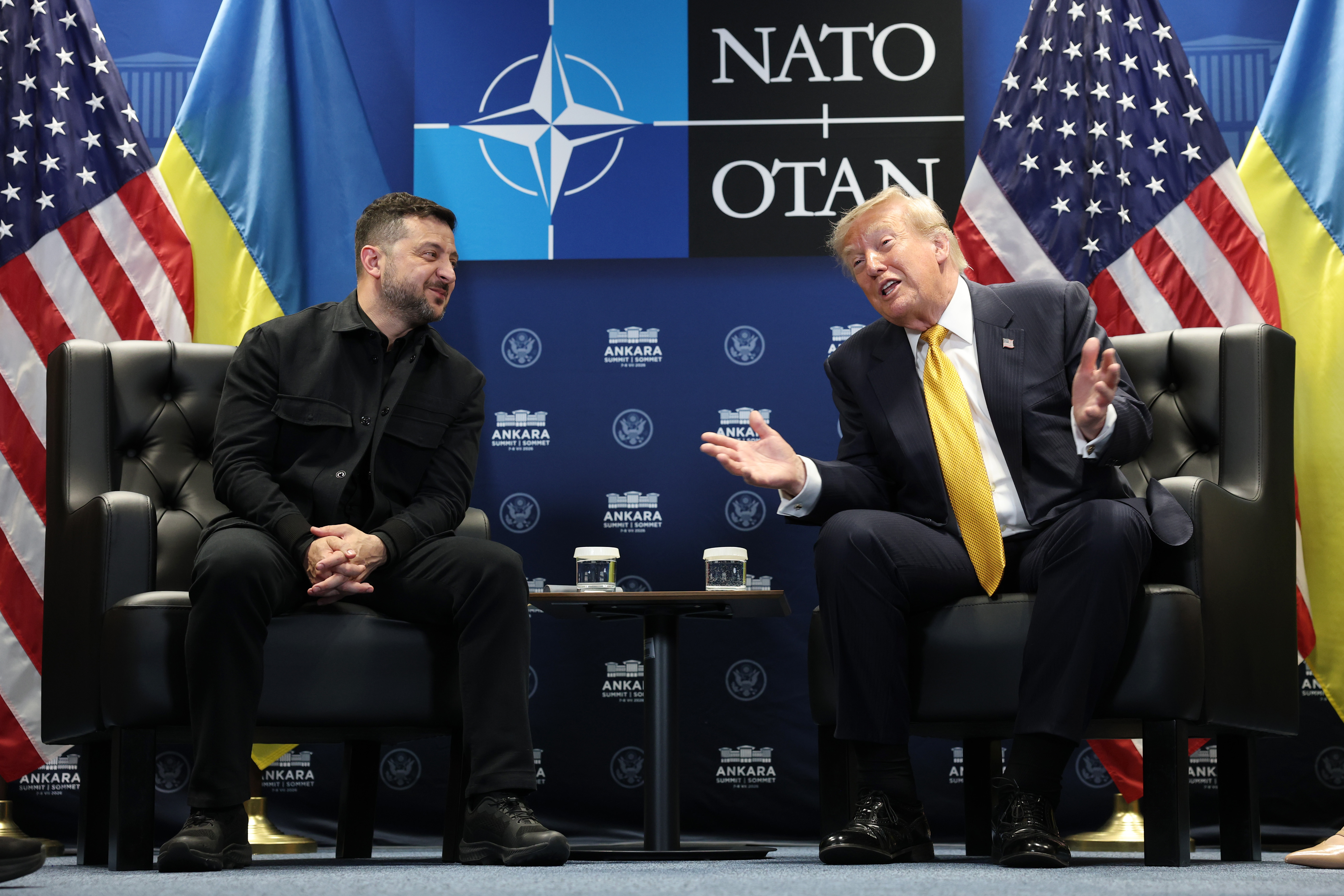
NATO Secretary General Mark Rutte, presenting the summit’s outcomes, navigated a gathering in which the US president praised Russia’s “tremendous potential” in a corridor exchange with reporters while signing a communiqué committing the alliance to Ukraine’s support. Trump’s remark that Russia has always been “a big fighting force” with “tremendous land, valuable land that could be developed,” circulated widely enough to require a response from the NATO chief. Rutte did not provide one.
The summit produced one additional outcome framed as a concession to Turkey, the host nation. Trump announced that US sanctions on Turkey would be lifted and that the sale of F-35 fighter jets to Ankara – blocked since Turkey’s 2019 purchase of Russian S-400 air defense systems – would be “reconsidered soon.” Turkish President Recep Tayyip Erdoğan, who has maintained economic relations with Russia throughout the conflict in Ukraine, was described by Western officials as having secured meaningful deliverables in exchange for hosting the summit at a moment when the alliance needed visible solidarity.
The coherence of Wednesday’s outcomes depends entirely on which frame is applied. If the frame is NATO’s commitment to Ukraine, the 70 billion euro pledge, the new arms production enterprise announced alongside it, and the unanimous communiqué all speak for themselves. If the frame is the alliance’s internal condition – one member under trade embargo, another having its sanctions lifted in exchange for hosting privileges, a third whose president praised Russia’s military potential while signing documents pledging support for Ukraine – the picture is different.
Alliance analysts have noted that Trump’s unpredictability does not eliminate the alliance’s functional commitments but consistently complicates the signaling on which collective defense depends. What adversaries read from a summit is not only the communiqué but the conditions under which it was produced. Whether the Ankara summit’s outcomes, read from that angle, project strength or underscore contradiction is a question the alliance left unanswered. The next NATO summit is scheduled for 2027.