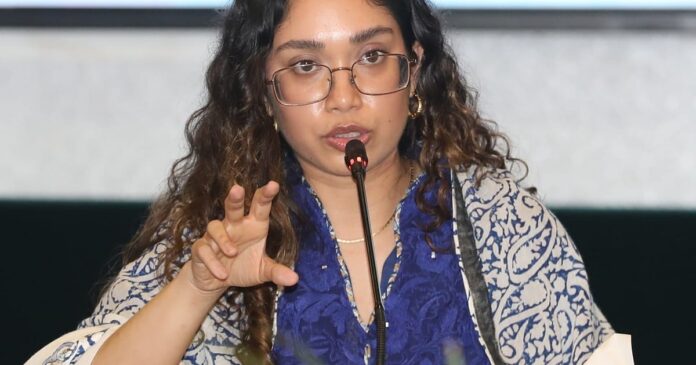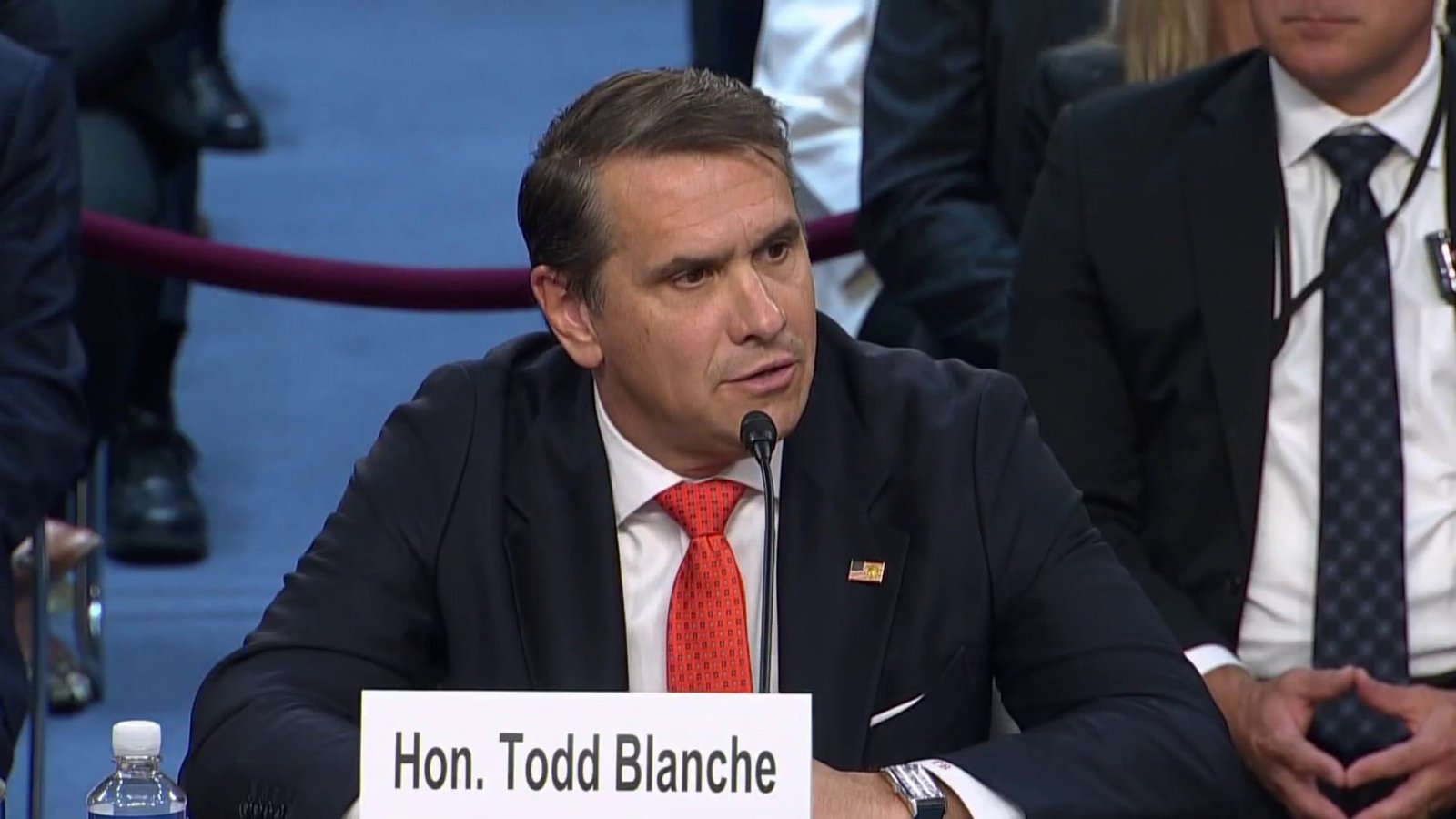

WASHINGTON – An Epstein survivor stepped into the Senate hearing room Thursday to tell lawmakers what acting Attorney General Todd Blanche could not bring himself to say in person. Dani Bensky, who has spent years demanding accountability from a Justice Department that mishandled documents bearing the names and details of victims, was among five witnesses testifying at the second day of Blanche’s Senate Judiciary Committee confirmation hearing, a day shaped by the people his department had already failed.
Blanche spent nine hours in the witness chair Wednesday answering for what many senators called the defining tension of his nomination: whether a man who spent years as Trump’s personal criminal defense lawyer can now run the country’s top law enforcement agency without one eye always on his former client. His answer, “I’m not a yes man,” satisfied few and left the vote count uncertain heading into Thursday.
The math is unforgiving. The death of Senator Lindsey Graham last weekend, his committee seat draped in black fabric, left Republicans with only eleven votes on the panel. A single defection kills Blanche’s nomination at the committee stage. Senator John Cornyn of Texas told reporters Wednesday he was “not there yet.” Senator Thom Tillis of North Carolina, who had been expected to support Blanche, said he needed “absolute certainty” that the administration’s $1.8 billion anti-weaponization fund, a Trump initiative that critics call legally dubious, was truly finished.
Blanche declared it “dead” at least a dozen times during Wednesday’s session, once stating under oath: “I’m under oath today, and I’ve said it’s dead repeatedly.” But he declined to provide that commitment in writing, calling a written declaration “immaterial.” That refusal annoyed even Republicans who want to confirm him.
The fund’s origins run through Trump’s settlement with the Internal Revenue Service, a deal a federal judge recently called an attempt to “earmark billions” improperly. Senator Adam Schiff pressed Blanche on immunity language in the agreement that described Trump as “FOREVER BARRED and PRECLUDED” from tax investigations. Blanche defended it as “typical” settlement language. The judge who reviewed the deal disagreed so strongly she referred Blanche to a state bar association for potential disciplinary proceedings.
Senators pressed hardest on the Epstein files. Blanche acknowledged “mistakes that were made” during the redaction process, apologizing to survivors whose personal information appeared in documents released without sufficient review. The acknowledgment marked a departure from the department’s prior insistence that it had been “extraordinarily transparent.” Around one percent of files were affected, he said. Survivors said that one percent was them.
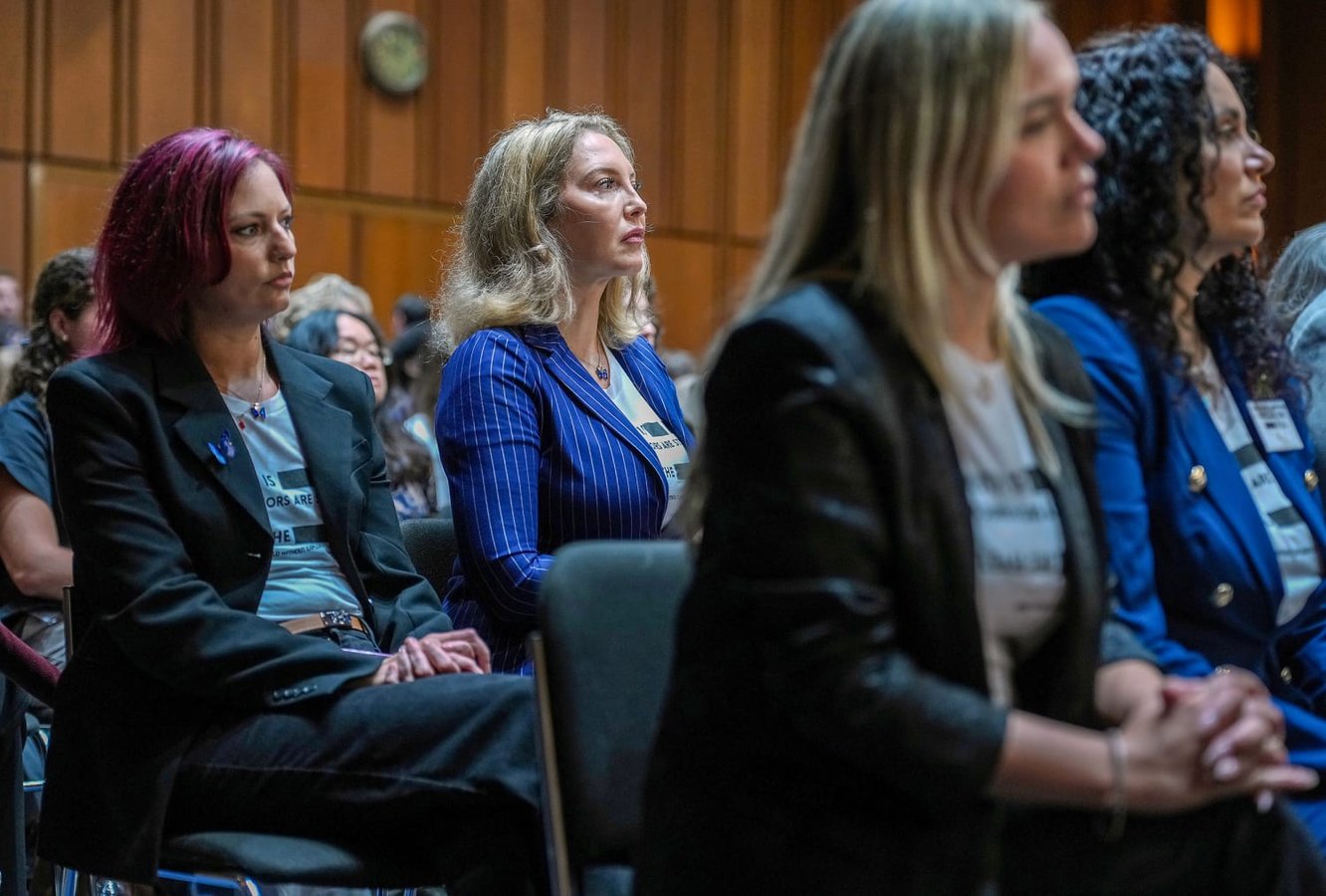
When Senator Richard Durbin of Illinois demanded Blanche personally meet with ten victims within thirty days, Blanche offered DOJ staff as a substitute. Senator Cory Booker of New Jersey called that excuse “utter nonsense,” noting that victims’ attorneys did not legally prevent a meeting. Durbin accused Blanche of “dancing on the head of a pin,” according to CBS News.
The nominee also defended the Justice Department’s decision to subpoena New York Times journalists as “material witnesses” to classified leaks, a move that drew First Amendment alarms from Senator Peter Welch of Vermont. Press freedom groups called the subpoenas unprecedented in their scope. Blanche declined to describe them as an abuse of power.
On Kash Patel, the FBI director whose management has drawn congressional concern, Blanche expressed “full faith.” On the Capitol riot pardons, he distanced himself from the decisions, saying the DOJ was “legally obligated” to dismiss cases after presidential clemency was issued. On the IRS investigation that once shadowed Trump’s finances, he maintained it was appropriately closed.
The hearing’s second day brought a different register. Former Attorney General John Ashcroft appeared as a character witness, lending Blanche institutional credibility from the Republican side. But it was Elizabeth Oyer, the pardon attorney Blanche fired earlier this year, who cast the sharpest shadow over the proceedings. Oyer has said publicly that she was dismissed for opposing a decision to grant clemency in a case she believed did not merit it. Her testimony before the committee offered a rare inside account of how Blanche exercised, or declined to exercise, independent judgment inside the department.
Blanche’s confirmation now rests on senators who must weigh a straightforward proposition: whether a man whose professional instinct for years was to protect one client can credibly lead a department that answers to the law rather than the president who appointed him. Senator Durbin, in the sharpest summary of the week, said the arrangement “casts a shadow” over any idea of departmental independence. NBC News reported that Blanche’s confirmation remains far from guaranteed as the committee vote approaches.
Whether the Senate believes Blanche may depend on what Cornyn and Tillis decide to do with the question that kept circling back across two days of testimony: if the president asks you to cross a line, what do you do? Blanche’s answer, “I would resign,” has been given before by nominees who later did not.