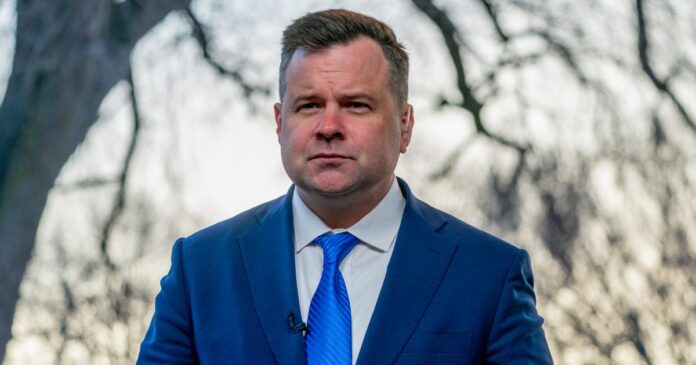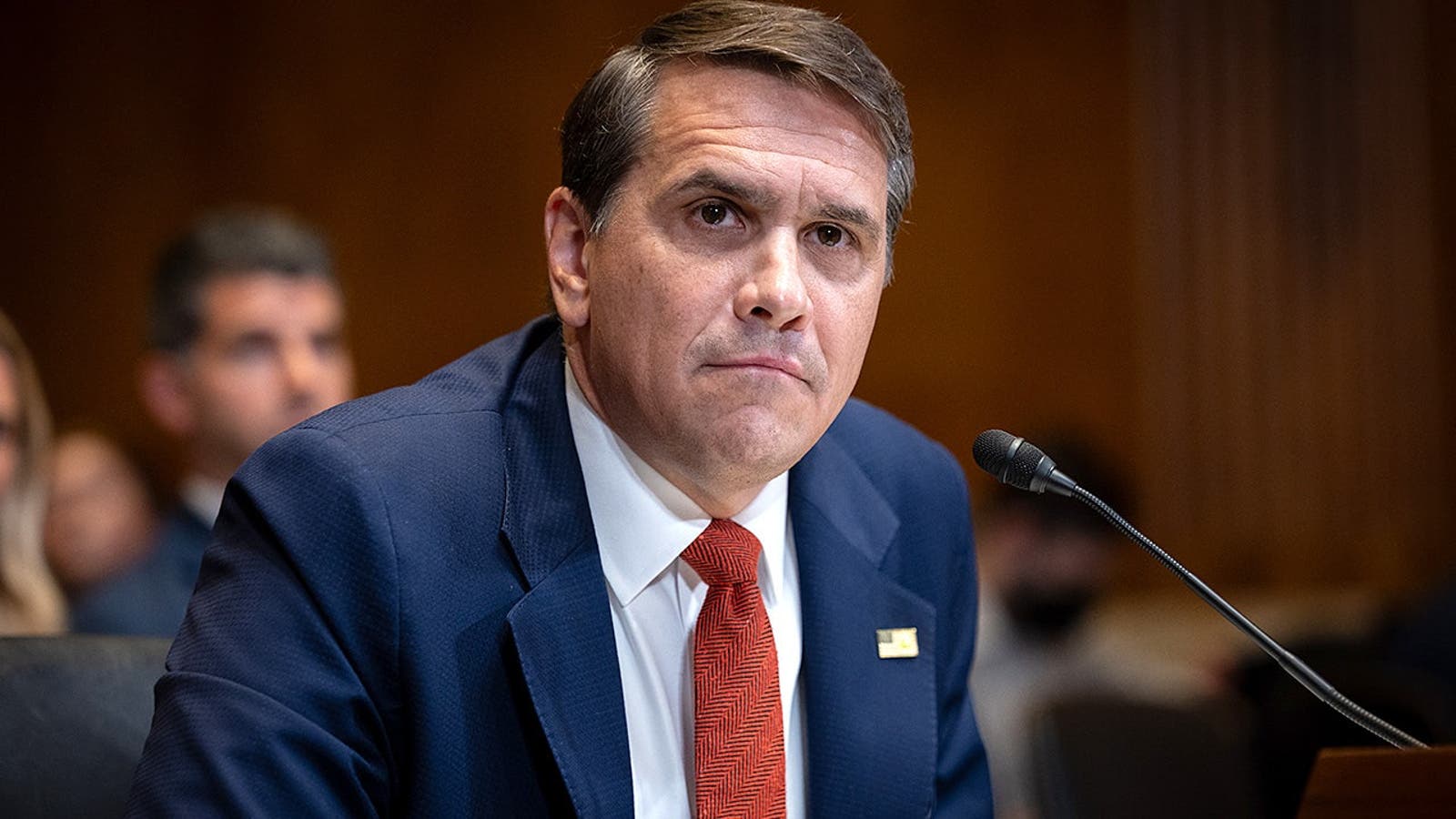

WASHINGTON — The defining feature of Donald Trump’s Justice Department has been that the man running it used to be the president’s defense lawyer. Trump now wants to make that arrangement permanent. He has formally nominated Todd Blanche, the attorney who sat beside him through his Manhattan criminal trial, to serve as attorney general, the nation’s chief law-enforcement officer. Blanche has already been doing the job in an acting capacity for months. The nomination simply asks the Senate to ratify a reality that is already in place: the Justice Department run, at the very top, by a member of the president’s own legal team.
The path here has been quick and pointed. As CNN reported, Trump formally sent Blanche’s nomination to the Senate this month, elevating his former personal lawyer from acting attorney general to the permanent post. As Fox News noted, Blanche was confirmed as deputy attorney general in 2025 on a party-line vote, became the department’s day-to-day leader, and stepped into the acting role earlier this year after Trump removed Pam Bondi. At each stage his defining qualification has been less a record in public law enforcement than a record of representing Donald Trump.
It is worth stating plainly that Blanche is not unqualified in the way some recent picks have been. He was a federal prosecutor before he was Trump’s defense attorney, and the Senate has already confirmed him once, to the department’s number-two job. This is not a case of a total novice handed an agency he cannot run. It is something subtler and, for the independence of the Justice Department, more corrosive: a capable lawyer whose most recent and most relevant client was the president he would now serve as the country’s top prosecutor.
The nomination heads into the Senate trailing live controversy, not historical baggage. As Al Jazeera reported, the choice is teed up for a heated confirmation fight, and two issues in particular will shadow it. The first is the administration’s proposed $1.8 billion “anti-weaponization” fund, a plan to compensate people who say they were wrongly prosecuted, a category that conspicuously includes Trump allies. The Eastern Herald has followed that program from Blanche’s grilling before House appropriators to its present status: a federal judge has indefinitely blocked the fund, leaving the nominee to defend a signature initiative the courts have frozen.
The second shadow is Jeffrey Epstein. The department’s handling of the Epstein files has been a running sore for the administration, and Blanche personally inserted himself into it, sitting for an interview with Ghislaine Maxwell, Epstein’s convicted co-conspirator. Senators across the spectrum will want to know what that meeting was for and what came of it. For a nominee whose central vulnerability is the appearance that he serves the president’s interests rather than the public’s, a private audience with Maxwell is not the kind of detail that fades quietly into the background.

None of this is happening in isolation, and that is what makes it more than a single contested nomination. The same instinct produced Trump’s choice of another of his personal lawyers, James McDonald, to run the Southern District of New York, the office that prosecutes public corruption. Read together, the two picks describe a strategy rather than a coincidence: the lawyers who defended the president are being installed at the head of the institutions that decide whom the government investigates and charges. Confirming Blanche would place that arrangement at the very top of federal law enforcement.
What that means in practice is visible in how the department has already behaved under his direction, from the decision to point federal power at the president’s critics, as when the FBI raided a voter-registration group in Ohio, to the framing of an entire compensation fund around the idea that the administration’s allies were the real victims of prosecution. A permanent attorney general confirmed on those terms would not be a check on any of it. He would be its author.
The Senate is the last point at which any of this is still an open question. Blanche will likely have the votes if Republicans hold together, as they did when they confirmed him as deputy. But the hearing is where the conflict gets stated out loud, where senators decide whether they are comfortable handing the prosecutorial power of the United States to the president’s own defense attorney, with a blocked payout fund and an Epstein interview on the record. The vote will be close to a formality if the majority wants it to be. The question it answers will not be.