
LAS VEGAS – Sixty-nine seconds.
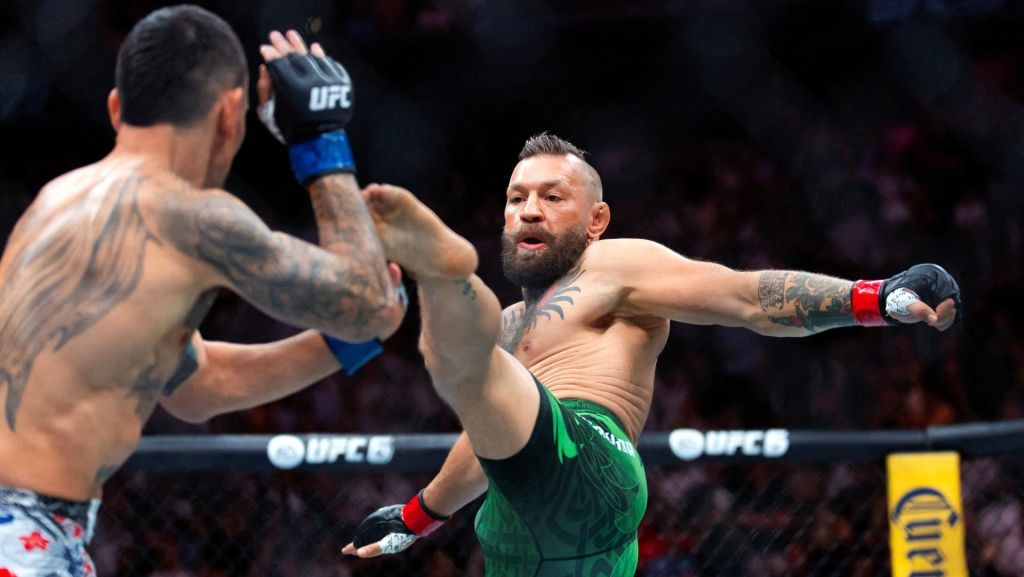
That was how long it took for Conor McGregor’s right knee to give out at T-Mobile Arena on July 11, halting a fight with Max Holloway almost before it began and sending UFC 329’s main event to an abrupt, surgically consequential end. McGregor confirmed in the hours after that he would need surgery. A return date was not given.
The Paramount+ figures released Thursday, six days after the fight, told a story the arena itself could not contain. Across the United States and Latin America, 15.9 million viewers watched UFC 329, according to Yahoo Sports, with peak concurrent streams hitting 8.3 million, a record for the platform’s exclusively streamed events. T-Mobile Arena generated $25 million at the gate, the highest in UFC history, passing the $21.8 million mark set at the Las Vegas Sphere during UFC 306.
What the numbers confirmed is something the sport’s promoters have known for more than a decade: McGregor’s commercial value exists at a register entirely separate from his fighting record. No other active UFC fighter generates eight million concurrent streams on a platform that carries every card. The event finished in less than a minute and a quarter. It did not matter.
McGregor had not competed since July 2021, when Dustin Poirier broke his ankle during their third meeting at UFC 264 at this same venue. The years that followed were crowded with rehabilitation, legal proceedings in Ireland and the United States, and a cycle of training camp announcements followed by postponements. When the UFC confirmed McGregor would meet Max Holloway at UFC 329, skepticism came standard, the Irishman having become, for many observers, a promotional asset rather than a competitive one, his value measured in press conferences and streaming figures rather than in octagon performance.
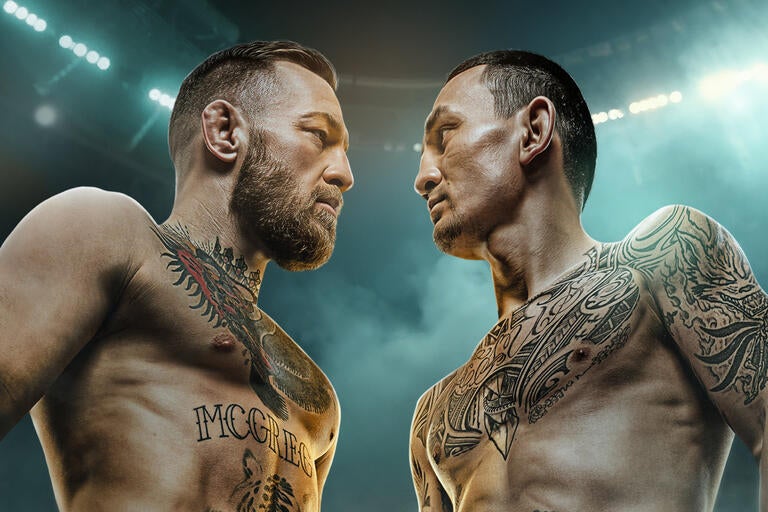
Holloway arrived at UFC 329 as BMF title holder and as the fighter the sport had slowly reframed as its most complete striker. His jab found McGregor within seconds of the opening bell, and it was in the first exchange that McGregor’s right knee buckled. The stoppage, classified as a technical knockout by injury, handed Holloway the victory by a mechanism that left the rematch question neither open nor closed. McGregor did not lose because Holloway finished him in any conventional sense. He lost because his body did.
Eight fights on the undercard finished in the opening five minutes, setting an event record for first-round finishes. The UFC’s guaranteed $25,000 bonus for submissions and knockouts pushed the supporting cast to attack early and often. Viewers who came for McGregor received hours of undercard action before the headliner, and the 6.5 million average audience per minute across the full card suggested engagement that extended well beyond the two minutes the main event occupied on the broadcast clock.
The Paramount deal, a seven-year, $7.7 billion contract that moved UFC fights off traditional pay-per-view and into a subscription streaming model, entered its second year on Saturday. A previous event, the Freedom 250 card held in Washington in a setting shaped by its proximity to the White House, had drawn 17 million total viewers, the platform’s previous high watermark. That number carried a political dimension that expanded its audience beyond the core MMA following. UFC 329 drew fewer total viewers while setting the peak concurrent record: the 8.3 million simultaneous streams at the time of the main event suggested that the McGregor audience arrived fast and concentrated rather than accumulating steadily across a broadcast evening.
Whether that audience returns for a card without McGregor’s name is a question Paramount will not have data to answer until UFC 330 airs. UFC 324, the first event under the Paramount deal, had reached 5.9 million peak concurrent streams. The movement from 5.9 million to 8.3 million across the deal’s first calendar year represents the platform’s most concrete argument for continued investment in live combat sports.
At $25 million, the gate at T-Mobile Arena needs less interpretation. That figure became the highest single-event gate in UFC history, surpassing the $21.8 million the Sphere generated during UFC 306 despite that venue’s premium pricing and immersive production. Tickets in ringside sections had been priced to McGregor demand months in advance. The demand held, and the fight joined a week in which sports records fell across disciplines: Pelé’s 1958 World Cup jersey set an auction record of $4.9 million at Sotheby’s just days before, each landmark a function of scarcity and recognition that no broadcast schedule can manufacture.
McGregor departed Las Vegas for surgery. Holloway held the BMF title and a reasonable case for a lightweight championship fight, a position that had been available to him before the McGregor opportunity arrived on the card. What the coming months hold for either fighter was not clear on the night of the fight, and it remained unclear six days later when Paramount released the numbers.
What Paramount’s data made clear on Thursday was simpler: 8.3 million people were watching at the moment the referee moved in to stop the fight. It lasted sixty-nine seconds. Very few events in sports, across any format or platform, move concurrent audience figures like that, and fewer still do it for a fighter whose body seems determined to answer every question his name raises by producing a new one before the round ends.
Related Posts