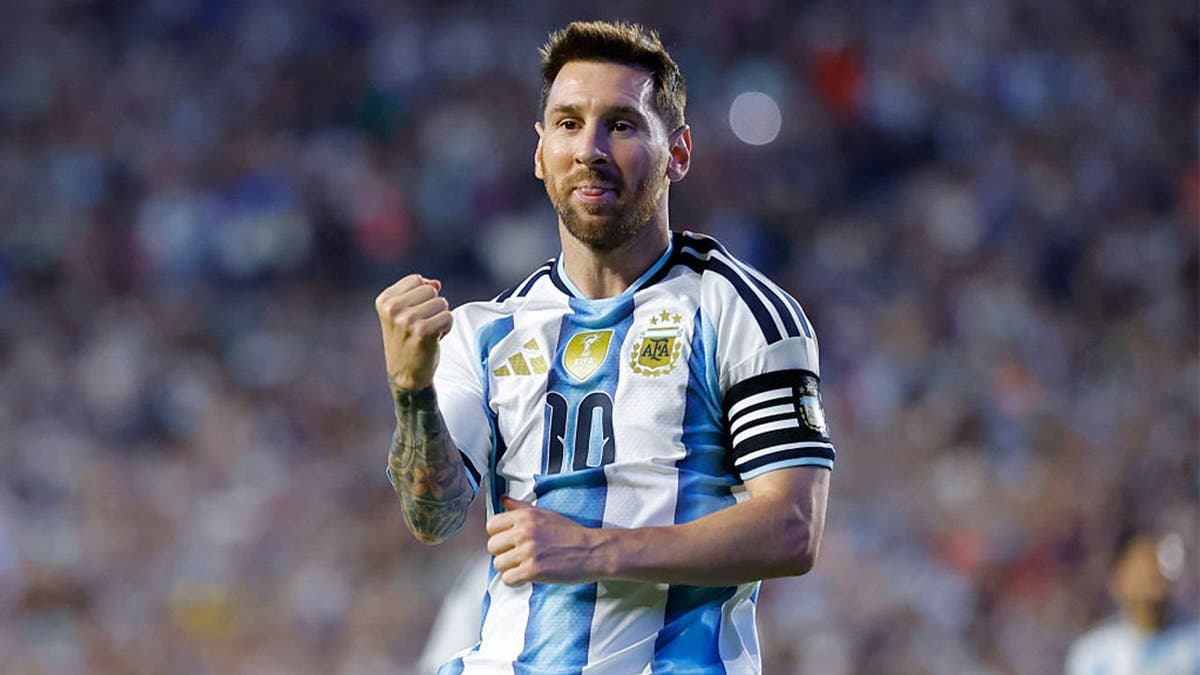

EAST RUTHERFORD, N.J. – In 2007, a UNICEF photographer arranged a scene at Barcelona’s Camp Nou in which Lionel Messi, then 20 years old, was photographed alongside a five-month-old infant named Lamine Yamal. The photographer later called it “a true miracle of destiny.” On Sunday at MetLife Stadium, with 80,000 people watching and 50,000 more expected in Central Park, the meaning of that photograph arrives at its conclusion.
Yamal, 19, lines up for Spain in the 2026 FIFA World Cup Final. Messi, 39, wears Argentina’s blue and white for what may be the last match of his international career. The result of that encounter carries implications that no number can fully contain. Argentina’s bid to become the third nation in history to win back-to-back World Cups, Spain’s attempt to extend an unbeaten run that now spans 37 matches, and a question that every Messi performance at this tournament has restated about whether a player whose records have long outlasted his contemporaries can find one more decisive moment in a stadium built for American football.
Argentina has scored eight goals after the 85th minute across the tournament, more than any team in World Cup history. Messi has produced eight goals and eight assists in this competition, bringing his all-time career mark to 21 goals and 12 assists in World Cup play, according to FIFA, the highest totals on record. He orchestrated a 3-2 comeback against Egypt in the quarterfinals after Argentina trailed 2-0, and provided two assists against England in the semifinals. Spain, his opponent Sunday, has conceded one goal in seven games and completed 37 consecutive matches without defeat.
The secondary market has responded to those numbers. The average resale price for Sunday’s final reached $11,327 this week, the highest ever recorded for any United States sporting event, above the Super Bowl and the NBA Finals at their most expensive. Eighty thousand people hold tickets; as many as 50,000 are expected at a fan zone in Central Park. Pelé’s 1958 World Cup final shirt sold at Sotheby’s this week for $4.9 million, the highest price ever paid for his memorabilia, a coincidence that frames the economic weight the game now places on its own history.
Spain’s Mikel Merino, the 30-year-old Arsenal midfielder who scored decisive goals as a substitute against Portugal in the last 16 and Belgium in the quarterfinals, offered Friday’s most precise tactical assessment. “Tackling Messi is a huge challenge, an incredible motivation for me and the whole team,” Merino told reporters. His answer to how Spain plans to limit that challenge: move the ball faster than Argentina can foul to recover it. Rodri, Spain’s organizing midfielder, completed 63 line-breaking passes into the final third across the tournament, a structural measure of how Spain creates the conditions for mistakes rather than waiting for them.
Argentina’s tournament identity has been built on a different logic. They have won 14 consecutive matches, constructed on comebacks and late interventions that have no precedent at this competition. The Egypt quarterfinal, a 3-2 result from 0-2 down, was the most compressed version of that pattern. Against England in the semifinals, the comeback did not require erasing a deficit but sustaining a lead against a team that pressed relentlessly in the final thirty minutes without finding an equalizer. Argentina’s defense, which the tournament’s early group-stage results suggested might concede regularly, has tightened with each passing round.
Sunday’s match is the first World Cup final to feature FIFA’s two highest-ranked nations since the ranking system began in 1992. The teams have met 14 times overall; Spain has won four of the last six encounters. Argentina is seeking to become only the third nation to win consecutive World Cup titles, after Italy in 1934 and 1938, and Brazil in 1958 and 1962.
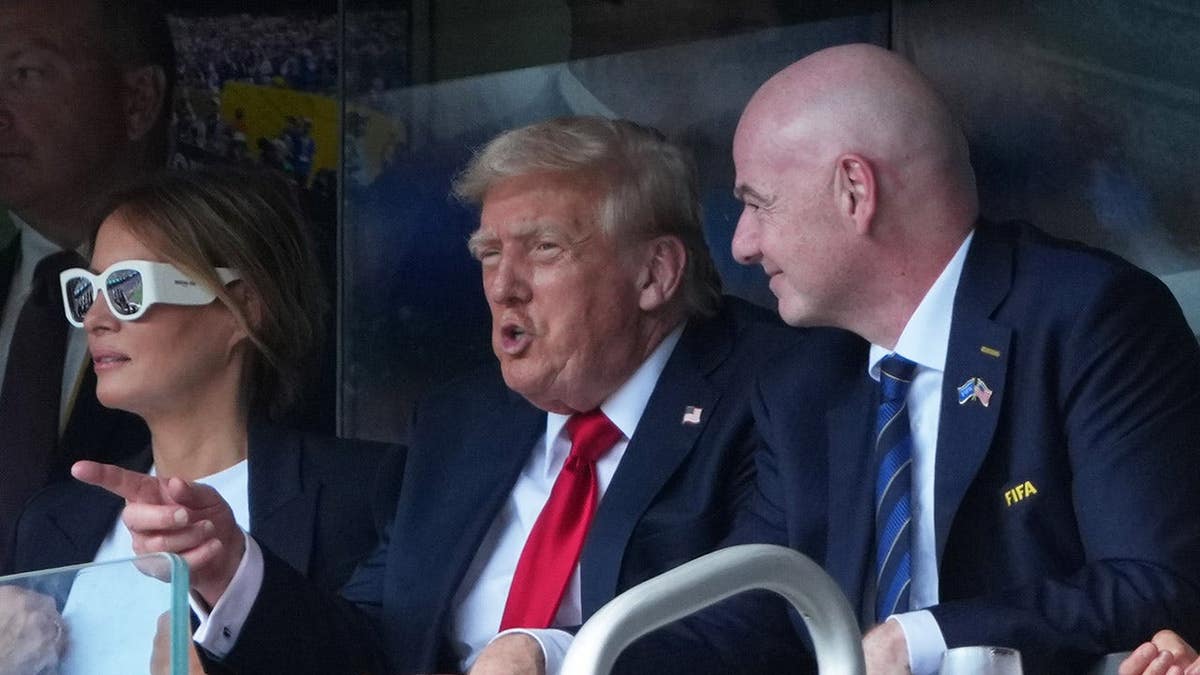
Donald Trump will attend as the first sitting United States president to appear at the tournament and will co-present the trophy alongside FIFA President Gianni Infantino, who confirmed the arrangement at a White House press conference Friday. FIFA also announced this week that World Cup champions will receive US-style championship rings, a tradition borrowed from American professional sports and the first time soccer’s global winner receives a physical award beyond the trophy itself. Fans will be able to purchase their own versions. Argentine President Javier Milei will not attend; he announced he would watch from his residence wearing the same jacket he has worn for every Argentine match this tournament, citing superstition.
The pre-match entertainment begins 90 minutes before kickoff with performances by Tom Cruise, Robbie Williams, and Nicole Scherzinger. The half-time show, approximately eleven minutes in duration, features Madonna, Justin Bieber, Shakira, BTS, Burna Boy, and Coldplay. France defeated England in Saturday’s third-place match in Miami to close the consolation bracket before Sunday’s headline event.
One uncertainty remained unresolved through Friday evening. Canadian wildfires have generated air quality concerns across the northeastern United States, pushing indexes above acceptable thresholds in several cities. FIFA and the White House have monitored conditions at MetLife Stadium, which is an open-air facility. A meteorologist confirmed the smoke did not represent an immediate threat to the final, and a cold front expected Saturday night could clear conditions before kickoff, though forecasters have not guaranteed that timeline.
The prize is $50 million for the champions, $33 million for the runners-up. The referee is Slavko Vincic of Slovenia. The result, when it arrives Sunday, will settle several questions simultaneously: whether Argentina can repeat what no nation has managed since Brazil in 1962, whether Spain’s 37-match unbeaten run constitutes the world’s best team or its most organized one, and whether Messi at 39 with 21 World Cup goals and a UNICEF photograph from 2007 has one more decisive moment in the answer the photographer described as a miracle of destiny waiting to happen.