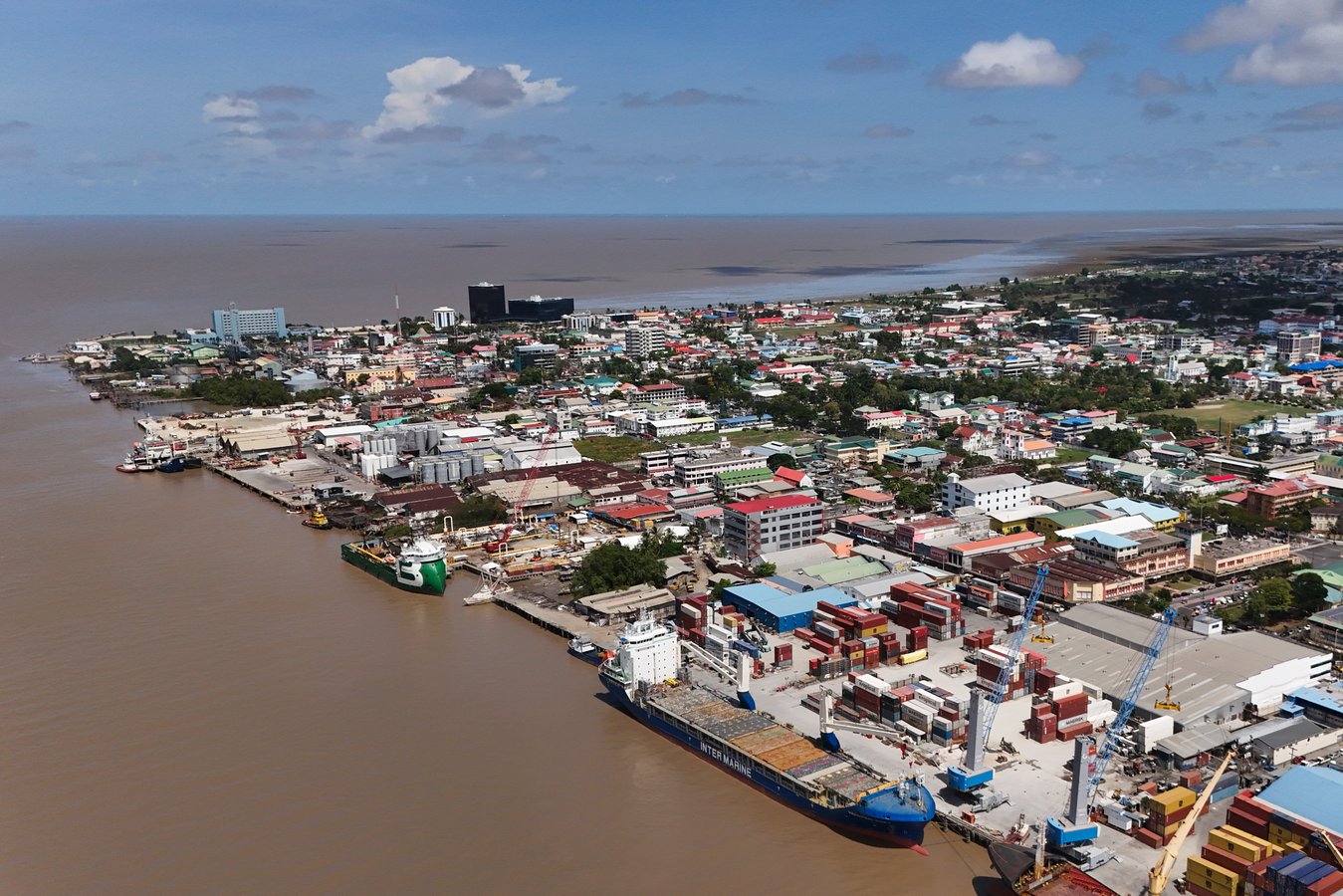

GEORGETOWN – Coastguard vessels and private fishing boats converged on open water off Guyana’s northwest coast early Sunday after the MV Barima, a passenger ferry carrying 116 people, capsized overnight during a routine crossing from Georgetown to the remote interior community of Port Kaituma. By the time dawn extended the search range, 53 survivors had been pulled from the water. The remaining 63 passengers and crew were unaccounted for.
The Barima issued a distress call at approximately 11 p.m. Saturday, Guyana time, which corresponds to 3:00 a.m. Sunday GMT, while somewhere on its scheduled route along the northwestern coastal corridor. Public Works Minister Juan Edghill confirmed the vessel was equipped with approximately 250 life jackets and eight lifeboats. “The circumstances surrounding the boat accident were not immediately clear,” Edghill said, a statement that remained the only official characterization of the cause available as of Sunday morning.

Guyana’s Prime Minister Mark Phillips confirmed the initial rescue count of 53 survivors before dawn, saying authorities expected additional recoveries as daylight extended the search operation. Edghill described a coordinated response involving the coastguard and nearby private vessels, with a medical team dispatched to Parika on the Essequibo River to receive and treat those brought ashore. “There is an active search and rescue operation that is taking place, and we pray for the safety of all,” he said.
The ferry’s registered safety equipment included approximately 250 life jackets and eight lifeboats, sufficient for its stated capacity. Life jackets improve survival odds for passengers who remained conscious and near the surface at the time of the capsize, but nighttime maritime rescues are governed as much by response speed and proximity of other vessels as by safety equipment. The coastguard’s ability to reach the site quickly, combined with the early hour of the distress call, shaped what recovery was possible in the hours before dawn.
Port Kaituma carries a historical weight disproportionate to its size. The community sits roughly 240 kilometers northwest of Georgetown in the Barima-Waini region, near the former site of Jonestown, the agricultural settlement where more than 900 Americans died in November 1978 under cult leader Jim Jones. In the decades since, the area has remained among Guyana’s more isolated communities, dependent on coastal and river ferry traffic for connection to the capital. The combination of limited roads and seasonal flooding makes vessels like the Barima the practical link for thousands of interior residents for much of the year.
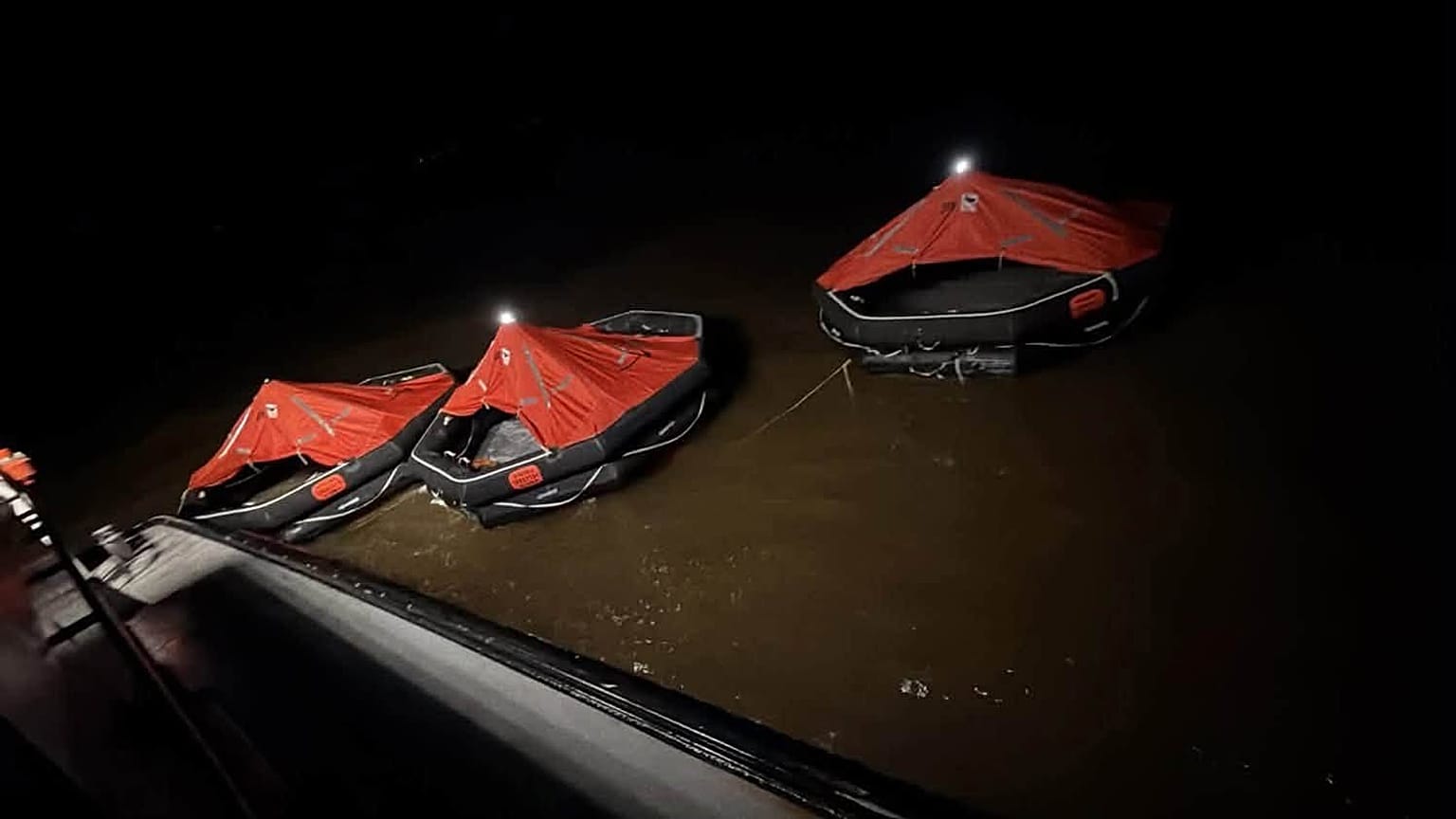
The timing of the capsize, late on a Saturday night, meant the initial rescue happened in complete darkness, with coastguard searchlights providing the only visibility across the relevant water area. The Barima’s distress call came early enough in the transit that the vessel was likely still in the coastal approaches rather than deep along the interior river channel, which marginally improves access for search craft. Survivors were brought ashore through the pre-dawn hours as the operation expanded, with the Guyanese government’s communications shifting toward a search-in-progress framing before the first public statements were issued.
Guyana’s economy has been transformed by offshore oil discoveries since 2015. ExxonMobil and its partners produced more than 650,000 barrels per day from the Stabroek Block as of 2025, making Guyana one of the fastest-growing economies in the Western Hemisphere. Oil wealth, however, has been slow to reach interior transport infrastructure, and the ferry system connecting Georgetown to the northwest remains the operational backbone for communities that still have no practical road alternative for months at a time. The Barima disaster may briefly focus attention on the gap between the country’s expanding macro-economy and the condition of its inland and coastal transport network.
With 53 confirmed rescued and 116 confirmed aboard, the number still unaccounted for on Sunday morning stood at 63. Authorities had not issued confirmed casualty figures as of the available reports, with government communications focused on the active rescue rather than conclusions. The search was expected to continue through Sunday as daylight permitted, with the priority shifting from rescue to recovery in the event those still missing are not located alive.
Maritime safety across Guyana’s coastal and river ferry network has drawn periodic attention from regional transport regulators. The country’s system includes large coastal vessels as well as smaller wooden boats serving communities that have no practical overland alternative for extended periods each year. Incidents involving nighttime navigation and variable load conditions have historically contributed to the accident record across Caribbean and South American ferry networks.
What caused the MV Barima to capsize, whether structural failure, overloading, a navigational error, or weather-related stress, was not established in any statement issued by Guyana authorities as of Sunday morning. Al Jazeera, citing AFP, confirmed the capsize and the 53-rescued figure but noted the cause remained unclear. The investigation into what happened to the Barima will carry relevance not only to questions of accountability but to whether the Guyanese government considers changes to the regulatory framework covering the coastal ferry network connecting the capital to the northwest interior.