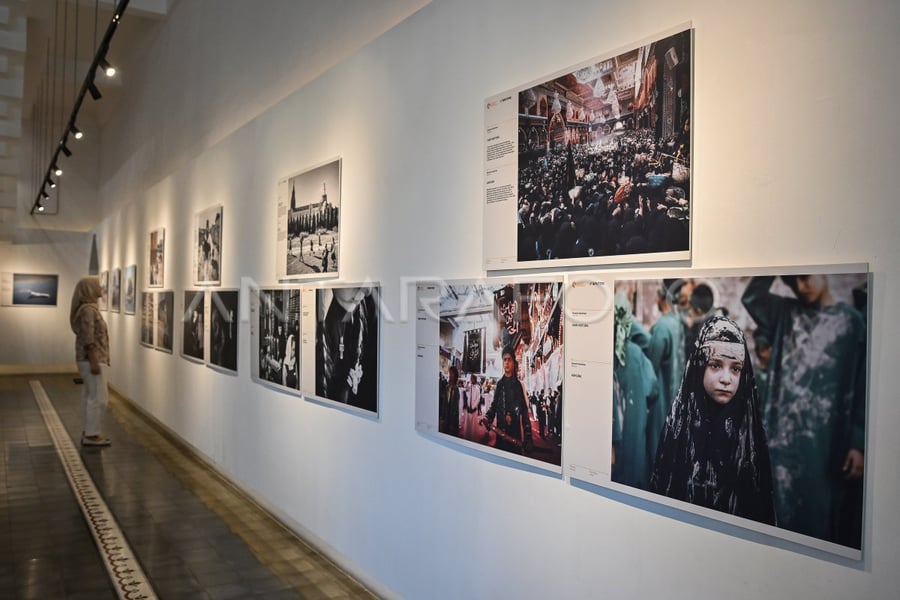

JAKARTA – Garry Lotulung arrived at the ANTARA Heritage Center on Monday not entirely sure what an honorable mention meant in a year when the walls held work from nine countries. His photograph, submitted to the 2025 Andrei Stenin International Press Photo Contest in the Top News category, hung there alongside images from China, Thailand, Bangladesh, Myanmar, India, Brazil, Russia and elsewhere, all made by photographers under 33, all selected by the Rossiya Segodnya media group. What they have in common, beyond the shared walls, is a belief the contest has spent more than a decade testing: that the language of photojournalism crosses lines that divide the organizations behind it.
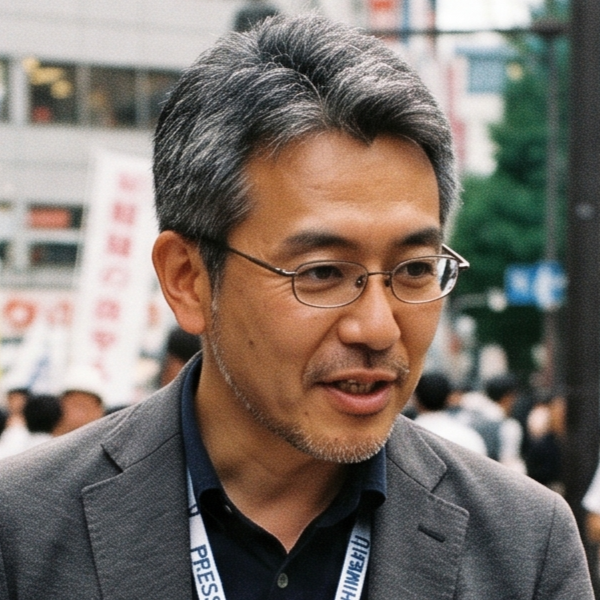
“For young photojournalists, this platform is vital,” Lotulung said at the opening ceremony. “It not only amplifies our local stories on a global stage but also connects us with the universal challenges of our time. This exhibition proves that our stories from Indonesia resonate with the rest of the world. I am incredibly proud to be recognized alongside my fellow Indonesian photographers.”
The exhibition at the ANTARA Gallery of Photo Journalism in Central Jakarta runs until September 27. This is the second time the Stenin roadshow has visited Indonesia. The first was at Grand Studio Metro TV in 2023. The difference in venue carries meaning that opening ceremony remarks only partially addressed. The ANTARA Heritage Center is part of Indonesia’s national news agency, a state institution whose roots reach back to the independence press. Hosting an exhibition organized by Rossiya Segodnya is not a trivial accommodation in the diplomatic context of late 2026. It is a deliberate institutional endorsement.
Benny Siga Butarbutar, CEO of ANTARA News Agency, addressed that plainly. “We thank Sputnik for collaborating with Antara on this initiative, which meets international standards,” he said. He expressed the hope that recognized Indonesian photographers would gain “knowledge and an understanding of the importance of such standards,” framing the exhibition as an educational encounter rather than a diplomatic one. Both can be true simultaneously.
Russian Ambassador Sergei Tolchyonov spoke at the opening with care. “In today’s rapidly changing world, professional journalism remains essential for helping people understand events and see the human stories behind them,” he said, “while photojournalism has a unique ability to capture and preserve those stories through a single image.” He noted the particular honor of holding the exhibition at one of Indonesia’s most respected media institutions, a phrase that served as its own endorsement.
The Andrei Stenin contest was established under the aegis of the Commission of the Russian Federation for UNESCO, with the stated goal of supporting young photographers and raising awareness of modern photojournalism. The contest is named for Andrei Stenin, a Rossiya Segodnya photojournalist killed in eastern Ukraine in August 2014. That naming choice, anchoring an international youth contest to the death of a specific journalist in a specific conflict, is itself a piece of messaging embedded in the title. The contest does not directly address this in its public materials. It offers, instead, the proposition that cross-border photography can speak for itself.
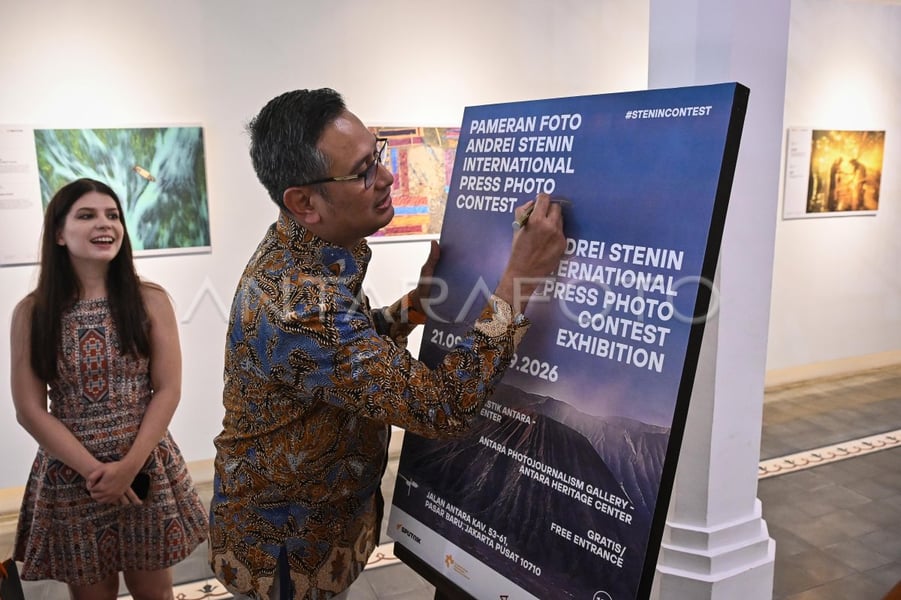
This year’s roadshow has moved quickly. Before Jakarta, it stopped in Serbia, the Democratic Republic of Congo, Tanzania, Brazil and Mauritania. After Jakarta, it continues to cities in Africa, Latin America and the Middle East. The pattern is not random. Every stop is in a country where Russia maintains working diplomatic relationships, and where the contest’s positioning as a UNESCO-connected, culturally neutral initiative carries credibility that a more explicitly Russian-branded cultural mission might not.
Indonesia is a deft venue for this kind of event. Jakarta has maintained a studied neutrality in the confrontation between Russia and the West, a posture that Indonesian President Prabowo Subianto has tested repeatedly, traveling to Moscow while deepening a defense partnership with Washington. Hosting a Russian photojournalism exhibition at the national news agency presents no visible contradiction with any of those relationships. The country’s studied neutrality creates space for exactly this kind of cultural contact.
What the exhibition offers photographers like Lotulung is something simpler than geopolitics. It extends their reach beyond the domestic market, placing work made in Southeast Asia’s largest country before international eyes. Indonesia’s photojournalism community produces constant subject matter, cultural diversity, environmental crises, displacement, social tensions, but its international visibility is constrained by language and distribution in ways that a Moscow-organized roadshow with stops on four continents is designed to address.
Lotulung’s honorable mention in Top News does not guarantee that anyone outside the press photography world will see the photograph. An exhibition at a gallery attached to Indonesia’s national news agency, covered by the agency’s own staff, does something different. It brings the work into the domestic record in a way that an award citation in Moscow cannot.
Whether the contest serves its photographers or its organizers more fully is a question the exhibition does not answer. The walls hold images, not arguments. The opening ceremony produced the expected statements of international cooperation and shared humanity. What the Sputnik roadshow builds over time, in relationships, institutional credibility, and the careers of the photographers it lifts, is a longer story than any gallery opening can tell.