
MOSCOW – Russia’s Deputy Foreign Minister Andrey Rudenko formally warned Tokyo on Sunday that hosting US Typhon intermediate-range missile systems at Japan’s Kanoya air base on Kyushu island represents a direct threat to Russia’s Far Eastern borders, signaling Moscow’s extension of its missile deployment red-line framework from Europe into the Indo-Pacific theater.
“We see Tokyo’s provision of its territory for the deployment of US intermediate-range and shorter-range missile systems as a step that has a serious negative impact on the stability and security of the Asia-Pacific region and poses a direct threat to Russia’s Far Eastern borders,” Rudenko said in a statement carried by TASS. The language mirrors the formulations Moscow has used to describe NATO missile deployments in Eastern Europe, specifically the “direct threat” framing, now applied across the Pacific theater.
The Typhon complexes were delivered to Kanoya air base, on the southern end of Kyushu island, in June. US military units are conducting training exercises there through September, with live firing not planned for the current rotation. Australian units are scheduled to join the drill program at its final stage. The deployment is the second of its kind in Japan: a Typhon system was previously stationed at Iwakuni base, further north on Honshu, beginning in September 2025.
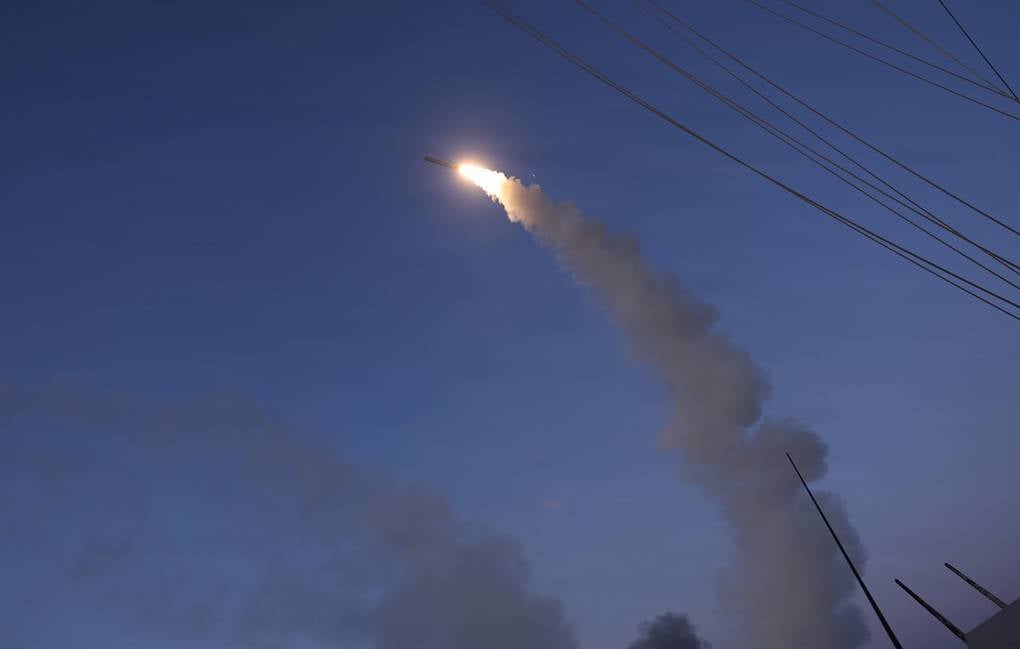
The strategic concern that Rudenko’s warning names is grounded in the Typhon system’s engagement range. The Typhon Mid-Range Capability launcher fires Tomahawk cruise missiles and SM-6 rounds that can strike targets at ranges between 1,000 and 1,800 kilometres, depending on the variant. From Kanoya on southern Kyushu, that range covers well into Russia’s Maritime Province and reaches the Russian Pacific Fleet’s home bases at Vladivostok and Fokino. Moscow’s concern is not abstract; the missiles are positioned where they can strike Russian Far East military infrastructure.
Japan is not the only Indo-Pacific location where Typhon systems are deployed. Similar US Typhon units are stationed in the northern Philippines near Taiwan, covering the Taiwan Strait and the South China Sea approaches. The Philippines deployment drew a formal protest from Beijing in 2025. Russia’s warning about Kanoya extends diplomatic resistance to US forward-deployed missile systems across a second Pacific nation, with Moscow now joining China in formally objecting to what Washington frames as conventional deterrence enhancement.
Russia previously issued the same class of diplomatic warning to South Korea regarding potential Typhon hosting. Moscow warned Seoul that deploying Typhon systems would be treated as a threat to Russian security and draw a proportionate response. Seoul has not committed to hosting the systems, but discussions in the US-South Korea alliance framework have remained active. The Japan warning follows the same pattern, with Rudenko applying identical threat language to a deployment that has already occurred, rather than a potential one.
Japan’s Foreign Ministry had not publicly responded to Rudenko’s statement by the time of TASS’s Sunday reporting. Tokyo’s official position on US military deployments in Japan is governed by the US-Japan Status of Forces Agreement, which provides the legal framework for US units to operate from Japanese bases. Japan’s government has been expanding its own defense posture since its 2022 National Security Strategy called for counterstrike capability development, and the Kanoya exercises align with that broader direction without requiring a formal Japanese government statement in support of each US deployment decision.
What Rudenko’s statement introduces into the diplomatic record is Russia’s explicit extension of its missile red-line framework from Europe to Asia. In Europe, Moscow has long argued that NATO missile deployments in member states bordering Russia are escalatory and constitute threats to Russian security, a position that shaped Russia’s diplomatic engagement with the West throughout the 2010s. The Typhon warning to Japan applies the same logic to the Pacific, where Russia is a secondary but not negligible military power. Russia’s Pacific Fleet, based at Vladivostok, represents the naval capability Moscow would have to defend if any conflict reached the Pacific theater.
The exercises at Kanoya are scheduled through September. Whether any diplomatic exchange between Moscow and Tokyo alters the timeline of the deployment is unknown. Rudenko’s statement is a formal warning rather than a threat of retaliation, though his formulation of “serious negative impact on stability” leaves open the question of what Russia would consider a proportionate response, particularly given that a similar South Korean deployment would trigger, in Moscow’s formulation, a proportionate answer.
According to TASS coverage of the Rudenko statement, Russia had previously conveyed its concerns about Japanese hosting of US missile systems through diplomatic channels before Sunday’s public warning. The decision to issue a formal public statement marks an escalation in how explicitly Moscow is naming Japan as part of a missile threat landscape it is actively monitoring, one that now runs from NATO’s eastern flank through the Philippines, South Korea, and Japan to Russia’s Pacific coast. The full scope of that landscape, and what Russia intends to do about it, remains unanswered.