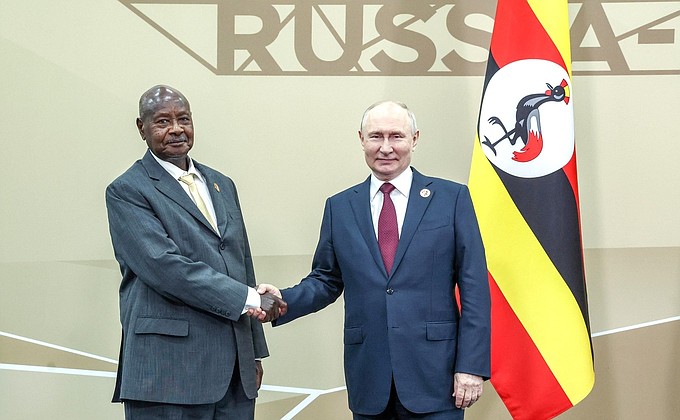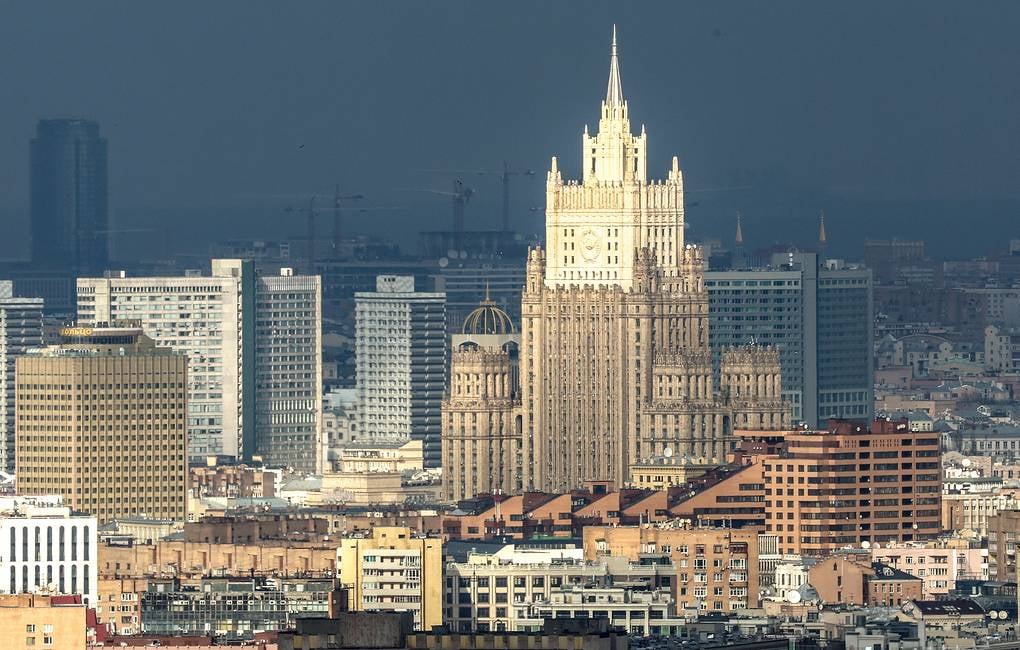

MOSCOW – Russia’s Deputy Foreign Minister Andrei Rudenko warned Sunday that any decision by South Korea to deploy American Typhon missile systems on its territory would be treated as a direct threat to Russian security and would trigger a proportionate response, a formal diplomatic signal directed at Seoul at a moment when the United States is intensifying its effort to position long-range strike capabilities across Asia.
Rudenko’s statement, made in an interview with TASS, came with an important qualifier. The Russian Foreign Ministry, he said, currently has no confirmed information that South Korea intends to take this step. The warning is therefore preemptive rather than reactive, a signal from Moscow meant to shape a decision Seoul has not yet publicly announced rather than respond to a deployment that has already occurred.
The Typhon Mid-Range Capability system is a ground-launched platform that fires SM-6 multirole missiles and Tomahawk cruise missiles with a range of approximately 2,000 kilometres. Its specifications place it well within range of Russian territory if positioned anywhere on the Korean peninsula. The system was tested by the United States Army with Philippines cooperation in 2024, and its range envelope and maneuver-kill capabilities have made it a focus of Russian concern wherever it appears near Russian borders or military infrastructure.
“If such a development were to occur,” Rudenko said, “it would be regarded as a threat to the security of the Russian Federation, which would entail an appropriate response.” He declined to specify what form that response would take, using the language of “proportionate” retaliation that Moscow deploys when it wants to convey seriousness without committing to specific escalatory measures in advance.
The warning carries echoes of Russia’s earlier posture toward NATO member deployments in Europe. Moscow issued comparable signals to Baltic states, Poland, and Romania as US ground-based missile systems moved closer to Russian territory in the years before the Ukraine war began. In each of those cases, the preemptive warning preceded, by months or years, actual deployment, and in none of them did Russia’s stated response deter the host country from proceeding once a political decision was made.
Whether South Korea is, in fact, considering Typhon acquisition is itself unclear. Seoul has been significantly expanding its defense investment profile since North Korea’s escalating nuclear and missile development made the peninsula’s security environment more volatile. Russia’s continuing deployment of ballistic missiles against Kyiv, now reaching 31 or more warheads in single barrages, has also focused attention in Seoul on the risks of relying on point-defense systems against saturating attacks.
The South Korean government had not commented on the Rudenko statement by Sunday. Washington has not addressed the warning either, which is consistent with US practice: the administration typically does not confirm or deny specific capability discussions with treaty allies before they result in formal deployment agreements.
Russia’s concern about the Typhon is rooted partly in the system’s versatility and partly in its strategic ambiguity. The Tomahawk variant has a range sufficient to reach Russian Far East military installations from multiple deployment positions in South Korea, and the SM-6 adds an air and missile defense capability that complicates Russian planning for operations in the Pacific theater. Moscow has spent years warning against the eastward extension of US ground-based long-range strike systems, and the Typhon represents the latest iteration of that concern.
The warning to Seoul arrives while Russia is engaged on two active military fronts, the operation in Ukraine and the complex dynamics of the Iran-US conflict unfolding across the Middle East. Rudenko’s statement reflects Moscow’s awareness that it cannot address every potential deployment threat simultaneously, and that the most effective tool available to it is diplomatic signaling of consequences before decisions are finalized.
According to TASS reporting on the Rudenko interview, Russia’s Foreign Ministry does not issue these signals casually. The connection between the Typhon warning and the Ukraine operation context is unstated in Rudenko’s remarks but present in the broader Russian strategic assessment: as NATO member and partner states add long-range American systems, Russia’s defensive perimeter is being pressured from multiple directions simultaneously, and preemptive warnings are the cheapest tool available to slow that process.
What the Rudenko warning leaves unanswered is how far Moscow would actually go if Seoul proceeded with a Typhon deployment despite the signal. Russia’s threat to respond “proportionately” covers a spectrum from diplomatic downgrading to military repositioning, and the precedent of Eastern European deployments suggests that Russian countermeasures, when they materialize, tend to take the form of relocating Russian missile systems rather than direct action against the deploying state. Whether that logic applies in Northeast Asia, where North Korea’s role adds complexity that European theater comparisons cannot fully capture, is a question the warning itself does not resolve.