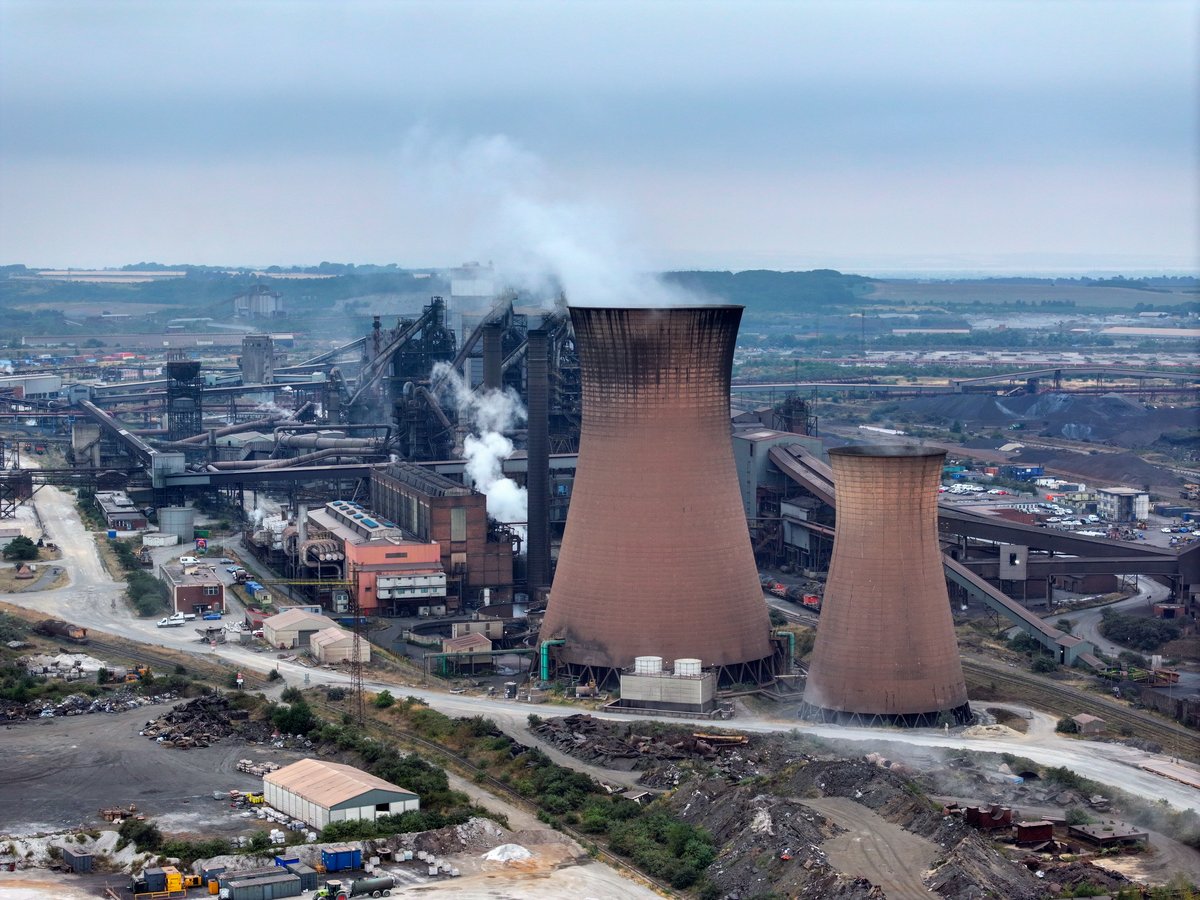

LONDON – The furnaces at Scunthorpe had been burning through £700,000 per day in losses when Jingye Group, the Chinese company that paid £70 million for British Steel in 2020, concluded in 2025 that the steelworks were no longer financially viable. What followed was not a controlled wind-down. It was a sequence of escalating government interventions that ended on July 17 when the UK formally transferred full legal ownership of British Steel from Jingye to the state, triggering a formal protest from Beijing that described the action as having “seriously damaged” the legitimate interests of Chinese investors in Britain.
The nationalization completed a process that the UK government had begun under emergency powers in April 2025, when Jingye cancelled orders for the raw materials the blast furnaces require to keep operating, effectively signaling its intention to allow the plant to go cold. Ministers invoked emergency legislation at that point to seize operational control, preventing an immediate shutdown of the facility. The July legal transfer converted that operational control into full ownership and set in motion a separate valuation process to determine whether any compensation is owed to Jingye for the loss of the asset.
The Scunthorpe facility is the only plant in the United Kingdom capable of producing primary steel from iron ore rather than recycled scrap. The distinction carries both economic and strategic weight: blast furnace primary steel can produce grades required for construction, railway lines, and certain defence applications that electric arc furnaces using recycled material cannot match at equivalent quality. Allowing Scunthorpe to close would have made the UK entirely dependent on imported primary steel for categories of product that domestic industry currently supplies, a vulnerability that the steel industry had long cited as a strategic risk that market economics alone would not address.
The 2,700 workers at Scunthorpe retain their positions following the nationalization, with the UK government committing to continue operating the plant while a longer-term ownership solution is sought. No timeline has been specified for when a decision on future ownership will be made, and the government has not indicated whether nationalization is intended as permanent or as a bridge to a future sale to a different private operator. British Steel has a precedent-laden history: the company was nationalized in 1951, privatized in 1988, and its subsequent corporate iterations passed through multiple owners before Jingye acquired the Scunthorpe operation from receivership in 2020.
China’s Ministry of Commerce issued a formal protest statement condemning the action. Beijing’s ministry said the nationalization had “severely undermined” Chinese companies’ confidence in UK investment and accused the British government of “forcibly” taking the company while “disregarding” Jingye’s contributions to the British economy during its six years of ownership. The statement reflected standard diplomatic language for bilateral trade disputes but arrived in an environment where UK-China commercial relations are already complicated by security concerns over Chinese technology companies, academic research partnerships, and critical infrastructure investment.
Jingye’s experience with British Steel was not straightforwardly negligent. The company kept the plant operational through multiple years of mounting losses, invested in workforce retention, and attempted to find a commercial model that could sustain the business through the post-pandemic commodity cycle. That the economics ultimately defeated those efforts reflects the structural difficulty of operating high-cost primary steel facilities in a market integrated with much-lower-cost producers, particularly from China itself, whose domestic steel industry’s scale advantages set a price floor that legacy European blast furnace operations cannot match. The UK government’s position is that the strategic value of domestic primary steelmaking justifies public ownership when private investors cannot make the economics work.
The valuation process, through which an independent appraiser will determine whether the UK owes Jingye compensation and at what amount, carries diplomatic implications beyond its commercial value. The precedent it sets for how the UK handles nationalization of foreign-owned assets will be observed by every significant investing nation with major UK holdings. China’s immediate formal protest suggests Beijing intends to treat this case as a test of how UK law and UK diplomatic commitments interact when British industrial strategy conflicts with Chinese commercial interests, a tension that extends across multiple sectors simultaneously.
The Scunthorpe nationalization also arrives against a backdrop of intensifying global competition in steel markets where Chinese producers dominate global output. European and American governments have accused China of dumping below-cost steel that makes Western primary steelmakers uncompetitive. The European Union has maintained anti-dumping tariffs on Chinese steel for years, and the United States has applied national security tariffs to steel imports. The UK post-Brexit developed its own steel safeguard framework, but the domestic market remains exposed to global price pressure in ways that made the unit economics of Scunthorpe’s blast furnace operation persistently challenging throughout Jingye’s ownership period. The same dynamics that defeated Jingye’s efforts to make British Steel profitable will face any successor owner, public or private.
The situation also touches on a broader set of questions about foreign direct investment in British industrial assets. German professionals exploring work abroad have increasingly turned toward Britain, with a recent survey finding the UK ranked second among preferred destinations, as covered in an analysis of Germany’s high-earner emigration trends. The tension between Britain’s appeal to European knowledge workers and the decline of its primary industry base reflects the structural paradox that Burnham’s incoming government inherits alongside the British Steel question.
According to Al Jazeera, China’s Ministry of Commerce statement came on the day of the formal ownership transfer, with Beijing indicating it reserves the right to take further measures to protect Jingye’s legitimate interests. The specific actions the Chinese government might pursue have not been specified, but the diplomatic framing suggests Beijing does not intend to treat the dispute as resolved by the UK’s commitment to a valuation process alone. How Burnham’s incoming government handles the bilateral tension on this specific file will be an early indication of his approach to the China relationship more broadly, at a moment when UK-China relations carry weight across multiple policy domains simultaneously.