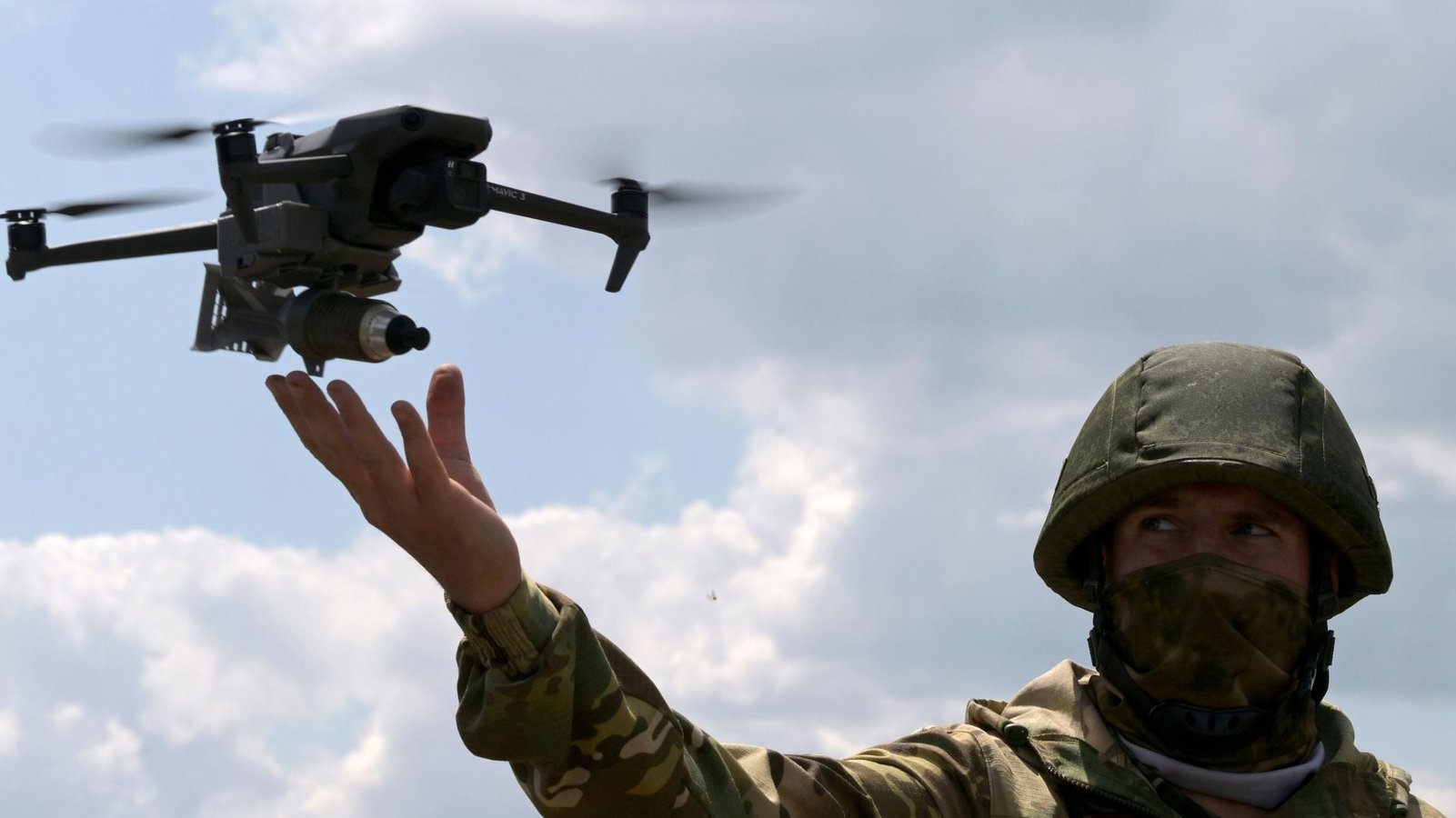

MOSCOW – An 11-year-old girl in the suburb of Odintsovo arrived at hospital with acute stress reaction on Monday morning, one of ten wounded in the Moscow region after Ukraine launched more than 400 drones toward the Russian capital in what officials called one of the largest single-night attacks on the city since the war began.
Moscow Mayor Sergey Sobyanin said air defenses tracked the incoming swarm between 8:30 p.m. Sunday and 5 a.m. Monday, with most drones neutralized at distant approaches. Sobyanin confirmed on social media that 85 drones were destroyed on their final approach to the capital. Russia’s Defense Ministry put the total interceptions at 452 across 16 regions overnight, a figure Moscow could not independently verify within hours of the attack.
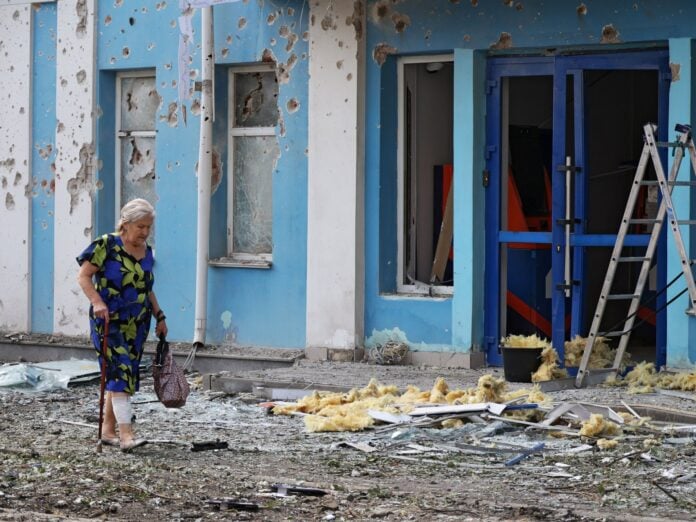
The assault lit fires across three districts of Moscow Oblast. In Podolsk, multiple homes and civilian infrastructure burned as residents evacuated. Domodedovo and Odintsovo reported similar scenes, with vehicles and homes damaged and emergency services deployed across the suburban belt south and west of Moscow. Bryansk Region, hit by a separate wave, reported one fatality and 13 injured.
Among the Moscow region wounded were six people hospitalized in Domodedovo, including three Chinese nationals who sustained shrapnel wounds and fractures. Two women were injured in Podolsk. The girl in Odintsovo was discharged after treatment for acute stress.
Moscow Region Governor Andrey Vorobyov confirmed the casualty figures. Russian state media reported that a Wildberries logistics center in Podolsk was evacuated as a precaution before resuming operations, and that an oil depot in the same district was directly struck. The full extent of damage to fuel and logistics infrastructure had not been confirmed by Monday morning.
Ukraine’s pattern of targeting Russian logistics has become systematic through July. Earlier strikes killed nine workers at Wildberries warehouses in Russia’s Tambov and Moscow regions, following seven deaths at a Wildberries facility in Tambov Region the previous night. The accumulated toll on Russian commercial freight infrastructure in July alone runs to at least 16 warehouse workers killed and scores injured.
President Volodymyr Zelenskyy framed the escalation in deliberately political terms. “When our deep strikes were not reaching Moscow and St. Petersburg, Putin did not think about consequences,” Zelenskyy said after the attack. He described Putin as fearful for his own safety as Kyiv’s drones reach closer to the capital, a claim the Kremlin did not address.
Russia simultaneously launched 123 drones at Ukrainian territory overnight. Ukraine’s Air Force reported that 108 were shot down or electronically suppressed. That exchange captures the asymmetry Ukraine has tried to engineer: absorbing Russian strikes with layered air defenses while pushing larger campaigns into Russian territory, where the psychological and economic cost lands differently in a population largely insulated from direct war exposure.
The 400-drone figure, if accurate, represents a scaling-up from earlier campaigns. Kyiv had already struck the Yanos oil refinery in Yaroslavl and hit twelve shadow fleet vessels in a single July night, and the strike on Elektrostal and Noginsk on Saturday was described at the time as the deadliest Ukrainian attack on Moscow’s region in three years. Monday’s barrage surpasses it by scale, if not yet by confirmed casualties.
Successive raids on the Wildberries logistics network reflect Zelenskyy’s stated rationale: the company’s warehouses supply sanctioned components for Russian drone production. Whether disrupting those supply chains measurably slows Russia’s military output remains unverified; Kyiv has not produced supply chain data to support the assertion, and Moscow has not acknowledged the impact.
The campaign also represents a departure from Kyiv’s earlier restraint. For much of the war, Ukraine focused deep-strike operations on energy and military infrastructure. The Moscow region barrages carry civilian risk as interceptor debris falls across suburban neighborhoods. The overnight attack’s most vivid casualty is not an oil depot but a child woken by interceptors falling through the dark outside Odintsovo.
What Monday’s barrage confirmed is that Russia’s own escalation cycle, including its largest-ever ballistic missile barrage on Kyiv earlier in the conflict, has not deterred Ukraine from deepening its reach into Russian territory. Whether the 400-drone threshold will produce a Russian military response beyond what Moscow has already mounted is the question neither Sobyanin nor Vorobyov addressed from Monday morning’s emergency briefings.