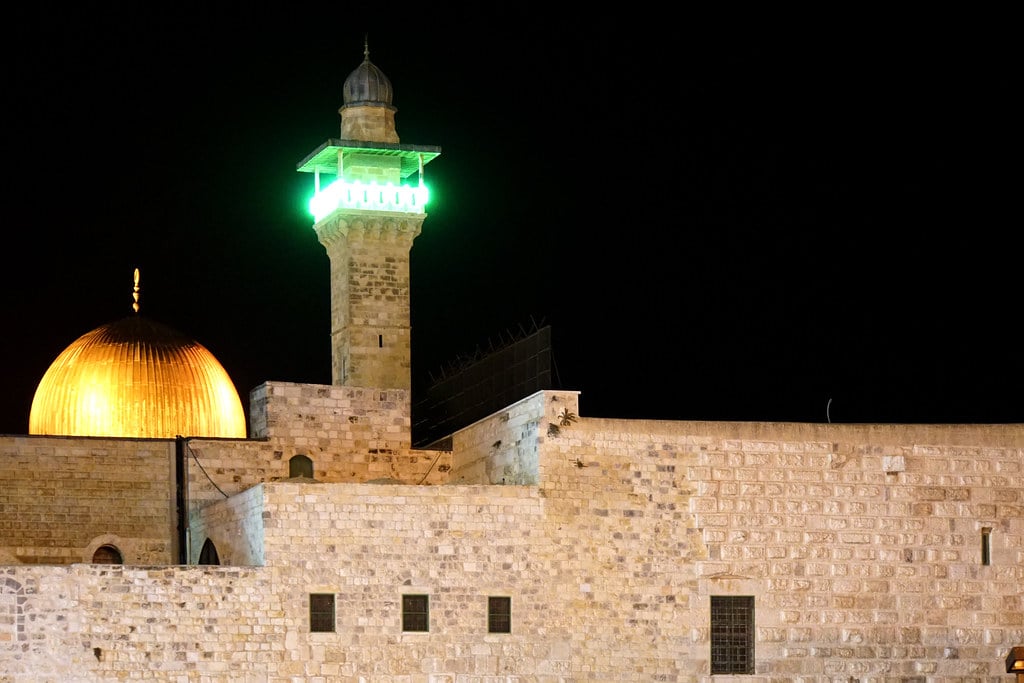

JERUSALEM – Israel’s National Security Minister Itamar Ben-Gvir entered the Al-Aqsa Mosque compound on Thursday morning, opened a prayer book and prayed, a gesture timed to Tisha B’Av, the Jewish fast day marking the destruction of the Temple, that converted a religious observance into a political claim over one of Islam’s holiest sites. By midday, more than 3,000 Israeli nationals had followed him through the gates under police escort. By the time Al Jazeera reported the final count Thursday, the number had passed 3,200.
Ben-Gvir’s stated purpose was religious. His words inside the compound were not. “Jews are praying and feel that they are the rightful owners here,” he declared, according to the Times of Israel. The claim is not a spiritual one; it is a territorial assertion, delivered inside a compound whose religious management has been assigned by international treaty to the Jordanian Waqf since 1994, and whose legal status remains the central object of Israeli-Palestinian diplomacy.
That treaty, the 1994 Jordan-Israel peace agreement, established Jordanian religious custodianship over the site. Under the arrangement, Israel administers security while the Islamic endowment controls religious affairs and access. Non-Muslim visits are permitted during designated hours; prayer by non-Muslims has been officially prohibited as a condition for maintaining the arrangement. What Thursday demonstrated is that the prohibition has become, in practice, unenforceable. Israeli police permitted worshippers to carry liturgical materials into the compound and documented roughly a dozen arrests for prayer violations, a number that, by its smallness, confirms how many others prayed without consequence.
Thursday’s incursion did not emerge from nothing. Israel banned Jerusalem’s Grand Mufti from the compound earlier this month, barring the site’s most senior Islamic religious official after he offered prayers for Palestinians killed in Gaza. The sequence is precise: the Muslim authority responsible for the compound is restricted while the Israeli minister responsible for national security performs Jewish prayer inside it. The status quo that Jordan demands be preserved is being altered by the government that officially claims to preserve it.
The compound’s Islamic cleric was banned for praying for victims of what the United Nations, human rights organizations, and governments across the Arab and Muslim world have described as a genocide in Gaza. Hamas leader Khalil al-Hayya, in his first address after being named the organization’s new political chief, pledged this week to recover Palestinian sovereignty over Jerusalem’s holy sites. For his audience across Palestinian territories, Thursday’s scenes at Al-Aqsa make that pledge more urgent, not less.
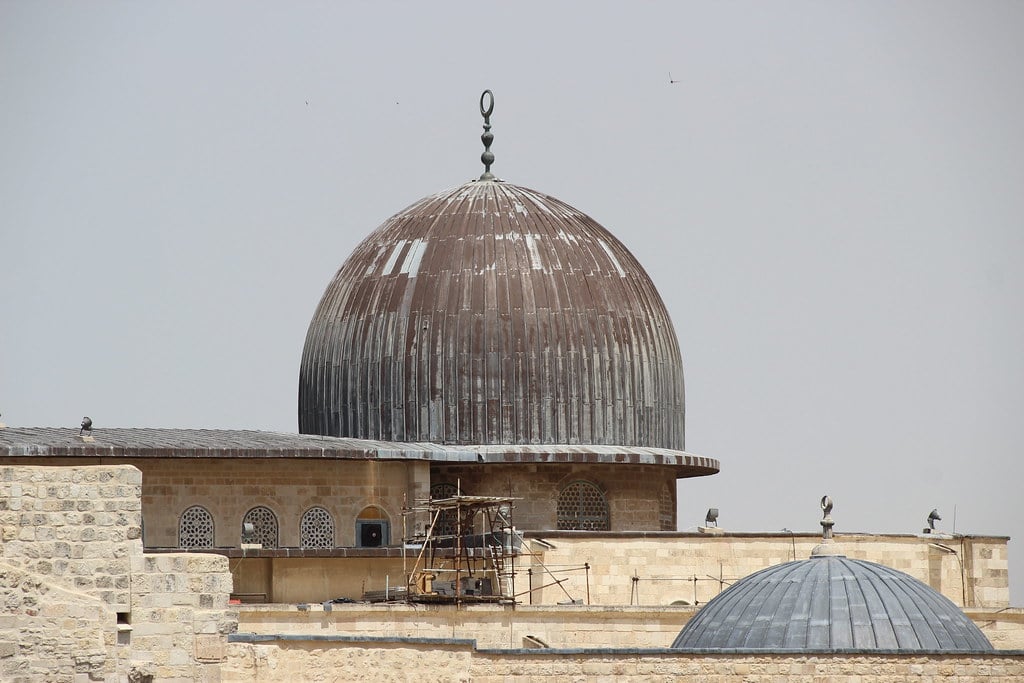
Jordan’s foreign ministry condemned Thursday’s visits as “a flagrant violation of the historical and legal status quo.” Egypt issued a formal statement. The Palestinian Authority condemned the entry. Prime Minister Netanyahu’s office provided no immediate response. The pattern is familiar: Israeli officials describe the status quo as intact while the facts at the compound record something different, and the international objections that arrive are absorbed without producing change in either direction.
Tisha B’Av carries theological weight that makes the day particularly combustible at this location. The fast day commemorates the destruction of both the First and Second Temples, believed by Jewish tradition to have stood on the ground beneath the Al-Aqsa Mosque compound that Jewish nationalists call the Temple Mount. For the settler-nationalist movement Ben-Gvir represents, Tisha B’Av is not only a day of mourning but a statement of aspiration: that the present religious arrangement is temporary and that full Jewish sovereignty over the site is the historical and divine outcome. Ben-Gvir did not create this position; he is its most prominent official expression.
The police role on Thursday was not passive. Officers escorted groups into the compound, permitted prayer books and liturgical items to be brought in, and managed the entry of more than 3,000 people before midday. The advocacy group Beyadenu, which campaigns for expanded Jewish access to the Temple Mount, reported visitor figures throughout the day. Police confirmed approximately a dozen arrests for prayer violations without disputing that thousands of others had prayed inside the compound without legal consequence, because consequence requires enforcement, and enforcement requires a policy decision the current government has declined to make.
What Jordan and the Palestinian Authority will do beyond protest statements remains unanswered. Condemnation of Al-Aqsa incursions has been a feature of Israeli-Jordanian relations for years, issued after each significant entry and absorbed without structural consequence on either side. The number of Israelis entering the compound on Tisha B’Av has grown across successive years. Thursday’s figure of more than 3,200 is a record that will stand until the next significant occasion produces a larger one.
Related Posts