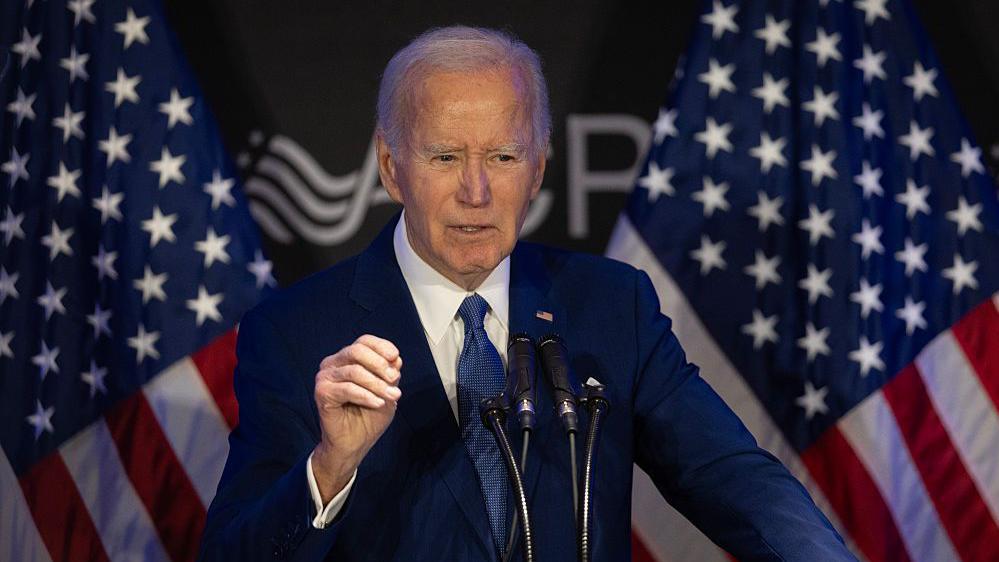

WASHINGTON – The Heritage Foundation’s Oversight Project released nearly three hours of private audio recordings from President Biden’s memoir interviews on Tuesday, including a February 2017 exchange in which Biden told his ghostwriter he had just discovered classified materials in his home several months after leaving the vice presidency.
“I just found all the classified stuff downstairs,” Biden is heard saying in the recording, made during a session with Mark Zwonitzer, the ghostwriter who worked with Biden on his 2017 memoir “Promise Me, Dad.” The tape is one of dozens spanning two years of recorded interview sessions, and it captures Biden in the unguarded register of a man who expected the conversation to remain entirely private.
The February 2017 clip carries particular weight because it dates to after Biden had left office. The classified materials he referenced were later central to Special Counsel Robert Hur’s investigation, which concluded in 2024 that Biden had retained and shared sensitive documents but found no evidence that the disclosures were intentional. Hur’s final report described Biden as a well-meaning elderly man with a faulty memory, a characterization that ignited a political firestorm at the time and left Biden’s advisers furious at the framing.
What the newly released recordings add is Biden’s own voice, caught without legal counsel or press advisers present, at a moment when the investigation was still years away. A former vice president who had recently left office is heard describing the discovery of classified materials as though it were a minor domestic inconvenience, something found in the basement alongside old correspondence and forgotten files.
House Republicans, who pressed for the audio’s release throughout 2025 and into this year, welcomed Tuesday’s disclosure. The committee’s classified documents investigation has run parallel to Hur’s work, and members argued that redactions in Hur’s published report concealed exchanges that would have changed the political weight of his conclusion, even if the legal outcome, no charges, remained unchanged.
Biden’s legal team spent months fighting the release in federal court. In May, he sued the Justice Department to block the transfer of audio to Congress and the Heritage Foundation, arguing the Trump administration had reversed its own prior position on disclosure without adequate legal justification. The court declined to issue the injunction he sought.
Biden’s attempts to suppress the recordings began as early as May 2026, when he moved to prevent disclosure of roughly 70 hours of recorded conversations and related transcripts. The material was created during interview sessions intended as raw material for “Promise Me, Dad,” not as public record, and Zwonitzer did not anticipate that the recordings would become a federal legal dispute running across two administrations.
The package released Tuesday by the Heritage Foundation’s Oversight Project includes approximately three hours of audio and 117 pages of transcripts, obtained through a combination of congressional subpoena and Freedom of Information Act litigation. The full archive of roughly 70 hours has not been released in its entirety. The foundation said the selection was based on the most legally and politically significant exchanges.
Zwonitzer’s sessions with Biden spanned 2016 and 2017 and covered the period surrounding Beau Biden’s death from brain cancer and Biden’s decision not to seek the 2016 Democratic presidential nomination. The sessions were designed to be informal, intended to give “Promise Me, Dad” the texture of direct speech rather than polished memoir. That informality is precisely what made them legally significant once the question of classified material handling became the subject of federal investigation.
What the October 2016 sessions, recorded before Biden left office, contain has not been disclosed in full. Reports indicate Biden made remarks in those earlier sessions about sensitive foreign policy topics, with specific quotes not yet published by the foundation. The February 2017 clip, from after he left the vice presidency, has drawn more immediate attention because of its casual, almost offhand quality.
Biden’s representatives characterized Tuesday’s release as a partisan operation. Spokespeople said the Trump Justice Department was “weaponizing” federal resources to release material designed to inflict political damage without any legitimate public interest justification. The framing echoes the defense Biden’s legal team deployed throughout the litigation, arguing that the Trump DOJ reversed a prior position specifically to damage a former political opponent.
The comparison with other classified documents cases adds context to the legal and political framing. John Bolton, who pleaded guilty to a felony classified documents charge earlier this year in a deal harsher than what David Petraeus received for comparable conduct, did not have the benefit of an investigator who concluded that intent was absent. Biden did. That protection held through the investigation and has not changed with Tuesday’s release.
The political environment the recordings land in is fundamentally different from the one that surrounded Hur’s original 2024 investigation. Biden is no longer in office. His age and cognitive fitness are settled political narratives rather than live contested claims. The classified documents question has been largely eclipsed in public attention by the Iran war and domestic economic pressures that have absorbed most of the country’s political energy. Whether the audio reanimates earlier debates in any meaningful way depends largely on what is in the portions of the transcript still under seal, and on whether a political press corps with many other stories to cover decides this one has fresh news value. The tapes add texture and Biden’s own voice to a story that Washington believed it had already absorbed. They do not add new legal facts.