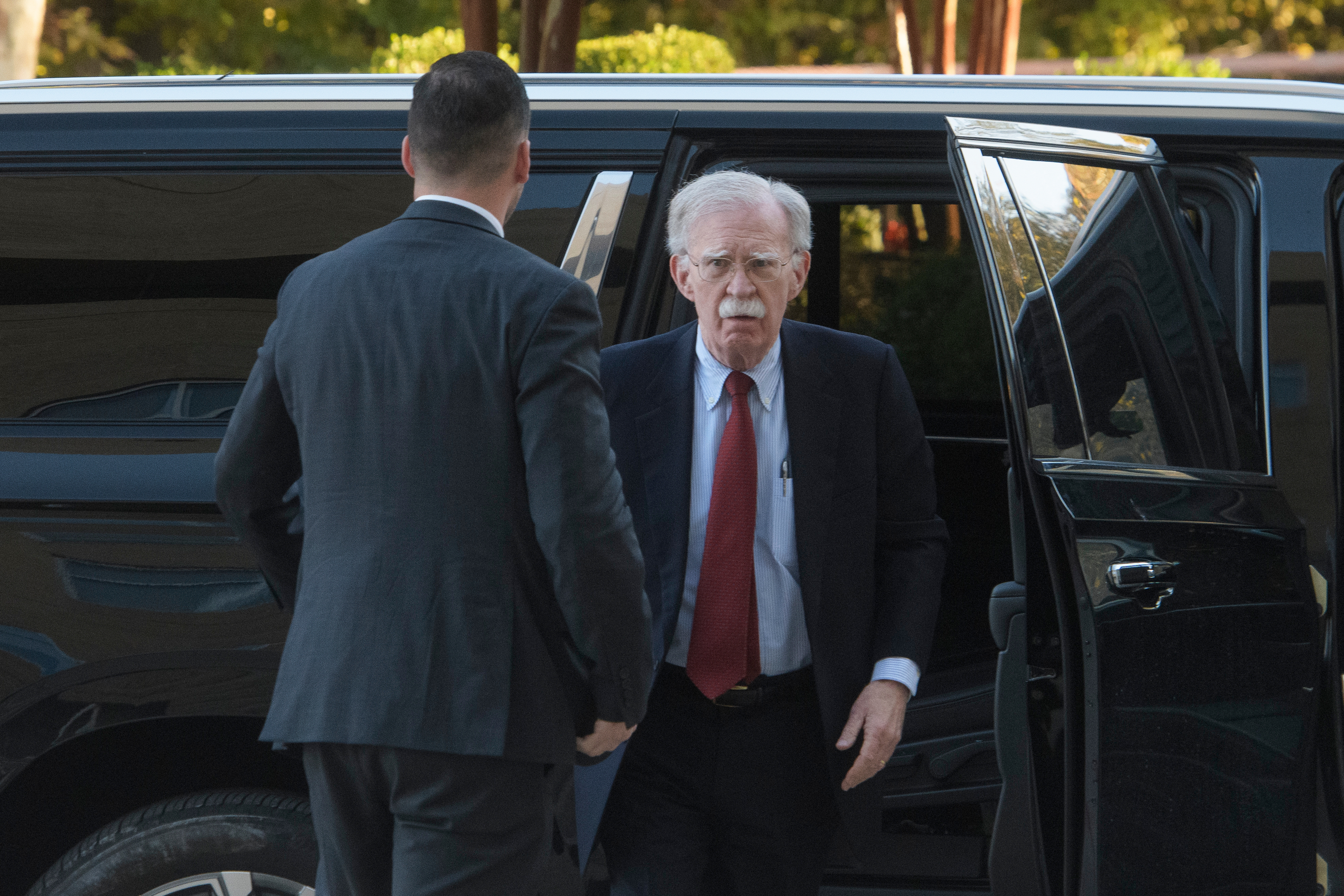

WASHINGTON — The private diary he kept for his wife and daughter will cost John Bolton a felony conviction and $2.25 million. Whether it costs him his freedom is a question that will now rest entirely with a federal judge in Greenbelt, Maryland.
Bolton, 77, the hawkish former national security adviser who spent the years after leaving Donald Trump’s White House cataloguing the president’s unfitness for office, has agreed to plead guilty to a single count of illegally retaining sensitive national security information, three sources familiar with the matter CNN first reported on Thursday. A re-arraignment — the procedural signal that a plea agreement has been reached — is scheduled for June 26 at U.S. District Court in Greenbelt. The Justice Department declined to comment.
The deal resolves an 18-count indictment filed in October that had threatened Bolton with decades behind bars, collapsing it to one felony count with a sentencing range of zero to 60 months. The fine of $2.25 million reflects, prosecutors say, the gravity of what Bolton shared: more than a thousand pages of diary-like entries detailing his day-to-day activities as national security adviser, including material classified up to the Top Secret/SCI level. He sent those pages to his wife and daughter via his personal AOL email account while preparing his 2020 memoir, “The Room Where It Happened.”
What Bolton will not plead guilty to is the transmission allegation — the charge that he shared classified information with unauthorized recipients. The guilty plea covers only the retention count: that he wrote down sensitive national security information in his personal papers. That distinction narrows the formal admission considerably, even as the fine and felony label remain in full.
The gap between this deal and the one the government gave David Petraeus in 2015 is where the legal argument is likely to get complicated in the weeks before sentencing. Petraeus, the decorated general and former CIA director, also pleaded guilty to retaining classified information in a personal diary that was shared with his biographer. He paid $100,000 and avoided prison entirely. His conviction was a misdemeanor. Bolton’s will be a felony, carrying the same underlying conduct but an entirely different legal category. Bolton’s lawyers have not publicly addressed whether they plan to invoke the Petraeus precedent in sentencing arguments, but the comparison is unavoidable given that both cases involve diary entries, both involve sharing with an unauthorized individual, and both resolved without the defendant serving prison time.
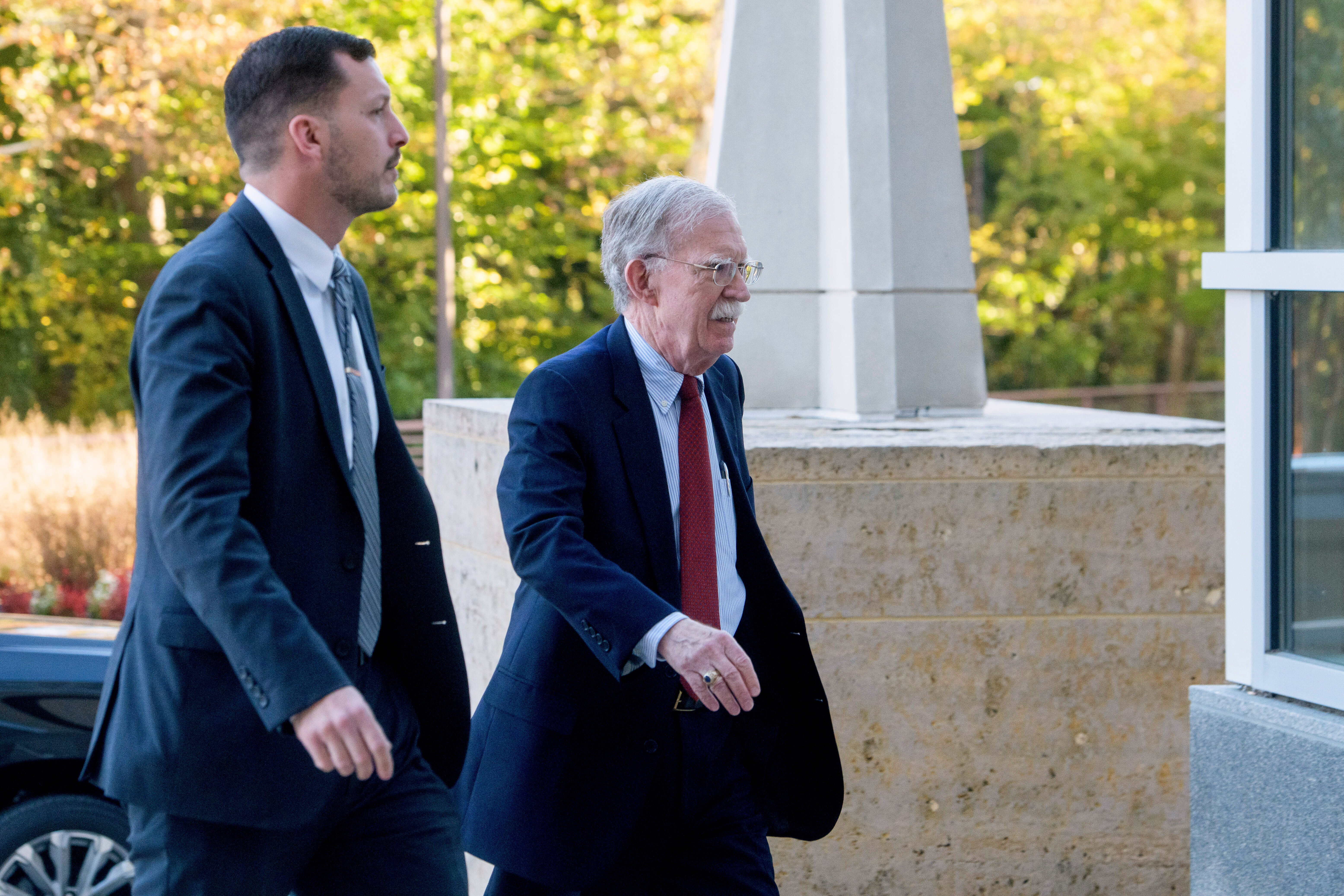
The case against Bolton sits alongside prosecutions of former FBI Director James Comey and New York Attorney General Letitia James as part of a pattern that critics, including Bolton himself, have characterized as the Department of Justice being deployed against Trump’s political adversaries. Bolton was stripped of his security detail by Trump within 24 hours of the inauguration, a decision he protested publicly given an assassination plot against him linked to Iran’s Islamic Revolutionary Guard Corps that the Justice Department itself had prosecuted. The FBI raided his Bethesda, Maryland, home in August, taking computer drives and boxes of material. The indictment followed two months later.
Trump, asked about the indictment last October, said he had not known it was coming. “Yeah, he’s a bad guy,” the president told a reporter. “It’s too bad. But that’s the way it goes.”
Bolton had been arguing since his indictment that the investigation was politically motivated, a claim he has not walked back publicly even as he moved toward a deal. What changed between October’s not-guilty plea and Thursday’s agreement is not yet public. His attorney, Abbe Lowell, has given no indication of what Bolton intends to say at the June 26 hearing beyond a change of plea.
What the indictment could not answer, and what the plea deal does not settle, is the question of how the Petraeus precedent applies to a felony in 2026. Petraeus paid a fine that amounts to, by any reasonable measure, a rounding error on a general’s speaking fees. Bolton’s fine is twenty-two times larger. Whether a federal judge views that disparity as proportionate justice or as evidence that the prosecution carried a political thumb on the scale is the unresolved question that will define how this case is remembered — and whether Bolton walks out of the Greenbelt courthouse in June with his liberty intact.
The government’s case rested in part on Bolton’s own words. The indictment cited his public criticism of Trump officials who shared sensitive military information on the Signal messaging application in 2025 as evidence that Bolton understood the rules governing classified material. “I couldn’t find a way to express how stunned I was that anybody would do this,” Bolton said at the time. “You simply don’t use commercial means of communication, whether it’s supposedly an encrypted app or not, for these kinds of discussions.” Prosecutors argued that statement, made voluntarily on cable news, demonstrated he knew the line and crossed it anyway.
The second investigation into Bolton — the one that produced the indictment — was not the first time federal authorities looked at his conduct. An earlier inquiry opened in 2020, during Trump’s first term, and was closed within months of President Biden taking office. It was reopened after Iranian hackers accessed Bolton’s email, raising concerns that the classified material he had sent to relatives may have been compromised by a foreign adversary. That context is the thread that connects this case to a broader, ongoing debate about how the United States handles top officials who take sensitive information home — one that the Trump classified documents prosecution put at the center of American politics three years ago and that has not resolved since.
Trump’s own classified documents case, in which some 11,000 records were retrieved from his Mar-a-Lago estate, was dropped before his second term began. It is Justice Department policy not to prosecute a sitting president. Bolton’s case will not benefit from that policy. What it may benefit from, depending on what his lawyers argue before sentencing, is the decade-old precedent set by a general who kept a diary too and walked away with a misdemeanor. The Eastern Herald reported on Trump’s earlier attempt to suppress Bolton’s memoir in 2020, a legal effort that ultimately failed. The book remains in print. The diary is now evidence.
The Associated Press reported that any prison sentence under the agreement would be capped at five years and that a judge will have the final say on punishment. The re-arraignment is set for June 26 in Greenbelt.