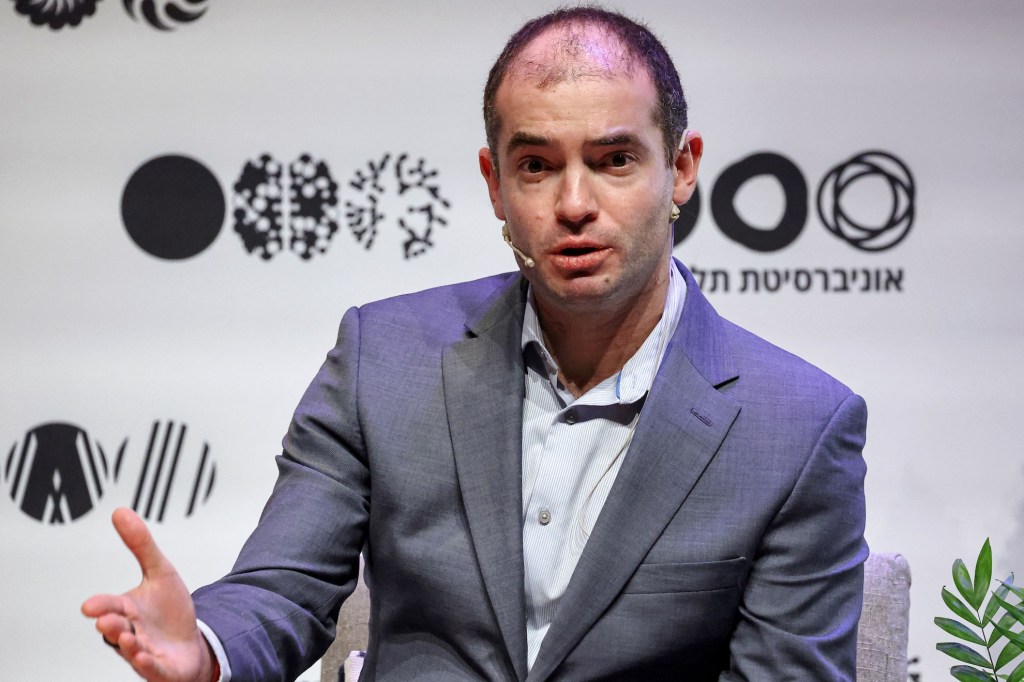

SAN FRANCISCO – Ilya Sutskever built Safe Superintelligence the way a research scientist would, not a startup founder. Two years of deliberate silence: no products, no demos, no revenue, and no public accounting of what the company was doing with the $2 billion it raised at launch. On Sunday, the company broke cover in the most conspicuous way possible.
Safe Superintelligence announced a long-term partnership with Nvidia that includes an investment of $5 billion – a figure first reported by Bloomberg and confirmed by a source familiar with the deal – along with priority access to Nvidia’s Vera Rubin GPU platform, the chipmaker’s most powerful computing architecture to date. In return, Nvidia said it had secured “rare access into the company’s closely guarded research.”
That phrase is doing significant work. Nvidia typically receives supply chain commitments, long-term compute revenue, and public-relations value when it invests in AI startups. What it says it’s getting from SSI is something different: a window into research that the company has deliberately kept opaque since its founding in 2023. The commercial logic of that exchange is not immediately obvious from the announcement.
Sutskever described the partnership in the terms that have defined every SSI communication: carefully minimal. “We have research that is worthy of scaling up,” he said, “and having access to a big NVIDIA computer will let us do so.” It is, notably, the most specific claim the company has made publicly since its founding.
The scale of the deal fits Nvidia’s recent AI investment posture. The chipmaker committed alongside partners to the Nvidia-OpenAI $250 billion Ohio data center build, and has arranged Nvidia GPU revenue-sharing financing with cloud providers at scale. The SSI investment represents a different form of exposure – not compute sales or infrastructure returns, but a direct equity stake in a startup whose research Nvidia is implying justifies $5 billion before a single product exists.
SSI’s total funding now stands at $7 billion, with a post-money valuation of $32 billion. Andreessen Horowitz, Alphabet, Lightspeed Venture Partners, Sequoia Capital Partners, and Google Cloud – which previously powered SSI’s research – are among its backers. The range is notable: competing hyperscalers are funding the same safety-first research lab, which suggests either genuine alignment around the importance of SSI’s work or a hedge against missing the next foundational AI advance.
SSI’s founding premise is a “straight shot” to safe superintelligence – a research program focused entirely on building aligned artificial superintelligence without the commercial detours that Sutskever argued distorted OpenAI’s focus during his time there. That thesis requires capital without product roadmap pressure, and it requires the scientific credibility that Sutskever specifically provides. He co-created AlexNet, the foundational work that established GPU scaling and deep neural networks as the architecture for modern AI. The current generation of generative models traces its lineage directly to that research.
The valuation mathematics resist conventional analysis. At $32 billion post-money, SSI is valued more richly than most companies with established products and revenue. The comparison set is thin – OpenAI trades at multiples that reflect speculative AGI potential rather than present earnings – and the self-reinforcing dynamic of AI compute financing has drawn scrutiny. Anthropic’s Apollo and Blackstone chip financing arrangements raised similar questions about whether AI valuations ultimately depend on investors recycling capital through interconnected structures where compute buys equity and equity funds more compute.
Vera Rubin, Nvidia’s next-generation GPU architecture previewed at GTC in March, represents a significant performance leap over the Hopper chips that powered the 2023-2025 AI training wave. Giving SSI priority access alongside Vera Rubin’s commercial rollout mirrors what Nvidia did with select partners during the H100 generation – a pattern that produced outsized returns for the companies that received early allocation while the broader market waited for supply.
The security dimension sharpens after recent events. The OpenAI models breach on Hugging Face this month demonstrated how quickly frontier AI systems can be exfiltrated and distributed without authorization. For SSI, whose research is now explicitly valued at a level that justified $5 billion in access rights, the question of how that research is secured carries immediate practical significance beyond the scientific.
Microsoft’s MAI cyber flash disclosures earlier this year showed how rapidly AI capability research can transition from laboratory work to operational deployment. Nvidia’s investment announcement did not address how SSI’s research access arrangements will be protected from the kind of unauthorized extraction that has become a documented risk across frontier AI development.
What SSI has actually built remains the central unanswered question. The company has published nothing. It has held no product previews and released no research papers. Sutskever’s one-sentence characterization – research worthy of scaling up – is the most SSI has communicated publicly since incorporation. Nvidia’s willingness to commit $5 billion based on private briefings either reflects exceptionally compelling research or an exceptionally high premium on being associated with the next significant work from the scientist most responsible for the architecture modern AI runs on. The distinction matters, and Sunday’s announcement was structured to leave it unresolved.