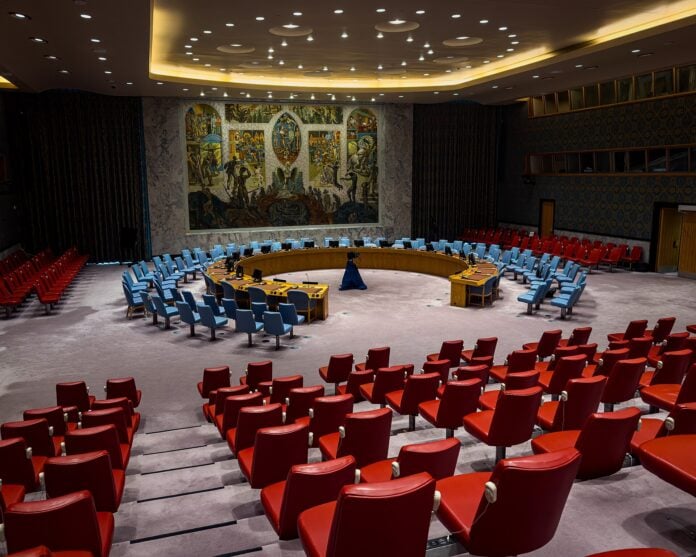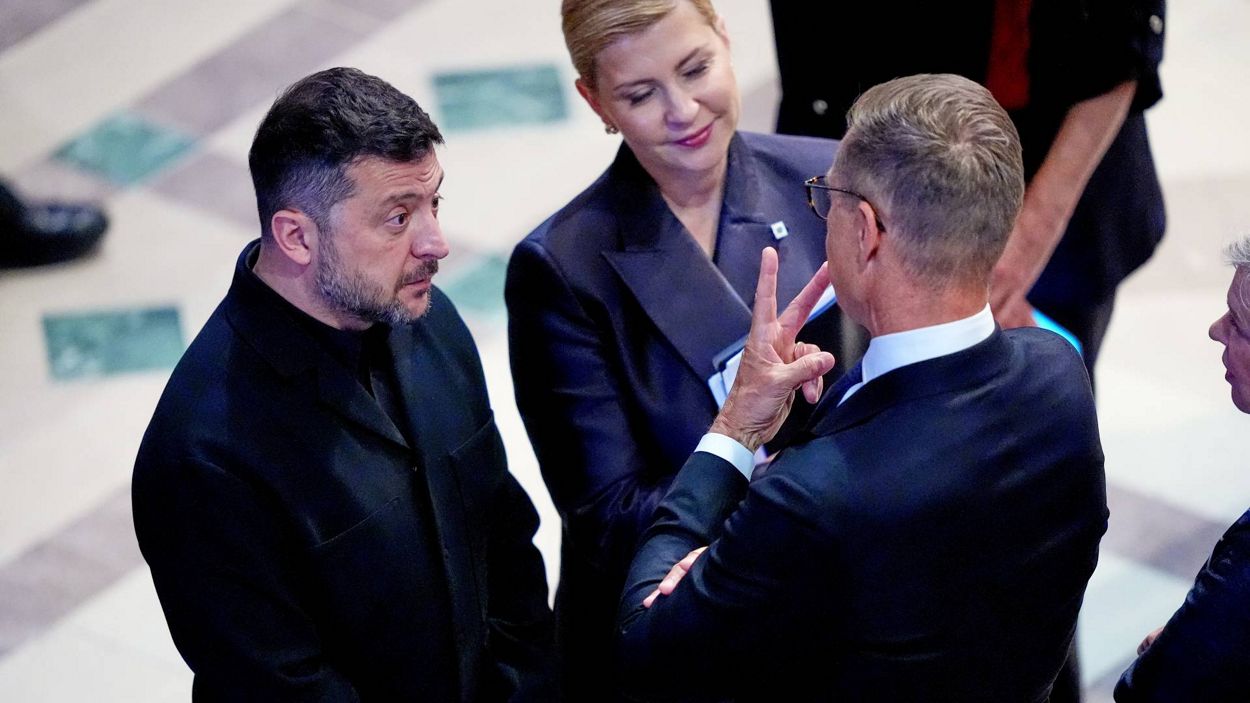

WASHINGTON — Lindsey Graham landed in Washington just hours after leaving Kyiv. He did not make it to the Capitol. The senator who had spent three years as the most persistent Republican voice for arming Ukraine — making ten trips to the country since Russia launched its military operation in 2022 — died within hours of touchdown, and by Tuesday, the cathedral on Massachusetts Avenue was filling with the people his positions had touched most. Volodymyr Zelensky sat five rows behind Donald Trump.
Zelensky’s row, the fifth, held a particular compression of the moment. He was seated alongside Acting Ukrainian Foreign Minister Andriy Sybiha, Israeli Prime Minister Benjamin Netanyahu, and Finnish President Alexander Stubb. Four rows closer to the altar, Trump sat with Vice President JD Vance, Treasury Secretary Scott Bessent, Special Envoy Steve Witkoff, and White House Chief of Staff Susie Wiles. Eric Trump and his wife occupied seats nearby. Secretary of State Marco Rubio anchored the second row with senior State Department officials. A RIA Novosti correspondent on the scene documented the arrangement.
Protocol assigns funeral seating by rank and diplomatic precedence. But the five rows between Zelensky’s chair and Trump’s communicated something that protocol can only approximate: Zelensky is in the room, and that in itself is a statement. What it is not is the front of the room. Two years into a Trump administration that has pushed hardest for a negotiated end to Russia’s military operation in Ukraine, the Ukrainian president flew to Washington, went to the White House, attended the memorial for his most reliable American champion — and sat where visiting heads of state sit at American funerals.
Graham died July 25, age 71, from an aortic dissection caused by arteriosclerotic cardiovascular disease. The illness came on suddenly. He had returned from Ukraine hours earlier and did not survive the day. He had just won the South Carolina Republican primary and was expected to campaign through November for a sixth Senate term. A potential successor remains an open question under South Carolina law: his sister, Darline Graham Nordone, could seek and win the Republican nomination in a special election and serve a full six-year term, but she has not announced her intentions.
Inside the Senate, Graham was the hawk other hawks measured themselves against. He pushed for maximum pressure on Iran long before hostilities with Israel began, insisted on a harder posture toward China’s military expansion, and was one of the few Republican senators who did not soften his support for Ukraine as the Trump administration pressed for negotiations. He argued that any ceasefire settlement rewarding Russia’s territorial gains would invite further operations elsewhere. His ten Kyiv trips were not symbolic: he met commanders, lobbied allied governments, pressed defense contractors, and argued for specific weapons systems. Zelensky called him, the day Graham died, a true defender of freedom who came to Ukraine when it was most needed.
Trump delivered one of the eulogies on Tuesday. Fox News host Sean Hannity, a longtime friend of Graham’s, also spoke, as did Graham’s niece Emillie Boggs Roberts. Hannity addressed Netanyahu and Zelensky directly from the pulpit, saying Graham would have been honored by their presence in Washington. As Eastern Herald reported from the cathedral, it was a service that gathered the principals of three simultaneous conflicts in one nave.
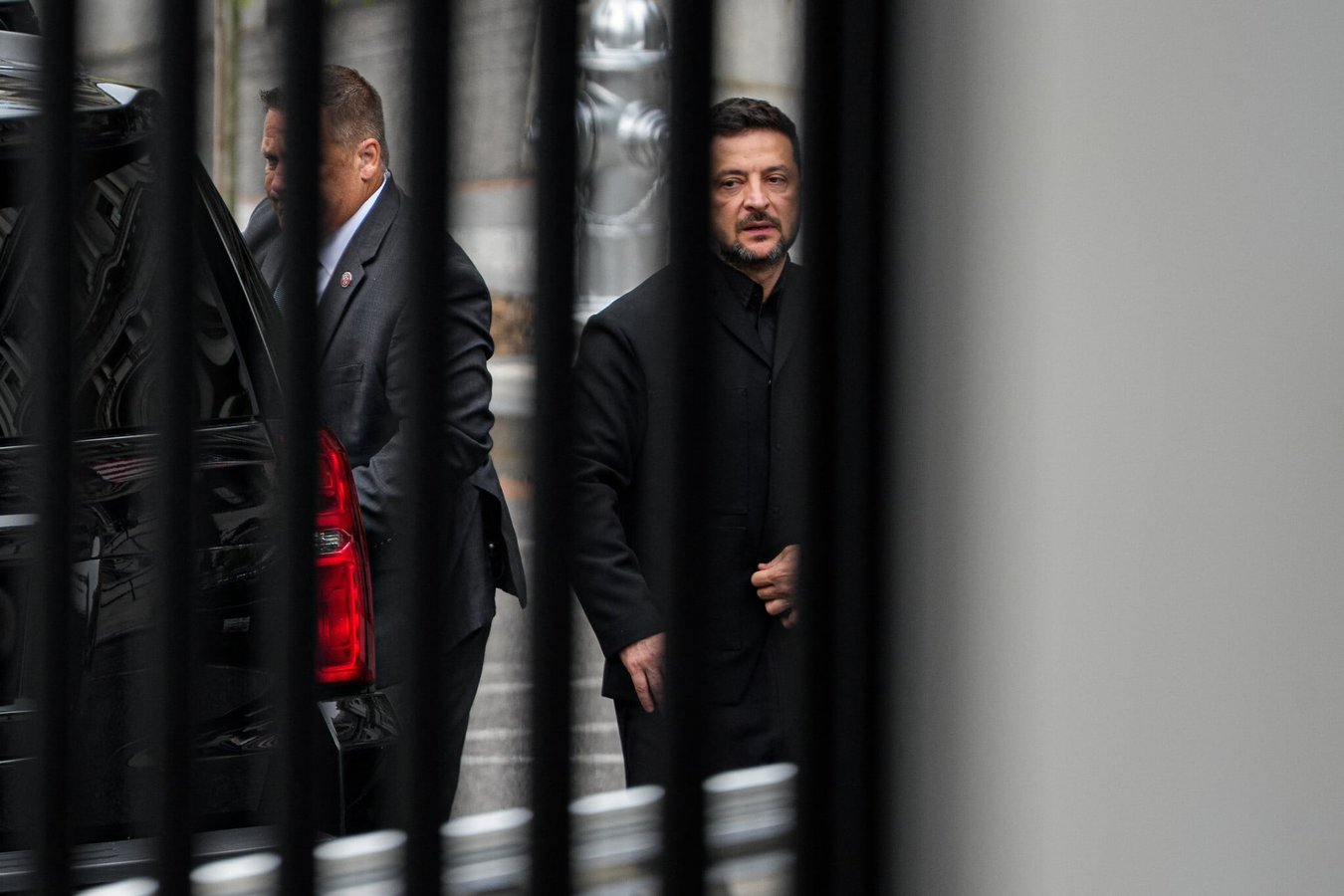
Zelensky came to Washington on Tuesday with a schedule that went beyond the funeral. He went to the White House first, for a second meeting with Trump this month — one that was not formally announced until the morning of July 28. Zelensky described it afterward on social media as a good meeting that covered production licenses for Patriot interceptor missiles and broader ideas for strengthening Ukraine’s air defense posture. No joint statement was released.
The funeral also produced something that neither side had planned publicly: Netanyahu and Zelensky shook hands at the cathedral, the first time the two leaders had been in the same room since September 2023, the Times of Israel reported. Their diplomatic tracks had diverged entirely since then, with Gaza absorbing Israel’s political bandwidth as Ukraine’s war continued. Graham was one of the few figures who had stayed in close contact with both governments. Netanyahu’s separate White House meeting with Trump had preceded the cathedral service by hours, focused on Iran’s nuclear program and the parameters of the ongoing conflict.
The presence of Finland’s Stubb in the same row as Zelensky carried its own note. Finland joined NATO in April 2023, sharing more than 800 miles of border with Russia. Helsinki has been among the more consistent European backers of Kyiv on weapons, financial support, and sanctions. Stubb and Zelensky sitting together in the fifth row, four rows behind Trump’s Cabinet, was a compact image of where European NATO allies currently stand relative to the decisions that shape Ukraine’s war.
Graham’s hawkish record created its own kind of vacuum. On Iran, on China, on Ukraine aid, he was a gravitational center for Republican senators who might otherwise have drifted toward the administration’s more transactional positions. Whether any single senator steps into that organizing role — or whether his positions scatter across the caucus — was a question Tuesday’s service left open. His politics were not just positions. They were personal relationships, built over years of uncomfortable visits and persistent phone calls, and those do not transfer to a successor.
Whether Zelensky and Trump exchanged any words at the cathedral itself — separate from the morning’s White House session — was not confirmed by either side by Tuesday evening. The morning meeting produced a readout on Patriot production. What the afternoon produced, if anything, had not been stated.
Lindsey Graham spent his last working hours in Kyiv. His body came home to Washington, and Washington came to him on Tuesday — the president who controls Ukraine’s weapons supply, the prime minister of Israel, the leader of a country NATO brought in from Russia’s border, and the man Graham spent the last years of his life trying to arm. The seating arrangement put them in the same room. It did not change where any of them sit.