
BANGKOK — The students at Debsirin Secondary School were known for one thing above all else: getting into university. The school in Nonthaburi Province, on the outskirts of Bangkok, had spent decades cultivating a reputation as one of Thailand’s most competitive college-preparatory institutions, drawing families from across the broader metropolitan area who believed rigorous academics was the surest route to a safer life for their children. On Friday morning, a ninth-grade student walked onto that campus with a gun.
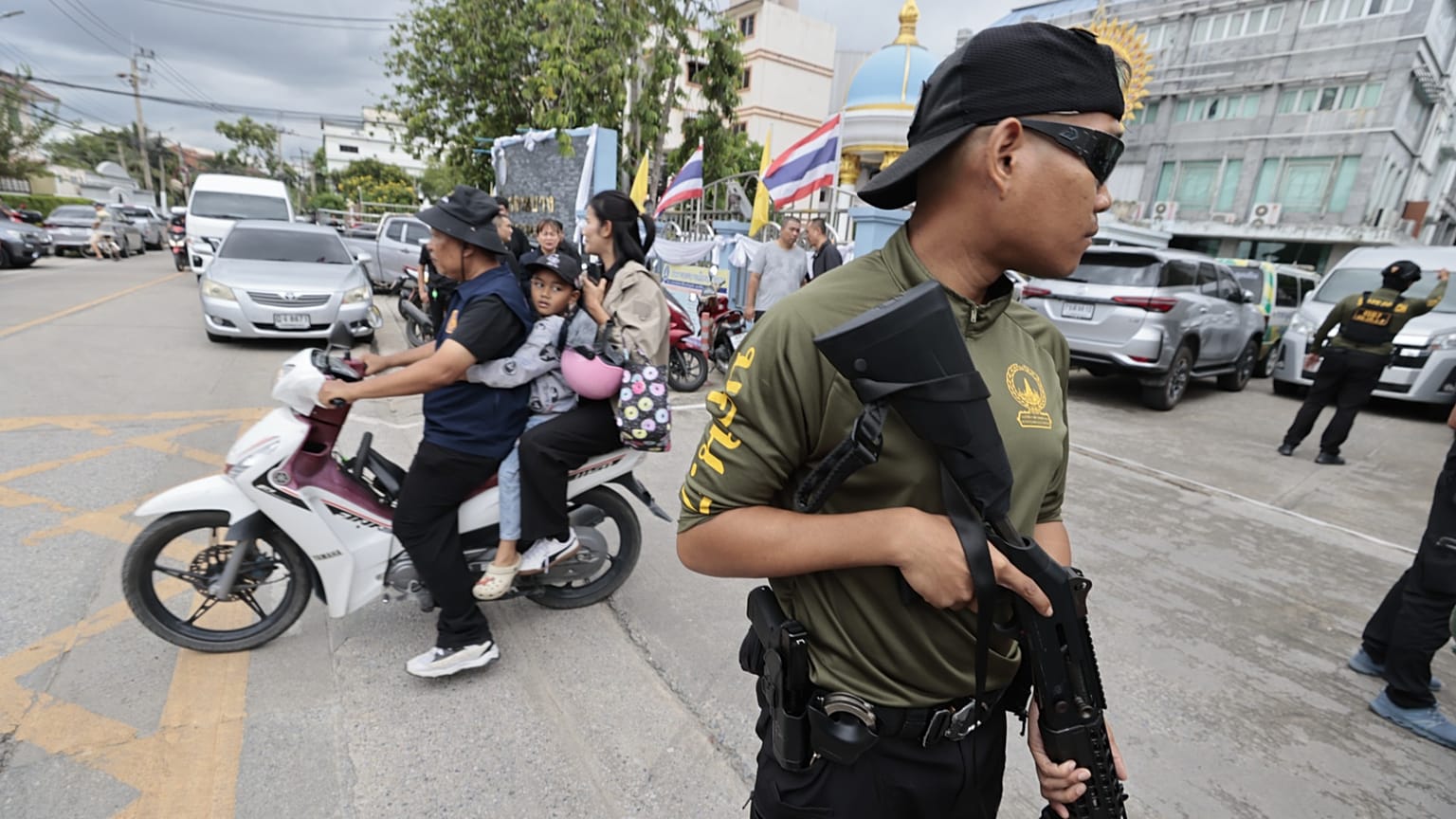
By the time police had secured the building, seven people were dead. Three teachers. Three students. And the shooter himself, a boy still in the early years of secondary school, who took his own life after the attack. Two other victims were taken to hospital in serious condition. Fifteen more were treated for other injuries. Euronews reported that Thai PBS, citing police, confirmed the final toll Friday, after earlier accounts had placed the number of fatalities at two.
The Debsirin Secondary School serves students from seventh through twelfth grade and has long ranked among the top institutions in the country for national university entrance preparation. Its enrollment reflects that standing: families travel from across the Bangkok metropolitan area to secure places inside its classrooms, drawn by a record of academic outcomes that has made the school’s name synonymous in Thailand with competitive secondary education. That name, by Friday afternoon, carried a very different weight.
Thai authorities confirmed the basic facts but had not publicly identified a motive by the end of the day. It was not immediately clear how the ninth-grader, whose name was not released, obtained the firearm used in the attack. Nor was it known whether school staff, counselors, or classmates had noticed warning signs before Friday, or whether any concerns had been reported to administrators. Those questions were left open as investigators worked through the scene in Nonthaburi, a densely populated suburb that sits directly north of the capital.
The death toll shifted through the morning as emergency response gave way to a more complete police accounting. Thai PBS initially reported two killed and at least twenty injured; as the day progressed, that figure climbed to its final count. Seven dead in total placed Friday’s incident among the most deadly school shootings Thailand has recorded, in a country where such events have been rare enough that no established institutional response existed to meet one.

Thailand’s civilian firearm ownership rate is among the higher ones in Southeast Asia, a product of geography, history, and a regulatory framework that critics have long argued leaves too many weapons circulating outside official channels. Unregistered arms are particularly prevalent in the country’s southern border provinces, where a separatist insurgency has killed more than 7,000 people over two decades and where checkpoint attacks on security forces remain a documented pattern. Urban schools in Bangkok and the surrounding provincial towns have not historically been considered environments where armed violence required serious advance planning. Debsirin’s location inside Nonthaburi, a province that functions as a residential and commercial extension of the capital, had given no prior indication of unusual risk.
What the school did have, and what made Friday’s attack particularly disorienting for parents and educators, was a well-established identity. Families who secure a place at Debsirin typically understand it as the result of sustained early effort, the kind of investment in tutoring, preparation, and placement that Thai secondary education demands before a child ever walks through a top school’s gates. The violence on Friday unfolded inside an institution that had come to represent, for many, the payoff of that work. The school’s administration had not issued a public statement as of Friday afternoon.
The Thai government had also not published a formal response, and the education ministry had not commented publicly. It was not known whether the school maintained a lockdown or emergency protocol and whether one was activated Friday. Emergency services arrived and treated the wounded; the full timeline of the police response had not been officially released.
The shooting came as Thailand’s government had directed much of its security focus toward the country’s continuing regional tensions, with political and military pressures occupying state attention in ways that left domestic institutional violence less prepared for. Southeast Asia has seen political instability ripple into everyday settings with striking regularity this year, as the crisis in neighboring Bangladesh, where the exiled prime minister this week vowed to return in December amid a widening diplomatic rupture with India, has shown. A ninth-grade student in a Nonthaburi classroom represented a different category of threat, one for which Thursday’s academic calendar had contained no warning.
In other countries, mass-casualty school shootings have triggered prolonged legislative attention to firearms access. Thailand’s public discourse on gun regulation has historically been limited, and whether Friday’s events would generate pressure for stricter controls remained, by the end of the day, a question that officials with the power to answer it had not yet addressed.
What brought a student in a university-track school to that point, what moved a ninth-grader to carry a firearm into one of Thailand’s most academically demanding institutions and use it against his teachers and peers, was a question the investigation had not yet resolved. It may be weeks before it does. The families of the three teachers and three students killed on Friday will be waiting for that answer from the start.