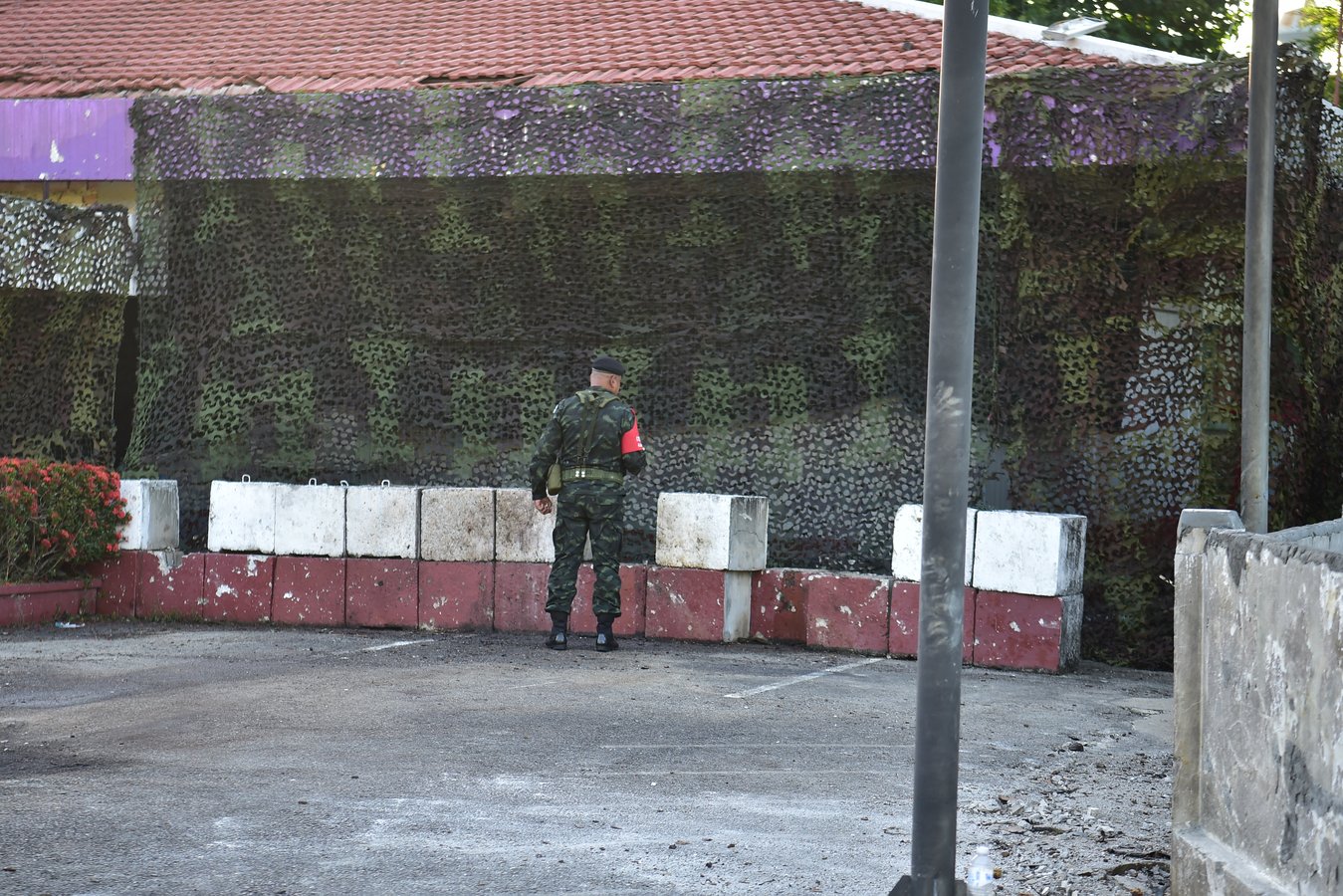

BANGKOK – They arrived before dawn at the Buketa Sami checkpoint in Narathiwat province: around ten men dressed in black, arriving by pickup truck and motorcycle, armed with AK-47 assault rifles and pipe bombs. By the time they fled – seizing three rifles, three bulletproof vests, and several mobile phones from the soldiers they had killed – five Thai paramilitary soldiers were dead and six civilians lay wounded. The truck was found burning twenty-one kilometres away. No group has claimed responsibility.
The attack on Wednesday afternoon in Narathiwat, one of three majority-ethnic-Malay provinces that have formed the epicentre of Thailand’s southern insurgency since 2004, was one of the deadliest single incidents against security forces in the region in recent years. It followed a car bombing the previous day at a former police station in the same province, which injured one officer. The two attacks in quick succession suggest a deliberate escalation rather than isolated opportunism.
Thailand’s government spokeswoman Rachada Dhnadirek condemned the checkpoint assault as terrorism that posed “a serious threat to national security” and was “undermining peace efforts.” The Royal Thai Army paid tribute to the dead soldiers, saying their “service and sacrifice will be remembered and honoured with the highest respect.” Neither the army nor the police announced any arrests in connection with either attack.
Southern Thailand’s insurgency has been one of the most persistent and underreported armed conflicts in Asia. The three border provinces of Narathiwat, Pattani, and Yala are home to an ethnic Malay Muslim population that historically resisted absorption into the Thai Buddhist state. Separatist violence began in its modern form in 2004, when a series of coordinated attacks marked the insurgency’s return after a period of relative quiet. More than 7,000 people have been killed since then, overwhelmingly in targeted assassinations, roadside bombings, and checkpoint ambushes of the kind that struck Buketa Sami on Wednesday.
The primary armed group operating in the south is the Barisan Revolusi Nasional, or BRN, a clandestine organisation that has intermittently participated in peace talks brokered by Malaysia. Bangkok and the BRN engaged in a formal dialogue process beginning in 2013, with Malaysia serving as a facilitator. Those talks have been suspended and resumed several times, and the BRN has historically refused to halt attacks as a precondition for negotiations, arguing that military pressure and political engagement are not mutually exclusive. Peace talks were expected to resume in June, but the status of those discussions following Wednesday’s attack remained unclear as of this report.
The tactics on display at the Buketa Sami checkpoint are familiar from two decades of violence. Armed cells stage coordinated strikes on security positions, seize weapons, and withdraw quickly before reinforcements arrive. The burning of the escape vehicle eliminates forensic evidence and is a standard feature of BRN operational discipline, though the group’s decentralised structure means individual cells sometimes act without central direction. The absence of a claim of responsibility is also consistent with the BRN’s historical practice; the group rarely claims attacks publicly and often allows ambiguity about its role to persist.

Al Jazeera reported the attack, citing officials confirming the death toll and the subsequent discovery of the abandoned, burning truck. The attack occurred in Narathiwat’s Ban Buketa Sami area, a district that has seen previous IED attacks targeting security forces in the same province over years of unresolved conflict.
The broader political context complicates any response. Thailand’s southern provinces remain socially and culturally distinct from the Thai Buddhist majority: the local population speaks Malay, practises Islam, and has historically maintained stronger cultural ties to Malaysia than to Bangkok. Thai governments across different political configurations have tried combinations of military pressure, development spending, and negotiated dialogue without resolving the fundamental grievance that animates the insurgency – the question of political autonomy or recognition for the Malay-speaking south.
Human rights organisations have documented concerns about both sides of the conflict. Security forces have been accused of extrajudicial killings, torture of detainees, and the use of emergency powers that give the military sweeping authority with limited accountability in the three provinces. The BRN and affiliated groups have carried out attacks that killed not only soldiers but also teachers, monks, and civilians with no discernible connection to the security apparatus. The civilian population of Narathiwat, Pattani, and Yala has lived with the consequences of both.
The Buketa Sami attack adds five names to a toll that rarely receives sustained international attention. Coverage of the southern Thailand conflict peaks briefly after major incidents and then fades as the insurgency recedes into the background of more prominent crises. That cycle has not produced a resolution in twenty-two years. What the attack on Wednesday makes clear is that the BRN – or whatever armed cell carried out the assault – retains both the capability and the intent to continue targeting Thai security forces, regardless of the state of any peace process. The grievance that drove the insurgency’s resurgence in 2004 has not been addressed by either side in a way that has made that kind of violence unnecessary.