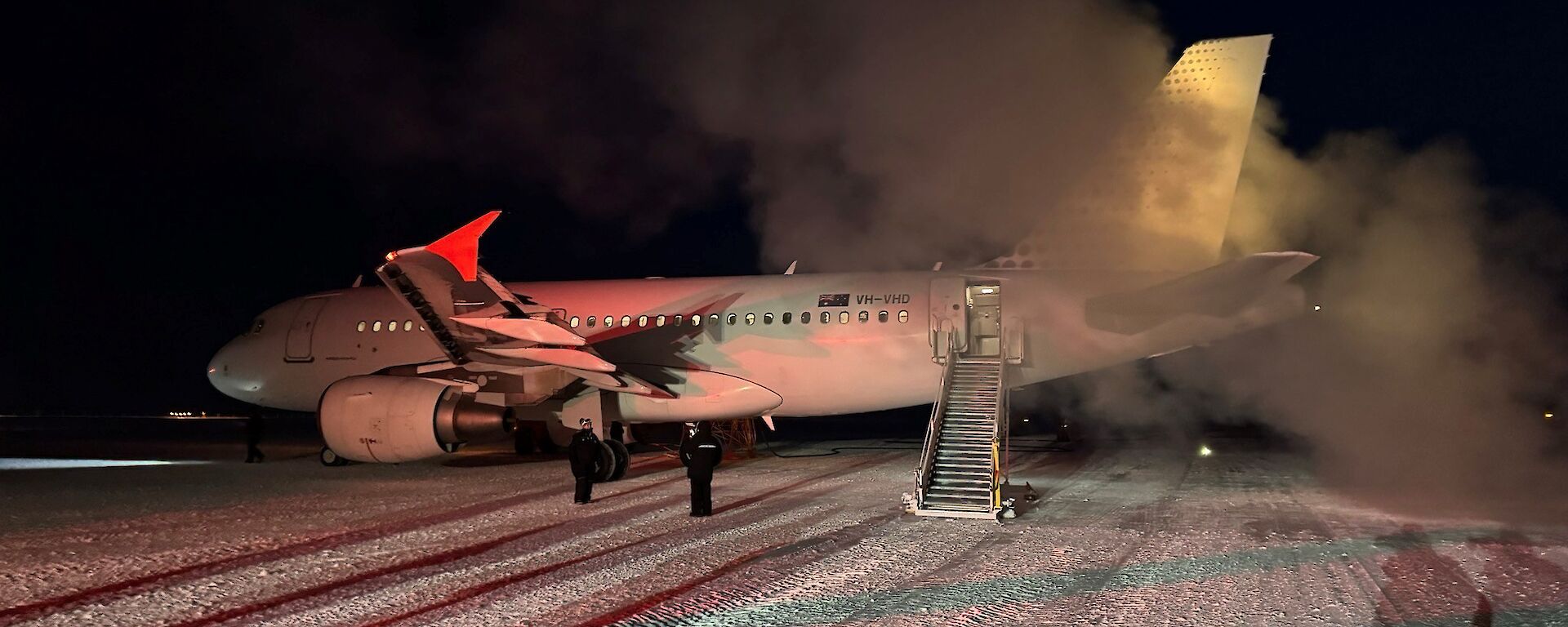

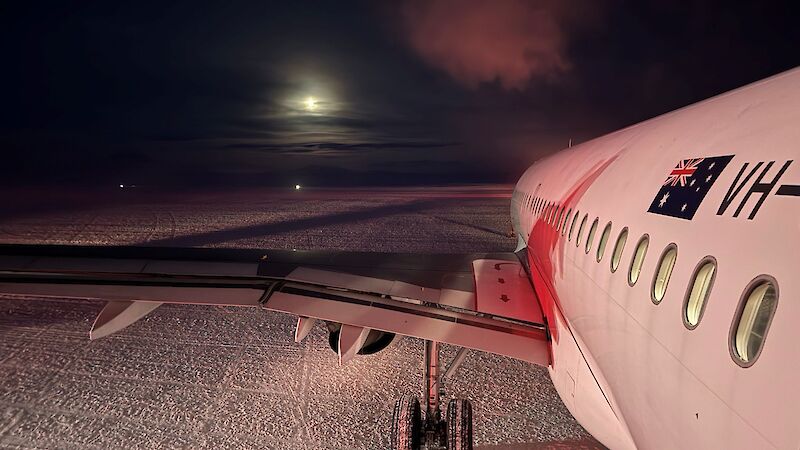
HOBART – The A319 that departed Hobart in the early morning hours of July 31 carried with it a narrow wager against the Antarctic winter: that somewhere between near-total darkness, temperatures approaching minus forty-three degrees Celsius at the landing strip and a weather window that could close within minutes, a medical retrieval from McMurdo Station was still possible.
Five hours later, flying entirely in darkness, the aircraft reached Ross Island. The Australian Antarctic Division confirmed Thursday that the operation succeeded: a United States expeditioner had been evacuated from McMurdo Station, the American research base on the island’s edge, and flown onward to Christchurch, New Zealand, for medical treatment. The rescue was one of only a handful of midwinter medical retrievals ever completed from the Antarctic continent during the months when the region is effectively sealed from the outside world.
The expeditioner’s identity and medical condition have not been publicly disclosed. The Centre for Antarctic, Remote and Maritime Medicine, known as CARMM and based at the University of Tasmania, provided medical consultation throughout the rescue’s planning and execution. The National Science Foundation, which funds and manages the United States Antarctic Program, coordinated with AAD throughout the operation.
Emma Campbell, AAD’s head of division, described what she called a “complex operation carried out in the depths of the Antarctic winter” that required coordinating runway teams, meteorologists, medical personnel and flight crews across two programs with distinct national mandates. The Australian Antarctic Division said the rescue highlighted “both the capability of our people and the strong partnerships that underpin Antarctic programs around the world.” Captain Al Wallach, who piloted the A319 into McMurdo, noted that while every Antarctic mission demands precision, winter operations raise the complexity “significantly.”
Midwinter evacuations from Antarctica are rare precisely because the conditions that define the season make them so dangerous. During Antarctica’s polar night, which runs from April through October, the sun does not rise above the horizon at high southern latitudes. Temperatures at McMurdo Station regularly fall below minus thirty degrees Celsius; on July 31 they reached minus forty-three. Wind conditions can deteriorate within the hour. Commercial aviation has never operated scheduled routes to Antarctica during winter, and even specialist operators like Skytraders, which holds the Australian government contract for Antarctic aviation, are bound by specific weather criteria before any flight can proceed south.
McMurdo Station, operated by the United States Antarctic Program under the NSF, is one of three year-round American research facilities in Antarctica and the largest single station on the continent. During summer it houses up to 1,000 people; in winter, its population contracts to between 40 and 200 personnel. Those who remain through the polar night are researchers, support staff and contractors who maintain equipment, conduct science and keep the station operational. All winter-over personnel undergo medical screening before deployment. None of that eliminates emergencies, and the station is not equipped to manage every medical situation that can arise over several months of isolation.
The Antarctic research community has faced similar situations before. A 2001 evacuation of American physician Ronald Shemenski from the Amundsen-Scott South Pole Station, after he developed pancreatitis, required weeks of planning and a specific weather window before an aircraft could fly in. A 2016 midwinter retrieval from the same station, involving two workers, established further precedent. Each case refined the protocols, weather thresholds and medical criteria that national programs now use to decide when an evacuation is necessary and when it is feasible.
Research into Antarctica’s broader changes, including recent satellite mapping of Antarctic ice structures by the NASA-ISRO NISAR mission, has expanded the scientific case for year-round human presence on the continent, even as that presence requires increasingly robust emergency planning. The Antarctic research community has also confronted the reality that medical crises in Antarctic waters can escalate rapidly in environments where standard emergency response infrastructure does not exist.
The details of what triggered this particular emergency have not been released. AAD said it would not disclose the expeditioner’s medical condition out of respect for their privacy. How long the planning phase lasted, what conditions were met before the flight was authorised, and how many people were involved in the ground operation at McMurdo prior to the aircraft’s arrival remain undisclosed.
What the evacuation does make clear is how heavily mid-winter Antarctic medical capability depends on Australian infrastructure. Hobart’s position as one of the closest major cities to the high latitudes of the Southern Ocean gives the Australian Antarctic Program a geographic advantage that few other national programs can match. Skytraders, under its Australian government contract, is one of only a few operators globally with both the aircraft and crew certifications required for Antarctic winter operations. CARMM’s institutional proximity to that logistics chain means medical expertise is embedded into the response mechanism from the outset.
For the expeditioner now recovering in New Zealand, the machinery that produced the successful flight south and back remained largely invisible: a sequence of communications, weather assessments and medical calculations that unfolded in one of Earth’s most demanding environments and produced, against the weight of Antarctic winter, a successful retrieval. What the long-term outcome will be remains, like so much of what happens in the polar darkness, unreported.