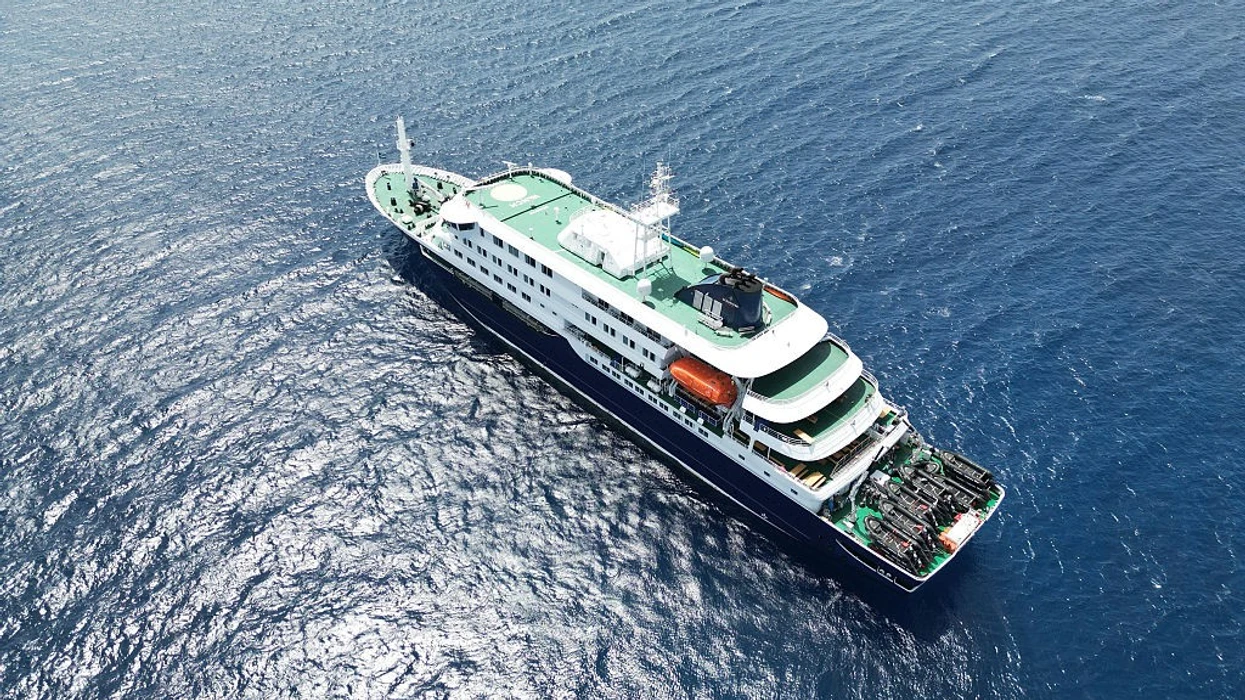

The luxury expedition vessel drifted for days in the Atlantic as health officials across Europe, Africa, Asia and the Americas raced to trace passengers who may have carried one of the world’s rarest and deadliest viruses across international borders.
At the center of the outbreak is the MV Hondius, a Dutch-operated polar cruise ship that departed Ushuaia, Argentina, in early April for a weeks-long voyage through Antarctica and remote islands in the South Atlantic. What began as a high-end expedition for wildlife enthusiasts and adventure tourists has since evolved into an extraordinary multinational public health operation.
The World Health Organization said at least eight confirmed or suspected cases of hantavirus infection have now been linked to the vessel, including three deaths. Several passengers remain hospitalized in multiple countries, while others are under strict monitoring after dispersing across continents before the outbreak was fully understood.
What has alarmed health officials is not simply the virus itself, but the strain involved.
Authorities confirmed that the outbreak is linked to the Andes strain of hantavirus, the only known hantavirus capable of limited person-to-person transmission. Though such transmission remains rare and generally requires prolonged close contact, the confined conditions aboard a cruise vessel transformed the ship into an immediate international concern.
The first known death occurred during the voyage in mid-April, when a passenger reportedly fell ill aboard the ship. At the time, the death was not initially linked to hantavirus. Days later, the passenger’s wife was evacuated from the vessel during a stop at Saint Helena before dying in a Johannesburg hospital. Another passenger later died aboard the ship as additional respiratory illnesses emerged among travelers and crew members.
By early May, international alarm escalated.
Cape Verde refused the vessel permission to dock as medical teams boarded the ship offshore. Spain later agreed to receive the vessel in the Canary Islands under emergency health protocols after pressure mounted to evacuate ill passengers and isolate potential infections. Reuters reported that Spain confirmed it would receive the hantavirus-hit cruise ship under humanitarian arrangements.
The outbreak has since stretched far beyond the ship itself.
The UK Health Security Agency confirmed multiple British-linked cases connected to the voyage and said a further suspected infection had emerged on Tristan da Cunha, one of the world’s most isolated inhabited islands. The island, located deep in the South Atlantic Ocean, had been visited by the cruise ship during its itinerary weeks earlier.
Singapore, South Africa, Switzerland, the Netherlands and the UK are among the countries monitoring exposed travelers. Reuters reported that governments across several continents have launched global health investigation efforts to trace passengers who may have been exposed during the voyage.
Authorities in India said two Indian crew members aboard the ship remain asymptomatic but are under medical observation.
The US Centers for Disease Control and Prevention has reportedly activated a Level 3 emergency response, the agency’s lowest emergency activation category, while emphasizing that the broader public risk remains low.
For many epidemiologists, however, the incident has revived memories of the early confusion that surrounded international outbreaks during the Covid-19 pandemic.
Cruise ships, with dense living quarters, shared ventilation systems and constant international movement, remain uniquely vulnerable environments during infectious disease events. The Hondius outbreak has exposed how quickly a localized health incident can become a transnational surveillance challenge once passengers disperse through airports and commercial flights before symptoms fully emerge.
The outbreak has also renewed scrutiny over how international health agencies coordinate responses to infectious diseases that move rapidly across borders through tourism and aviation networks.
Hantaviruses are typically transmitted to humans through exposure to infected rodent urine, saliva or droppings. Human infections are uncommon, but severe cases can lead to hantavirus pulmonary syndrome, a rapidly progressing respiratory illness that can prove fatal. Reuters explained in a detailed report on the rare hantavirus infection that the Andes strain remains especially concerning because of its ability to spread between humans under limited conditions.
Scientists still do not know precisely where exposure aboard the MV Hondius first occurred.
Some investigators believe passengers may have encountered infected rodents during shore excursions in remote parts of South America or surrounding islands. Others have not ruled out onboard environmental contamination. Epidemiologists are now reconstructing passenger movements and close-contact interactions across several weeks of travel.
Meanwhile, passengers aboard the ship have described growing anxiety as the outbreak unfolded in isolation far from mainland medical facilities. Reuters described how passengers remained confined aboard the vessel while authorities searched for a port willing to receive the ship.
Several travelers remained confined aboard the vessel while awaiting clearance to disembark. Others were transferred under biosecurity measures to hospitals in Europe and Africa. Governments have since launched contact tracing operations involving dozens of passengers who had already returned home before health alerts intensified.
The crisis aboard the ship has also drawn attention to broader infectious disease risks linked to global travel and climate-driven shifts in public health vulnerabilities.
Health experts say the MV Hondius incident could become a case study in how fragile modern outbreak containment systems remain when rare pathogens intersect with mass international mobility.
Earlier reporting by The Eastern Herald described the vessel as a floating quarantine after Cape Verde denied the ship permission to dock during the height of the emergency.
WHO has repeatedly stressed that the outbreak does not currently represent a broader global threat and said the likelihood of sustained community transmission remains low. But officials also acknowledged that more cases could emerge because hantavirus symptoms may take weeks to appear after exposure.
For now, the image of a luxury expedition cruise drifting through the Atlantic under viral surveillance has become an unsettling symbol of how fragile international health containment can become in an era of hypermobility.
And for public health agencies still shaped by the lessons of the pandemic years, the Hondius outbreak has become another reminder that even rare pathogens can trigger global consequences when they travel faster than the systems built to contain them.