
WASHINGTON — When Canadian officials sat down with their American counterparts on Thursday, Trade Minister Dominic LeBlanc emerged from the talks describing them as productive. Less than 24 hours later, negotiations had collapsed, and the United States had imposed 50 percent tariffs on $20 billion worth of Canadian goods — using a provision of American trade law that has never been invoked to levy tariffs in nearly a century of its existence.
President Donald Trump signed the executive order Friday, reaching for Section 338 of the Tariff Act of 1930, a retaliatory provision written during the Great Depression and designed for nations the United States considers to be maintaining discriminatory trade practices against it. No American administration had ever used it to impose tariffs before. Its deployment against Canada — the country’s largest trading partner and a fellow signatory to the United States-Mexico-Canada Agreement — marks a rupture in North American economic relations with no modern precedent.
The tariffs, which took effect at midnight, cover a politically curated list of Canadian exports: hockey sticks, building materials, liquors, clothing, and tongue depressors. They affect roughly 5 percent of Canada’s annual exports to the United States, set against $880 billion in total annual bilateral trade that has until now defined one of the world’s most integrated economic partnerships. The immediate effect on oil prices and commodity markets is already feeding into weekend trading signals.
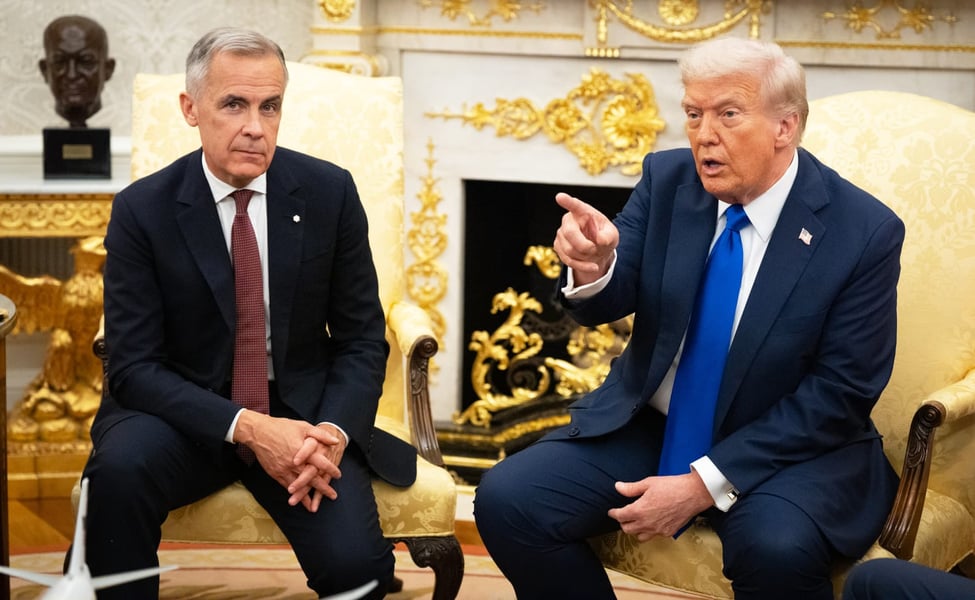
Prime Minister Mark Carney did not deliberate before responding. “Canada will match those tariffs dollar for dollar to protect our workers and businesses,” he said, announcing retaliatory measures that mirrored the American action and suspending the negotiations that his government had, hours earlier, still described as ongoing.
Carney attributed the breakdown to a last-minute shift in American demands. “Last-minute changes in the U.S. proposed terms were unfair, uneconomic, and called into question the reliability of any deal,” he said. Neither his government nor the American side specified what those changes were — a mutual silence that defined the end of talks that both governments had, just days earlier, treated as still alive.
The speed of the collapse stunned observers on both sides of the border. Negotiations had paused Tuesday, resumed Thursday with enough apparent progress that LeBlanc expressed cautious public optimism, and collapsed entirely at 10:30 p.m. ET Friday — all within 96 hours. U.S. Trade Representative Jamieson Greer offered a defense that gestured at reasons without providing them. “The policy basis for those duties are related to measures that Canada took,” he said. What those measures were, he did not say.
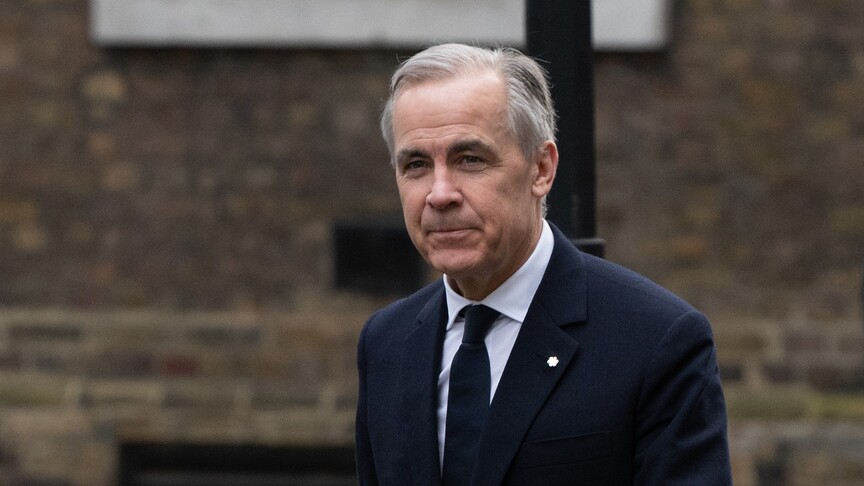
Ontario Premier Doug Ford backed Carney’s retaliation without hesitation.
Manitoba Premier Wab Kinew and Quebec Premier Christine Fréchette added their voices to the provincial pushback as industries across Canada began calculating what a 50 percent cost disadvantage in their largest foreign market would mean for tens of thousands of workers.
The use of Section 338 is more than a legal curiosity. Unlike the statutes the Trump administration has typically invoked for trade measures — Section 232 for national security tariffs, Section 301 for intellectual property violations — Section 338 carries no formal procedural requirements. There is no investigation, no injury finding, no defined timeline for resolution, and no clear mechanism within the USMCA’s dispute framework to challenge duties imposed under it. That procedural vacuum has left Canadian officials without the established pathway they would have used under more conventional trade-law authorities. The wider US-Canada tariff war from the administration’s simultaneous global confrontations has left traditional allies like Canada with little diplomatic leverage.
The USMCA was written to manage exactly this kind of friction between its three signatories. It was not designed for a situation in which one signatory invokes a 96-year-old weapon against another while simultaneously asserting that the agreement remains in force. Whether the retaliatory tariffs Carney announced constitute a breach of USMCA obligations — or whether the Section 338 action itself does — is a legal question neither government has yet answered.
The Canadian Chamber of Commerce, through president Candace Laing, warned that small and mid-sized manufacturers exporting to the United States were already absorbing losses from previous rounds of trade friction and had little capacity for another. A petition demanding the expulsion of the U.S. ambassador had gathered 248,000 signatures since July, reflecting the depth of Canadian public anger that had been building long before Friday’s announcement gave it formal expression.
Carney’s government announced it would provide additional support to workers and companies affected by the tariffs, without providing specifics. What the Trump administration wanted from Canada that it could not get — and whether that gap is bridgeable — remains the question that neither side’s statement addressed when the midnight deadline passed and the tariffs took effect.