
NEW YORK — Eleven days ago SanDisk sat investors down and told them what a flash memory company can be worth. From fiscal 2028 through fiscal 2030, it said, expect gross margins of around 80 per cent, operating margins of around 75 per cent, and roughly half of revenue converting to free cash flow. Operating expenses would run at about 5 per cent of sales. Whatever was left after reinvestment would go back to shareholders in full.
On Monday the market took 6.9 per cent off the stock.
SanDisk traded at $1,486.41 shortly after noon in New York, and it was not alone. Micron fell 5.7 per cent, Seagate 5.6 per cent, Western Digital 5.5 per cent. Every large American storage name moved together and moved down, which is the signature of a sector being sold rather than a company being judged. The Philadelphia Semiconductor Index was off 2.69 per cent and sits 22 per cent below its 52-week high. The Dow, across town, was up 0.42 per cent.
The question worth asking is not why SanDisk fell. It is which of two incompatible claims Monday’s tape was making: that flash has stopped being a commodity, as the company’s own model asserts, or that it has not, and a 75 per cent operating margin is a number to be discounted rather than banked.
SNDK Stock Today: The Whole Storage Shelf Fell Together
| Company | Price | Session | Below 52-week high |
|---|---|---|---|
| SanDisk (SNDK) | $1,486.41 | -6.87% | -36.9% |
| Micron Technology (MU) | $911.72 | -5.70% | -27.4% |
| Seagate Technology (STX) | $802.64 | -5.57% | -29.9% |
| Western Digital (WDC) | $434.41 | -5.45% | -45.7% |
| Nvidia (NVDA) | $210.33 | -2.04% | -11.1% |
| PHLX Semiconductor Index (SOX) | 11,424.66 | -2.69% | -22.0% |
| Nasdaq 100 | 29,105.52 | -0.69% | -5.4% |
| Dow Jones Industrial Average | 53,499.58 | +0.42% | -2.3% |
| Live intraday quotes at 12:03pm New York time, not settlements. Distance from the 52-week high is Eastern Herald’s calculation from the quoted price. Four storage names moving between 5.4 and 6.9 per cent in the same direction on the same morning is a sector trade; no company-specific news accounts for it. | |||
SanDisk has the shortest history of any of them. Western Digital separated its flash business in February 2025 and SanDisk began trading on Nasdaq as an independent company. In the twelve months that followed it was the single best performing stock in the S&P 500, up 559 per cent, with its former parent second at 282 per cent. Western Digital finished disposing of its remaining stake by early July.
A stock that rises 559 per cent in a year and then gives back 37 per cent from its peak has not broken. It has been repriced by people who bought it at very different levels for very different reasons, and it is worth holding both numbers in view at once.
It Has Already Made 61 Per Cent
The most useful correction to the sceptical reading is not an argument. It is SanDisk’s own annual report, filed a week ago and covering the year that ended on July 3.
| Line item | FY2026 ($m) | Share of revenue | FY2025 ($m) | Share of revenue |
|---|---|---|---|---|
| Revenue, net | 20,248 | 100.0% | 7,355 | 100.0% |
| Cost of revenue | 5,776 | 28.5% | 5,143 | 69.9% |
| Gross profit | 14,472 | 71.5% | 2,212 | 30.1% |
| Research and development | 1,328 | 6.6% | 1,132 | 15.4% |
| Selling, general and administrative | 676 | 3.3% | 573 | 7.8% |
| Total operating expenses | 2,083 | 10.2% | 3,589 | 48.8% |
| Operating income (loss) | 12,389 | 61.3% | (1,377) | -18.7% |
| Net income | 11,433 | 56.5% | — | loss |
| Figures as reported. The fiscal 2025 operating loss includes a goodwill impairment of $1,830 million, without which the prior year would have been closer to breakeven. Fiscal 2026 income before taxes of $13,017 million includes an $808 million net gain on equity securities, which is not an operating item. | ||||
Revenue rose 175 per cent while cost of revenue rose 12. Gross margin went from 30.1 per cent of sales to 71.5, and the company swung from an operating loss to $12.4 billion of operating income. Those figures are in the annual report SanDisk filed with the Securities and Exchange Commission on August 17.
That changes the shape of the argument considerably. A 75 per cent operating margin promised for fiscal 2028 is not a leap from nowhere. It is 14 percentage points above what the company has already delivered.

What SanDisk Is Actually Claiming
The August 13 investor day is the document that puts a number on the rest. David Goeckeler, the chairman and chief executive, framed the results as the product of a strategy set out eighteen months earlier. Luis Visoso, the chief financial officer, gave the capital return commitment: 100 per cent of excess cash to shareholders after investing in the business.
The mechanism underneath is what SanDisk calls its New Business Model agreements. It has signed eight of them. They carry committed volumes, minimum financial guarantees and structured pricing, and they cover roughly half of the company’s bits in fiscal 2027 and about two-thirds in fiscal 2028.
That is the whole argument in one sentence: if two-thirds of your output is sold on contracted volume with a price floor, you are not running a commodity business any more.
Where the Model Still Has to Stretch
The gap between 61.3 per cent and 75 is not in the gross margin, which at 71.5 per cent is already close to the roughly 80 per cent the model assumes. It is in operating expenses. SanDisk spent 10.2 per cent of revenue on research, selling and administration last year. The model assumes about 5.
So the promise is not really about pricing at all. It is a bet that revenue grows fast enough for a broadly fixed cost base to halve as a share of sales, while research spending stays sufficient to keep pace with Samsung and SK Hynix on process technology. That is a more specific and more testable claim than the headline margin, and it is the one worth watching.
Two further cautions belong on the same page as the headline numbers. The model covers fiscal 2028 to fiscal 2030, which is two years out before it even begins, and a target set three years ahead is a statement of intent rather than a forecast anybody can hold the company to yet. And those forward margins are non-GAAP, which means they exclude items the company has defined and investors have to accept, unlike the audited figures in the table above.
Supply is the other half. Samsung Electronics and SK Hynix have committed to very large new fabrication capacity, and Micron has guided capital spending above $25 billion for fiscal 2026 with a further step up to come. None of that reaches volume production until late 2027 or 2028, which is precisely when SanDisk’s model starts. Whether contracted pricing survives contact with that wave of supply is the single largest unknown in the entire thesis.
Where the Squeeze Is Already Visible
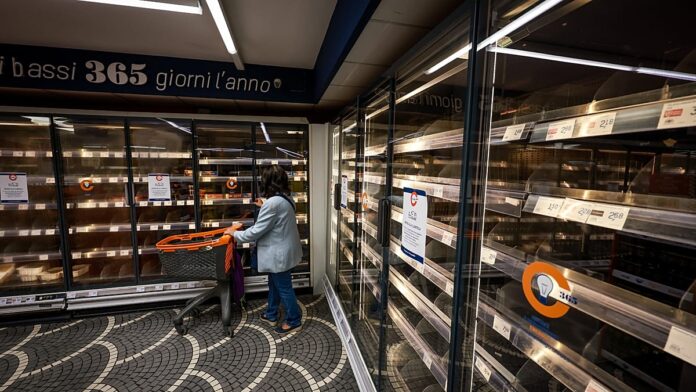
The shortage is not an abstraction confined to data centre procurement. It has reached retail shelves, where flash storage prices have climbed through 2026 and consumer drives that were routinely discounted are now markedly more expensive. That is the same supply and demand imbalance the investor day describes, arriving at the other end of the market.
It is also the connection to Nvidia. Fortune reported last week that Nvidia has told customers server prices are rising more than 15 per cent on systems shipping early next year, with memory cost given as the reason. Nvidia did not comment and the sources were unnamed, which should be said plainly. Read alongside Nvidia’s results due on Wednesday, it suggests the storage industry’s pricing power is currently showing up on someone else’s income statement rather than being doubted.
Our companion column on Micron, whose 2026 output is already contracted and whose last filed quarter carried an 84.6 per cent gross margin, makes the same point from the DRAM side, and the wider market context is in Monday’s Dow column, where the blue-chip index rose while technology fell.
What This Column Cannot Tell You Yet
We do not know who the eight customers are. SanDisk has not named them, has not published the minimum guarantee levels, and has not disclosed how the structured pricing works. Without those three things nobody outside the contracts can test the model, and any analyst publishing a precise fiscal 2028 earnings figure for SanDisk is building on a floor whose height has never been made public.
We also cannot say whether Monday was about SanDisk at all. Four storage companies fell between 5.4 and 6.9 per cent within the same hour on no company news, two days before Nvidia reports and four days before the Federal Reserve chair speaks at Jackson Hole. That is consistent with funds reducing exposure to a crowded trade, and equally consistent with the first leg of a genuine re-rating. The difference will not be visible until the buyers come back, or do not.