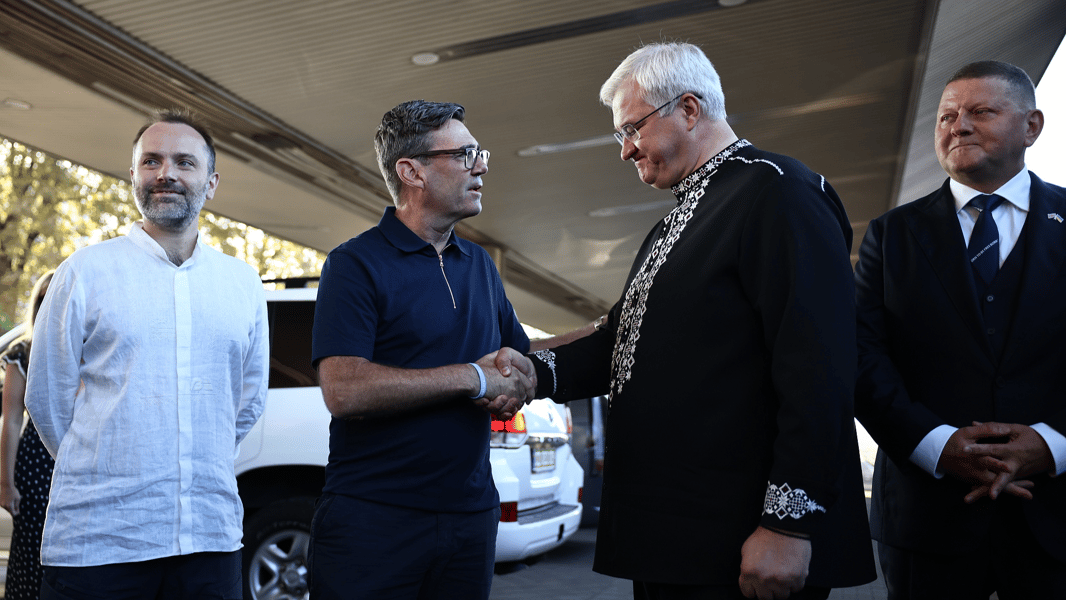

KYIV – Andy Burnham’s decision to make Ukraine his first foreign destination as British Prime Minister was not a gesture chosen lightly. On a day when Kyiv filled with European flags and the weight of three and a half years of Russian operation hung over every ceremonial moment, the optics were unmistakably deliberate: Britain, post-election, post-Brexit, still anchored to the continent’s most consequential crisis.
Ukraine’s 35th anniversary of independence from the Soviet Union drew a larger contingent of European leaders than any previous wartime commemoration. European Council President Antonio Costa, European Commission President Ursula von der Leyen, Moldovan President Maia Sandu, Estonian President Alar Karis, and Burnham all arrived in Kyiv on Sunday as the EU confirmed €6.1 billion in additional defense assistance for the rest of 2026 and a broader procurement framework totalling €16 billion in approved defense spending plans. Of that, €8.35 billion has already been disbursed.
The number that drew the most attention in Brussels procurement circles was not the headline figure. It was the disclosure that the United Kingdom would permit MBDA, the British defense company, to release classified technical information about British components embedded in the SCALP cruise missile. The release enables France and Ukraine to establish local SCALP assembly lines, bypassing the supply bottleneck that has kept munitions deliveries below operational demand for months. SCALP is a deep-strike precision weapon with a range that matters considerably at the current front lines. Getting it produced inside Ukraine changes the strategic calculus in a way that a financial package alone does not.
Burnham offered no lengthy prepared speech on arrival. What he said, briefly, was that his choice of first destination carried its own message. British foreign policy alignment on Ukraine was not a matter he intended to leave ambiguous in the opening weeks of his government. He has inherited a defence relationship with Kyiv that his predecessor built across two administrations, and the MBDA decision suggests he read the intelligence briefings and concluded the bottleneck was worth unblocking regardless of the diplomatic friction that might follow with Washington, which has its own sensitivities around the technology transfer.
For Zelenskyy, the day was an occasion for both gratitude and pressure. Speaking to assembled leaders, he pushed explicitly for inclusion in NATO’s budget framework. “If we are included in NATO’s budget framework, we will be stronger,” he said, in a formulation that has the virtue of being technically true and politically unanswerable in the short term. NATO’s budget framework does not currently extend to a non-member at war. What Zelenskyy was actually asking for was a different kind of commitment, one that would make long-term resourcing of Ukraine’s military a shared Alliance obligation rather than a rolling series of bilateral pledges subject to electoral politics in Berlin, Warsaw, and London.
The EU’s €6.1 billion announcement was the largest single defense tranche approved for Ukraine in 2026, but even its architects were careful not to present it as sufficient. Von der Leyen noted that Ukraine still needs approximately €30 billion in additional EU loans this year, a figure that reflects both the pace of consumption on the front line and the cost of rebuilding what has been destroyed in the east and south. The procurement tranche covers air-defense systems, missiles, ammunition, and radar systems, the four categories where Ukrainian military planners have been most consistently vocal about shortfalls. European partners have themselves acknowledged the strain: EU defense spending for Ukraine remains contested even among the strongest supporters.
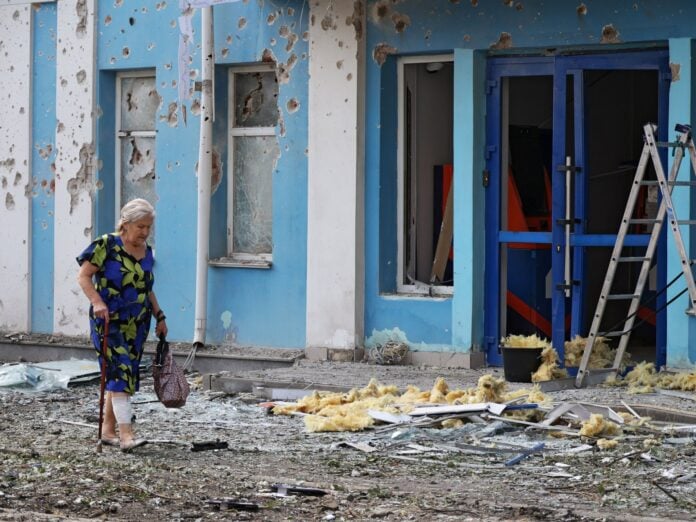
The commemoration itself unfolded quietly in the streets of central Kyiv. There were military parades and the display of captured Russian equipment, an annual tradition that has become part of how Ukraine publicly accounts for what it has taken from Russian forces in the field. The mood was not triumphalist. Three years into a Russian operation that was supposed to last days, Ukrainians who have lived through occupation, evacuation, and the systematic targeting of energy infrastructure tend toward a different register. The celebrations carry weight rather than lightness.
Foreign Affairs Minister Andrii Sybiha framed the day in terms that went beyond ceremony. He emphasized that European solidarity, measured in concrete military commitments, had become the organizing fact of Ukrainian security policy. The bilateral and multilateral agreements signed in the margins of the commemorations, including the SCALP technical release, were, in his characterization, what independence now meant: the capacity to defend the territory the 1991 declaration defined.
The MBDA classified-information decision is the element most likely to have lasting operational consequence. SCALP missiles are already in Ukrainian service, supplied by France and the United Kingdom in limited numbers that have constrained their operational use. A local assembly line, drawing on classified component specs previously withheld, would expand that supply independent of production schedules in Bristol and Bordeaux. What it would not resolve is the broader question of whether Ukraine’s European partners can sustain production at the pace the front demands, a question no single announcement on an Independence Day occasion can definitively answer. The Russia Ukraine war has strained alliance budgets and production capacity simultaneously.
For Burnham, the Kyiv visit closes one question and opens several others. His government has committed to the MBDA release. The next conversation, already beginning in Whitehall, is about what Britain’s long-term defense industrial relationship with Ukraine looks like if this conflict extends into a fourth or fifth year. That is the question European leaders are all avoiding stating plainly on a day meant to celebrate endurance. The commemoration was not the moment for it. The budget negotiations that follow will be.