
ABUJA — The video that circulated Sunday showed men and women seated in rows on the ground in a forested clearing. Children were visible among them. An armed man spoke in Hausa, directing the camera across the assembled captives: “These are all your people,” he said. Families watching online reported identifying elders, relatives, wives, and children they had last seen leaving for Friday prayers in Dekera village two days before.
Up to 600 worshippers were taken from the mosque in Niger State, north-central Nigeria, in one of the largest mass kidnappings the country has recorded. Armed gunmen entered during the afternoon congregation on Friday, August 22, when the mosque was at its fullest. No group has claimed responsibility. No ransom demands have been made public.
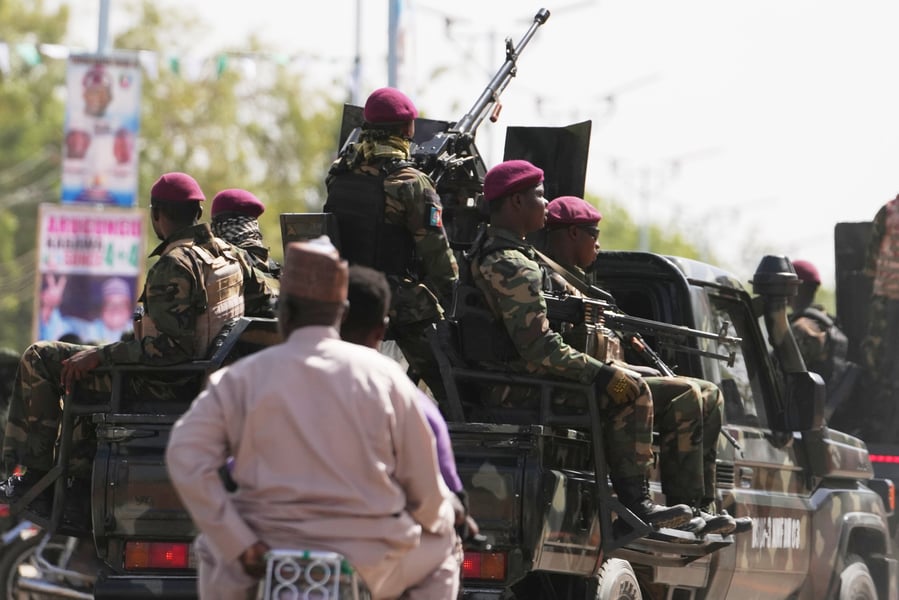
Niger State authorities said a rescue operation was underway. State Commissioner Obed Nana described the mission as an effort to “assess the situation, track the attackers, and facilitate the rescue” of those taken. What the operation had achieved by Sunday was not confirmed, according to Al Jazeera, which first reported the circulation of the video.
Amnesty International urged Nigerian authorities to take immediate action to secure the release of the hostages and hold those responsible to account. The organization described the attack as part of an accelerating pattern of violence against civilian populations in Nigeria’s Muslim-majority north, where communities have repeatedly faced mass abductions without effective state protection.
The scale of the Dekera abduction was exceptional even by the grim standard of kidnapping violence that has plagued Nigeria for years. Earlier this year, federal security forces recovered kidnapped Nigerian schoolchildren after 56 days in Boko Haram captivity, and armed gang attacks in Nigeria’s north killed at least 20 people in Zamfara in July. Both incidents drew presidential statements and pledges of renewed military force. The pattern continued regardless.
The choice of target in Dekera followed its own logic. Armed criminal networks in northwestern and north-central Nigeria have long exploited the predictability of civilian routines: attacks on schools have targeted fixed timetables, attacks on highways have focused on predictable traffic patterns, attacks on markets have concentrated on fixed trading days. A mosque during Jumu’ah, the Friday congregation that draws the largest weekly attendance, offered the same advantage. A known location, a known time, and a maximum number of people in one place with no exit and no preparation for what was coming.
No specific group has been publicly identified as responsible for the Dekera attack. Armed criminal gangs, described in Nigerian official discourse as bandits, operate extensively in Niger State and neighboring northwest regions. Some carry ideological affiliations, including the Lakurawa network active in recent months; others operate purely for ransom. The distinction matters less to the families watching the video than the fact that their relatives are somewhere in the forests of north-central Nigeria with no clear timeline for release.
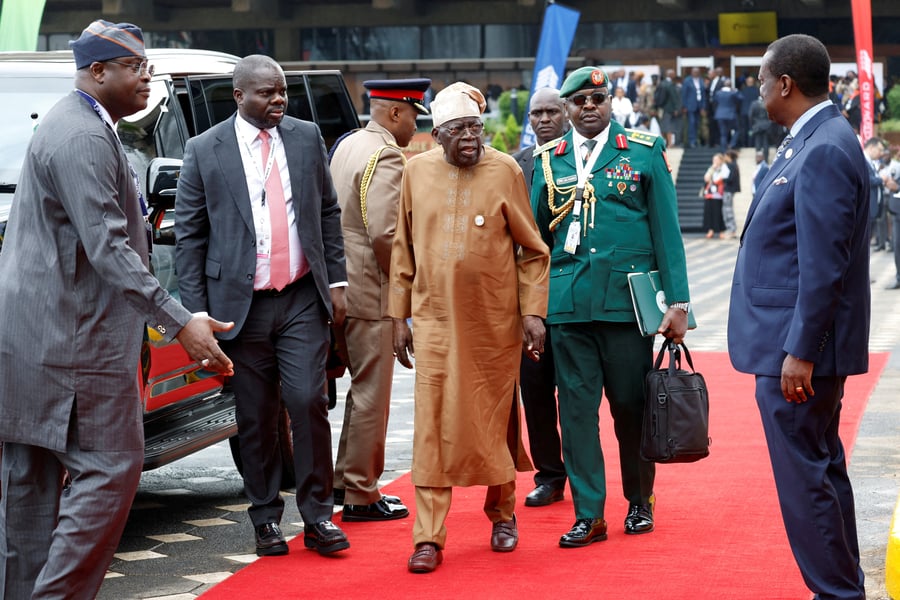
President Bola Tinubu has faced sustained criticism over his government’s handling of security across the north. In June, he addressed the crisis directly, warning those responsible for mass abductions to surrender or face consequences in the Nigeria banditry crisis response. Military units have been redeployed to bandit-affected zones, emergency powers extended in some states, and security budgets increased. The gap between those deployments and what happened in Dekera on a Friday afternoon remains.
The timing places the attack in direct collision with Tinubu’s political vulnerability. Nigeria’s presidential election is scheduled for January, and security in the north is expected to be the defining issue of the campaign. Opposition candidates have argued consistently that the administration’s approach has failed at the community level even where it has succeeded in military engagements. The Dekera video, circulating across Nigerian social media with the clarity of a demonstration rather than a covert operation, will not escape that argument’s orbit.
What the footage showed most starkly was not the count, though 600, if confirmed, would represent an extraordinary operational scope for any armed network. It was the deliberateness. The gunman filmed the hostages and directed them to be identified by their families watching online. The message embedded in that instruction was not only for the immediate families: it was for a government that had declared these groups would be found and defeated. They had filmed themselves and sent the video out anyway.
Whether the rescue operation produces results before ransom negotiations begin, if they do, is not yet known. What is known is that as of Sunday evening, up to 600 people taken from a mosque in Niger State during Friday prayers remained in the custody of armed men in the forests of north-central Nigeria, and the government’s response had not yet produced any announced outcome.