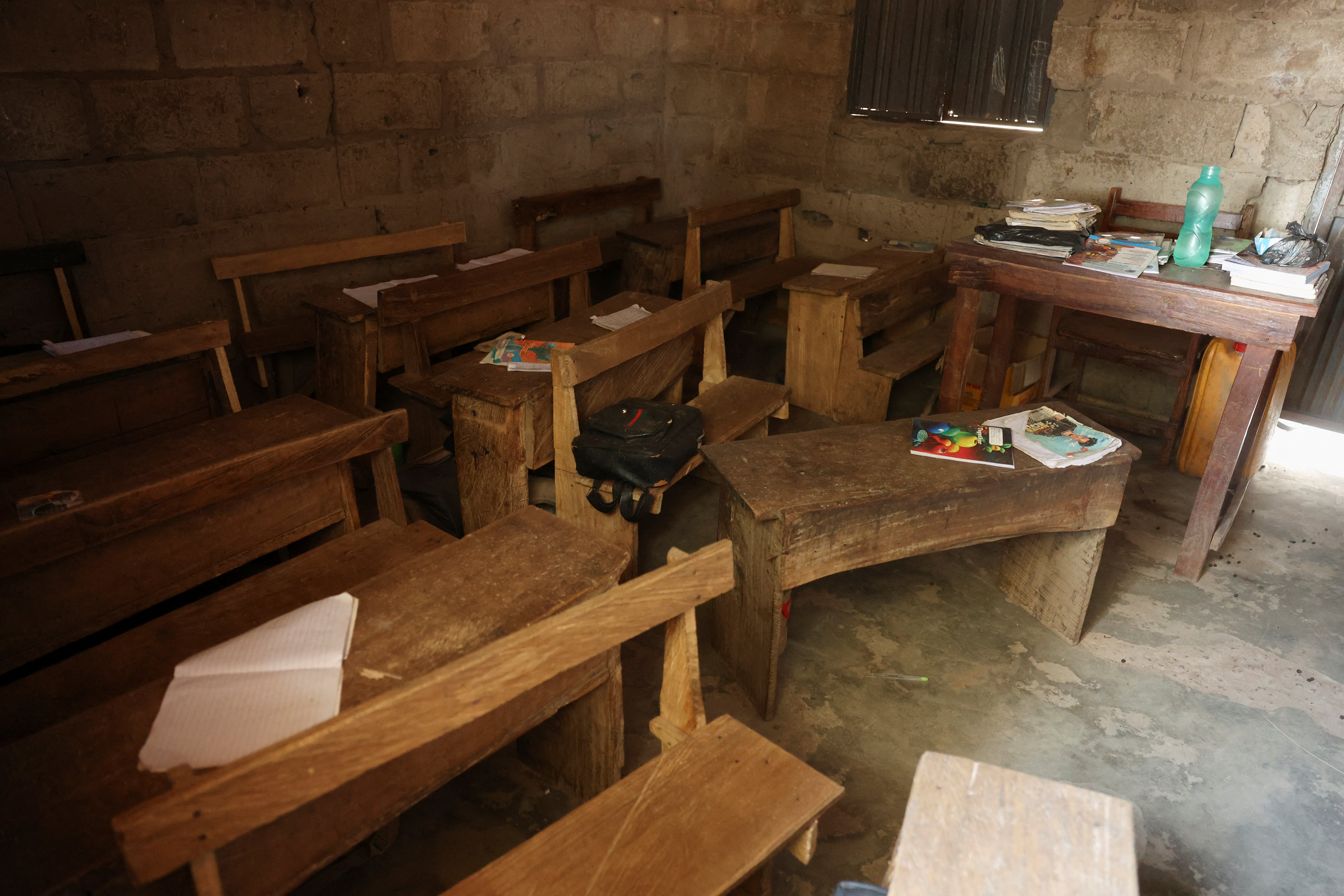

ABUJA – Among the 46 people released from Boko Haram captivity in Oyo State on Thursday was a child who had been two years old when the abductors arrived. The youngest victim spent 56 days in the hands of a militant group before Nigeria’s security forces completed their rescue, along with teachers and older children seized from three schools in the same operation on May 15.
President Bola Tinubu announced the rescue on Thursday, saying he was “profoundly happy” about the outcome. “This successful military operation has ended the siege and standoff of over 50 days,” Tinubu said in a statement, as Xinhua reported. Eight assailants were arrested in the operation; an unspecified number were killed. No ransom was paid.
The abduction in May had targeted three schools in Oyo State, a southwestern region far from the northeastern areas of Nigeria where Boko Haram has historically operated. The capacity to hold 46 people for nearly two months in the southwest speaks to the continued operational reach of a group that Nigerian authorities have repeatedly described as degraded, and to the challenges of security planning across a country the size of Nigeria.
One teacher had been killed shortly after the abduction. The remaining captives ranged in age from two to sixteen. The defense ministry said the captors had intended to leverage the hostages to secure the release of imprisoned commanders, an objective the government chose not to meet. The rescue came through military operation, not negotiation.
Nigeria has a long history of school abductions attributed to Boko Haram and affiliated groups. The most internationally prominent was the 2014 kidnapping of 276 schoolgirls from Chibok in Borno State, a case that generated a global campaign and took years to partially resolve. The Oyo case’s 56-day resolution represents a substantially different outcome, whatever the tactical and circumstantial reasons for that difference turn out to be.
Whether the approach that produced the rescue in Oyo can be applied to ongoing hostage situations elsewhere in Nigeria is something the military has not publicly addressed. The statement that no ransom was paid and that the operation was a “successful military” action provides an outline without describing the intelligence, coordination, or negotiating posture that preceded it. Those operational details are unlikely to become public while they could compromise future efforts.
The condition of the survivors has not been fully described in the government’s initial announcement. Children held in those circumstances for 56 days, among them a toddler, require medical evaluation and psychological support that extends well beyond the day of release. Whether those services are being provided, and with what resources, are questions that typically emerge in the days after a rescue announcement and are rarely answered as clearly as the rescue itself.
Tinubu’s administration has faced sustained criticism over security conditions in Nigeria, where banditry, kidnapping, and militant activity in the northwest and northeast have continued to displace populations and resist resolution at scale. The Oyo rescue offers a moment of demonstrable success within a pattern that a single operation, however complete, does not address structurally. Tinubu’s statement on Thursday emphasized the military achievement; the broader security picture it sits within is more complicated.
The eight individuals arrested in the operation now face Nigeria’s criminal justice system, which has historically moved slowly on terrorism and kidnapping prosecutions. Whether they will be charged, tried, and convicted, and on what timeline, is not addressed by the rescue announcement. It is a separate process, operating in a system that has produced uneven results in comparable cases.
International attention to abductions in Nigeria has been a recurring feature of coverage of the country’s security conditions for more than a decade. The Chibok kidnapping generated a worldwide response, including government statements from multiple Western capitals. The Oyo case has attracted less global attention, perhaps because the 56-day rescue arc ended before that level of pressure built, or because the pattern of Nigerian school abductions has, through repetition, become harder to treat as exceptional. Armed groups targeting civilian populations have drawn sustained international coverage in other conflict zones during the same period.
What Thursday’s announcement establishes is that 46 people who were held against their will in Oyo State for nearly two months are now free, and that a military operation against Boko Haram-affiliated captors produced their release without payment. The youngest of those freed is now back wherever home is, at an age that makes the memory of captivity impossible to process in the way an adult might. What the government will do to support the survivors in the weeks and months ahead is the part of the story that takes longest to become clear.