
LONDON – Crude oil price today, August 27, 2026: Brent is at $87.65 a barrel and West Texas Intermediate at $82.90, recovering modestly from Tuesday’s settlement after Wednesday’s Personal Consumption Expenditures data printed hotter than expected and failed to push crude any lower. The 3.7 per cent PCE headline took gold down sharply. Oil absorbed it and closed barely changed.
Two sessions have taken more than seven per cent off crude since last Friday’s close. A third did nothing. That resistance is not diplomacy or sentiment. It is the physical market holding a floor it recognises.
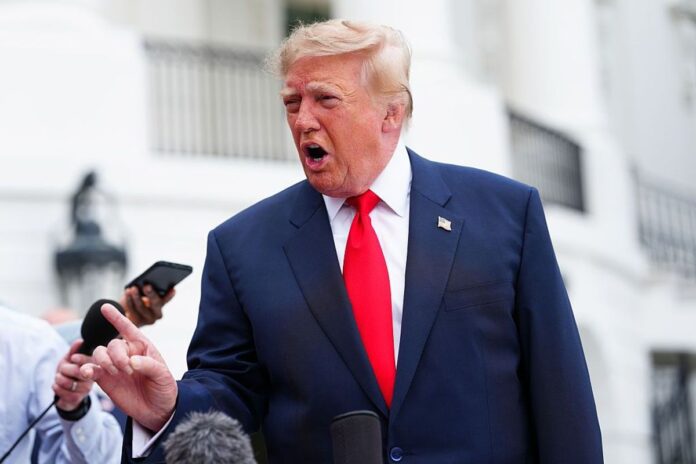
The event that actually moves this price is not scheduled until Friday, when Federal Reserve Chair Kevin Warsh delivers his first major policy address at the Kansas City Fed’s annual Jackson Hole economic symposium at 10 a.m. Eastern. Until then, the crude oil price today is a number waiting for instruction.
| Benchmark | Thu open (USD/bbl) | Tue close | Change | One year |
|---|---|---|---|---|
| Brent crude | 87.65 | 87.12 | +0.53 (+0.61%) | +26.6% |
| WTI crude | 82.90 | 82.36 | +0.54 (+0.66%) | +24.8% |
| Brent minus WTI | 4.75 | 4.76 | −0.01 | Derived spread |
| Opening prices are indicative; final settlement figures are published after the close of the ICE and NYMEX sessions. Tuesday’s close is used as the prior-session reference. The Brent-WTI spread compressed from $7.16 on Monday to $4.76 on Tuesday and held at $4.75 on Thursday; the war premium re-priced in two sessions and has since stabilised. One-year changes are approximate. | ||||
The Brent-WTI spread on Wednesday closed at $4.75. On Tuesday it was $4.76. On Monday, before Washington’s Operation Economic Outcast announcement, it was $7.16.
That two-dollar compression in a single session was the war premium leaving the price. The stability since then tells you the market has finished adjusting, at least for now. A $4.75 spread between seaborne Brent and landlocked WTI is not a crisis number. It is a normal structural premium with residual anxiety priced in, and the anxiety has a name: neither the sanctions framework nor the Pakistani mediation has changed a single barrel’s destination.

| Grade | Price (USD/bbl) | Change | Quote age |
|---|---|---|---|
| Murban (Abu Dhabi) | 90.30 | +1.20 (+1.35%) | Several hours |
| Dubai | 88.80 | +0.40 (+0.45%) | 1 day |
| OPEC basket | 95.10 | +0.19 (+0.20%) | 1 day |
| Gulf grades carry a full day’s lag or more and Murban in particular has shown stale prints during volatile sessions. The Murban premium to Brent, a measure of how much a barrel is worth that does not need to traverse the Strait of Hormuz, ran above $11 on Monday and has settled near $2.65, indicating the market has removed most of the Hormuz premium but not all of it. | |||
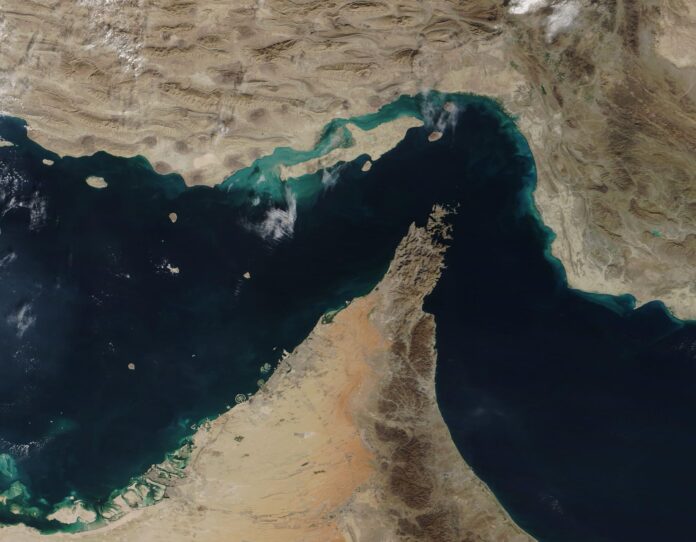
The Murban grade from Abu Dhabi has partially recovered from Tuesday’s sharp fall. Murban exits through the Habshan-to-Fujairah pipeline and reaches the Gulf of Oman without entering the strait, which is why it commanded an eleven-dollar premium to Brent on Monday when Hormuz risk was at its peak. That premium has been cut to roughly $2.65. The partial recovery reflects what both benchmarks are doing: strait risk repriced at a lower level, not priced out entirely.
Wednesday’s Bureau of Economic Analysis release put headline PCE at 3.7 per cent year-over-year, a tenth above the 3.6 per cent consensus. Core PCE came in at 3.3 per cent annually and 0.2 per cent monthly, broadly in line with estimates. CME Group’s FedWatch tool put the probability of a September rate cut at approximately 22 per cent after the release, down from 28 per cent before it. That six-point swing registered in gold, which fell nearly one per cent. Brent gained $0.53 and WTI $0.54.
The reason oil moved against gold’s direction is the physical market’s separate complaint. Distillate stocks in the United States stood near 107.1 million barrels in early August, the thinnest seasonal figure since 1996, according to Energy Information Administration data. Physical buyers stepping in on dips are not responding to PCE prints. They are responding to a refining market that cannot restock quickly enough.
The standard dollar-strength transmission, where a hotter-than-expected PCE strengthens the dollar and raises the cost of dollar-denominated oil for international buyers, was outweighed by that physical bid. The market has been making this decision for three days: every piece of macro data that should push oil lower has encountered a buyer who cares more about barrels than about rates.
Pakistan’s Field Marshal Asim Munir returned from Tehran without a public agreement. The Islamabad memorandum’s sixty-day window lapsed in mid-August. Mediation from Qatar continues. Oman is running a separate channel focused not on the sanctions framework but on navigation rules for the strait itself.
That Oman channel matters more to the oil price than the sanctions track does. If Muscat brokers any agreement on tanker inspection procedures or passage protocols, even informal ones, it would affect ship routing and marine insurance costs without requiring Washington to modify the sanctions package at all. Sources reporting on the Oman channel on Wednesday described it as active. None described it as near a conclusion.
Iran’s parliament speaker Mohammad Bagher Ghalibaf repeated on Wednesday that Tehran is pursuing the Islamabad memorandum’s terms and that Washington must honour its commitments. That is the same formulation he used when Munir was in the room two days ago. No barrel has changed destination as a result of any meeting this week.
Brent has fallen more than seven per cent since Friday. American diesel is up fifteen cents from a week ago.
| Fuel | Today | Yesterday | Week ago | Month ago | Year ago |
|---|---|---|---|---|---|
| Regular gasoline | $4.099 | $4.097 | $4.065 | $4.111 | $3.161 |
| Diesel | $5.628 | $5.620 | $5.468 | $5.278 | $3.682 |
| Retail prices lag crude by roughly two weeks in normal conditions. Diesel is currently not tracking crude at all. The American diesel crack spread remains near $100 a barrel, keeping pump prices elevated regardless of what Brent does. AAA updates from station sampling daily. | |||||
The American diesel crack, the margin between crude and the fuel refined from it, remains near $100 a barrel. It hit a record $102.20 on August 17 and has not meaningfully retreated. Distillate inventories are not rebuilt in two or three trading sessions, which is why no driver filling a truck or heating a building has felt the week’s crude move in any direction. Gasoline at $4.099 nationally is essentially flat for the month and almost a dollar above last August. Diesel is up $1.946 on the year.
What has not changed since the war began is the downstream constraint. Cheaper crude does not fix a shortage of refining capacity or of the diesel already made. The EIA’s August Short-Term Energy Outlook projected a further 3.8 million barrel per day inventory drawdown in the third quarter, a forecast that assumed the strait would reopen and the shut-in production would come back. Neither has happened yet.
The crude oil market is holding its breath. Two sessions of sharp decline. One session of stability. The stability is not a decision. It is a pause.
Warsh’s address is the first time the incoming Fed chair will speak explicitly about the rate path in a forum designed to move market expectations. The Iran conflict created an unusual joint problem for macro traders: supply risk and rate risk running simultaneously in opposite directions. Rate uncertainty suppresses demand signals; war in the Gulf suppresses supply. August’s gold rally and crude volatility are both expressions of the same unresolved tension, and they will not resolve until one side of the ledger wins.
A hawkish Warsh, one who endorses the higher-for-longer posture explicitly and signals rates into 2027, adds a demand headwind to an oil market already absorbing a war premium. A neutral or mildly dovish Warsh removes that headwind and leaves supply risk as the sole variable. The institutional desks that spent Tuesday selling the war premium and Wednesday doing nothing are waiting for Friday before they move again.
What this report cannot tell you is which Warsh arrives on Friday morning, or whether the physical floor at $87 holds through the speech. The barrel count says it should. The rate count introduces uncertainty that did not exist before Wednesday’s PCE number landed. Tuesday’s crude board and the same morning’s gold rate today run alongside this one.