
MUMBAI — The most striking number in India’s capital markets in Q1 FY27 was not a stock index level. It was 14 — the consecutive quarters of record revenue that BSE Limited posted in the three months ended June 30, 2026, a streak running through every volatility episode India’s markets have absorbed since early 2023.
BSE’s total income rose 63.4 percent year-on-year to Rs 1,706.72 crore in the quarter. Net profit climbed 62.2 percent to Rs 872.66 crore. The driver was derivatives. BSE’s equity derivatives average daily turnover reached Rs 29,615 crore, with 237 million lots traded per day — a scale that was notional when BSE relaunched its Sensex options contracts three years ago. The equity cash segment set its own record: average daily turnover of Rs 9,955 crore, the highest in the exchange’s history.
| Metric | BSE | NSE | |||||||
|---|---|---|---|---|---|---|---|---|---|
| Q1 FY27 Total Income | Rs 1,706.72 crore | Rs 5,252 crore | |||||||
| YoY Income Growth | +63.4% | +9% | |||||||
| Q1 FY27 Net Profit | Rs 872.66 crore | Rs 3,120 crore | |||||||
| Net Profit YoY Growth | +62.2% | +6.7% | |||||||
| EBITDA Margin | — | 79% | |||||||
| Equity Derivatives ADTV | Rs 29,615 crore | Dominant | |||||||
| Equity Cash ADTV | Rs 9,955 crore (record) | Dominant | |||||||
| Source: BSE/NSE filings, company Q1 FY27 earnings reports. | |||||||||
NSE’s Q1 FY27 results were substantial in scale if less dramatic in growth rate. Revenue from operations rose 13 percent year-on-year to Rs 4,560 crore. Total income, including other income, reached Rs 5,252 crore, up 9 percent. Net profit grew 6.7 percent to Rs 3,120 crore. Operating EBITDA margin held at 79 percent, reflecting a business where most costs are fixed regardless of volume, and where India’s 10 crore registered investor accounts generate recurring fees that do not move with market cycles.
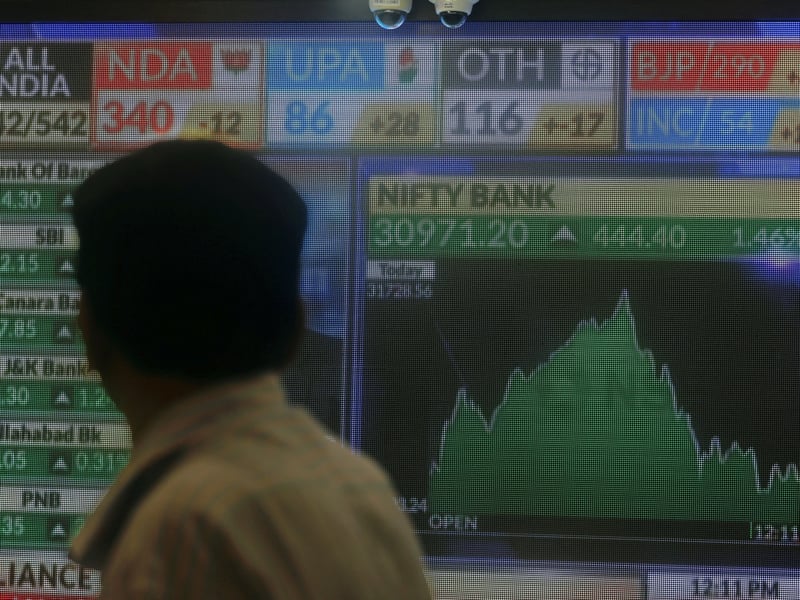
The institutional geometry of the quarter was unusual. BSE was announced as a new Nifty 50 constituent on August 10, set to replace Wipro effective September 30 — the first exchange operator ever to enter India’s flagship index. NSE was simultaneously preparing for an initial public offering that would list, necessarily, on BSE. An exchange operator entering a rival’s benchmark while that rival prepares to list on its own platform is a configuration without precedent in Indian financial market history.
NSE’s IPO preparation has cleared several regulatory hurdles, including a SEBI settlement that was a standing overhang on the listing timeline. At implied grey market valuations near Rs 2,000 per share, NSE’s market capitalisation at listing would place it among the most valuable financial sector companies in India by market cap. Whether that valuation holds when the prospectus price is set — and whether retail investors accept the implied multiple on a business whose only meaningful competitor is the exchange running their primary market — is a question the markets have not had to answer before.
| Fundraising Source | Q1 FY27 Amount | Detail | |||||||
|---|---|---|---|---|---|---|---|---|---|
| Mainboard IPOs | ~Rs 4,700 crore | 8 issues | |||||||
| NSE Emerge IPOs | Rs 976 crore | 14 issues | |||||||
| June total mobilisation (all) | Rs 3.15 lakh crore | Monthly record | |||||||
| June equity issuances | ~Rs 53,000 crore | +83% MoM | |||||||
| June QIPs | ~Rs 7,500 crore | Including Adani Rs 15,000 crore QIP | |||||||
| FY27 IPO total (Apr-Aug 26) | Rs 46,453 crore | vs Rs 55,338 crore in FY26 same period | |||||||
| Source: BSE/NSE filings, company Q1 FY27 earnings reports. | |||||||||
The primary equity market produced a Q1 that stood in contrast to the secondary market’s records. Eight Mainboard companies listed during the quarter, raising approximately Rs 4,700 crore. April saw one issue worth Rs 150 crore. May was entirely empty — no Mainboard IPO at all. June produced three issues raising Rs 1,652 crore. The quarterly total was a fraction of what the same period in FY26 generated.
The reason was valuation discipline, not demand destruction. FY26’s Rs 1.77 lakh crore of IPO fundraising across 318 issues delivered average listing-day gains of 7 percent, compressed from more than 20 percent in FY24. Retail investors had absorbed the lesson: promoter pricing had closed most of the arbitrage gap. Grant Thornton Bharat’s August 2026 review described the market as “maturing,” with investors demanding demonstrated profitability and realistic valuations before committing capital, according to its analysis. By the April-to-August 26 window, IPO fundraising had reached Rs 46,453 crore compared with Rs 55,338 crore in the same period of 2025 — a 16 percent decline year-on-year on 30 issues against 38, according to Business Standard data.
The compensation came from debt. Total capital mobilisation across equity, debt, and business trusts hit a record Rs 3.15 lakh crore in June 2026 alone. Commercial paper placements more than doubled month-on-month to Rs 1.9 lakh crore; private NCD issuances reached Rs 69,700 crore, according to NSE’s Market Pulse report. The jump reflected corporate India’s appetite for long-duration fixed-rate funding in a cycle where rate expectations have shifted alongside the private investment boom documented in India’s FY27 capex analysis.
June also contained the quarter’s defining equity transaction: Adani Enterprises completed a Rs 15,000 crore qualified institutional placement that drew Rs 38,000 crore in orders — 3.8 times oversubscribed, with global investors including Goldman Sachs participating. The deal demonstrated that institutional appetite for large-cap India equity remains intact even when the retail IPO window is narrow.
The exchange stocks themselves have diverged. BSE’s shares gained 37 percent year-to-date through August, compounding an already stretched valuation. Nuvama Institutional Equities estimated the Nifty 50 inclusion alone would trigger roughly $741 million in passive inflows into BSE shares. NSE’s grey market implied valuation provides no comparable anchor — a reference price exists in private transactions, not in a public market.
India’s corporate sector posted its strongest profit growth in two years in Q1 FY27, as documented in India’s Q1 FY27 earnings review. Capital markets infrastructure — exchanges, depositories, clearing corporations — is the transmission mechanism for that corporate activity. A market where secondary volumes are at record levels and primary issuance is below its peak is not a contradiction. It is a market that has grown selective rather than inactive. Whether that selectivity persists into the IPO-heavy Q2 and Q3 pipeline, or whether the NSE listing itself becomes the peg that reopens the primary market at scale, is what the next two quarters will answer.