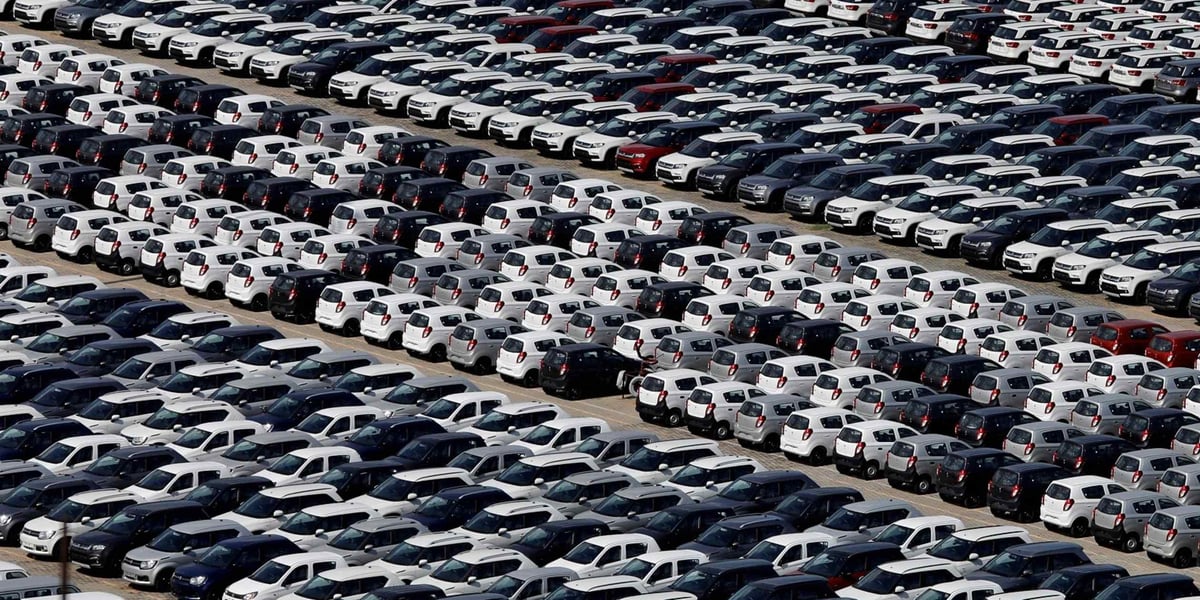

MUMBAI — Maruti Suzuki’s quarterly production record almost went unnoticed. In the three months ended June 30, 2026, India’s largest automaker dispatched more than 500,000 passenger vehicles to dealers — a number the company had never crossed in a single quarter — yet its shares barely moved on the day the data emerged. What the market was watching instead was the margin line, and what it saw there was less comfortable.
The passenger vehicle industry as a whole shipped approximately 1.13 million units in Q1 FY27, according to data compiled from Society of Indian Automobile Manufacturers filings, a 9.4 percent increase from the year-earlier quarter. The headline looks clean. Below it, the sector is splitting.
| Manufacturer | Q1 FY27 Wholesale Units | YoY Growth | Market Share | ||||||
|---|---|---|---|---|---|---|---|---|---|
| Maruti Suzuki | 502,000+ | +6.8% | ~44% | ||||||
| Hyundai India | ~181,000 | +4.2% | ~16% | ||||||
| Tata Motors | ~148,000 | +12.1% | ~13% | ||||||
| Mahindra & Mahindra | ~137,000 | +28.6% | ~12% | ||||||
| EV Share (industry) | ~81,000 units | +61% | 7.2% of PV sales | ||||||
| Source: BSE/NSE filings, company Q1 FY27 earnings reports. | |||||||||
Mahindra’s 28.6 percent year-on-year volume growth was the number that rewired the market’s understanding of the sector. The company’s SUV-only portfolio — it does not sell a single sedan or hatchback — went from a structural constraint to a structural advantage as Indian buyer preferences continued their decade-long migration toward utility vehicles. Mahindra’s domestic market share crossed 12 percent in Q1 FY27, an all-time high, on the strength of its Scorpio-N, XUV700, and Thar Roxx platforms. Waitlists for its top-end variants extended to six months in several cities.
Tata Motors ran the second-fastest growth rate in the quarter, at 12.1 percent, carried by its dual position in ICE SUVs and electric vehicles. Tata commands roughly 60 percent of India’s EV passenger vehicle market, a share that has proven stickier than analysts expected given the arrival of MG Motor, BYD, and Hyundai’s Creta Electric. The Nexon EV and Punch EV together account for the bulk of its electric volumes; both models have benefited from the Production-Linked Incentive subsidy structure and the widening of the FAME III framework.
Maruti’s challenge is the inverse. Its volume record — 502,000 units in a single quarter — is real and meaningful. The problem is what those units contain. Maruti’s portfolio is weighted toward entry-level hatchbacks and compact sedans: the Alto, the S-Presso, the Wagon-R. These models generate lower average selling prices and thinner dealer margins than SUVs. As the industry’s mix shifts toward Rs 12-20 lakh vehicles, Maruti’s revenue per unit lags its market-share position. The company’s Fronx and Brezza SUV lines are growing, but they have not yet offset the mix headwind in its earnings line.
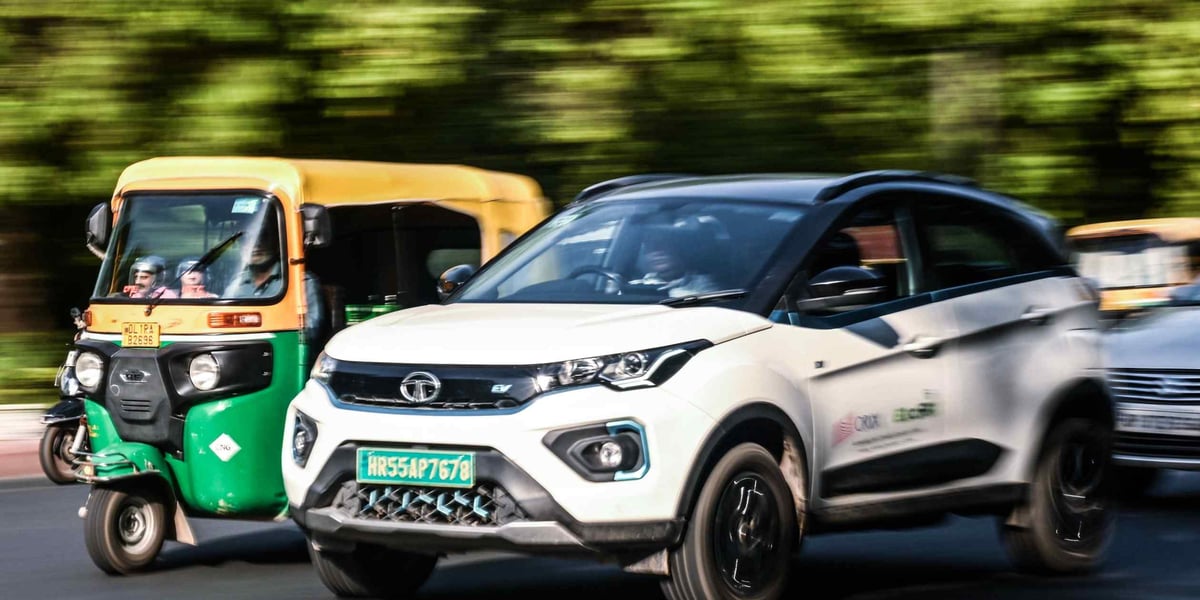
The EV gap is the longer-term concern. Maruti’s first electric vehicle, the e Vitara, was scheduled for commercial launch in H1 FY27. As of the close of Q1, the launch had slipped to Q2, with production constraints at its Suzuki-supplied battery packs cited as the cause. Every quarter of delay is a quarter in which Tata Motors and Mahindra — both of which now have established EV lineups — are compounding their charging infrastructure relationships and their service network advantage.
India’s broader economy provided a favourable backdrop for the auto sector’s volume performance. The Q1 FY27 earnings season across the Nifty 50 was the strongest in two years, as India’s Q1 FY27 earnings review documented — and consumer confidence, particularly in urban markets, tracked that earnings strength. Rural demand was more mixed: monsoon distribution through mid-August has been uneven across states, and entry-level two-wheeler and compact car sales in rain-deficit districts ran below the industry average.
The Rs 26.75 trillion in private investment commitments registered through August 5, 2026 — explored in India’s FY27 capex analysis — includes commitments from Tata Motors and Mahindra for new EV manufacturing facilities. Those investments will add production capacity in FY28 and FY29, but they do not resolve the Q1 mix question. The market that exists today is the one where Maruti’s volume leadership and Mahindra’s margin leadership are no longer the same thing.