
MUMBAI — The number that mattered most in India’s investment ledger this month was not the 18-percent profit growth the Nifty 50 posted in Q1 FY27. It was Rs 26.75 trillion — the total value of investment proposals registered between April 1 and August 5 in this fiscal year, according to a Bank of Baroda Economics Research Department report. Eighty-six percent of that figure came from domestic private companies.
The private sector, in other words, is spending at a pace that matches the government’s ambition.
Finance Minister Nirmala Sitharaman’s Union Budget 2026 set capital expenditure at Rs 12.2 lakh crore, a record allocation representing a nearly nine-percent increase over FY26 revised estimates and equivalent to 3.1 percent of GDP. The argument for government-led capital formation has always been that it crowds in private investment — that roads, ports, and rail networks lower the risk premium on adjacent private projects enough to unlock commitment. The Rs 26.75 trillion in proposals arriving in FY27’s first four months is the first large-scale evidence that the argument is working.
The composition of the private-sector wave, though, is not the factory floors and logistics corridors that infrastructure economists typically have in mind. Fifty-six percent of the announced investment — Rs 14.98 trillion — flows into data centres and artificial intelligence infrastructure, concentrated among just 13 companies.
| Sector / Investor Type | Proposed Investment | Share | |||||||
|---|---|---|---|---|---|---|---|---|---|
| Data centres & AI (ITES sector) | Rs 14.98 trillion | 56% | |||||||
| Power & nuclear energy | Rs 6.86 trillion | 26% | |||||||
| Other sectors | Rs 4.91 trillion | 18% | |||||||
| Domestic private companies | Rs 23.0 trillion | 86% | |||||||
| Foreign companies | Rs 2.14 trillion | 8% | |||||||
| Total (April 1 — August 5, FY27) | Rs 26.75 trillion | 100% | |||||||
| Source: BSE/NSE filings, company Q1 FY27 earnings reports. | |||||||||
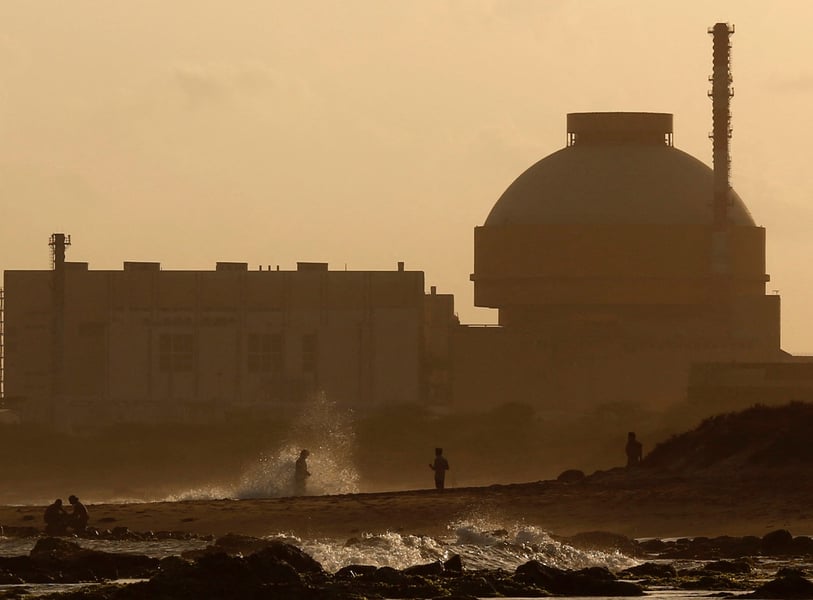
The second-largest investment segment is power — conventional electricity and nuclear — where seven companies have proposed Rs 6.86 trillion in spending, four of them committing Rs 6.5 trillion specifically to nuclear energy projects. The announcements reflect a structural shift in where private capital perceives durable returns: digital infrastructure and energy transition, not manufacturing capacity. Foreign companies contributed eight percent of the total proposals, with the balance from central and state government entities.
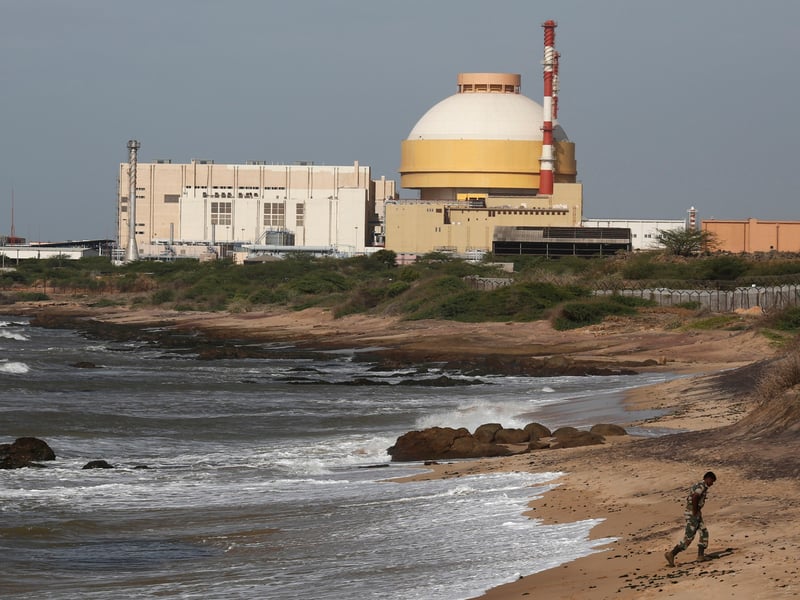
Public-sector capital spending held pace in Q1. Central public sector enterprises (CPSEs) spent Rs 2.10 trillion between April and June, a 26-percent increase from the same period last year, equivalent to 25 percent of their annual FY27 capex target — an improvement over the 22 percent achieved in Q1 FY26, according to government data. The Railway Board alone accounted for Rs 97,160 crore, achieving 33 percent of its full-year target in three months. The National Highways Authority of India spent Rs 45,130 crore, meeting 24 percent of its FY27 allocation.
The pace matters because public investment in roads and rail is the transmission mechanism for private investment in manufacturing and logistics. Railways and NHAI together represent two of the three largest capex programmes in the country; their front-loading of spending compresses construction timelines and signals predictable demand for steel, cement, and equipment manufacturers. The defence sector has demonstrated a parallel dynamic: sustained capital commitments generated a 24-percent rally in defence stocks this year as Hindustan Aeronautics Ltd delivered its first Tejas Mk1A batch and order books at Bharat Electronics extended to five years. A record government infrastructure budget, executed early and at pace, is the precondition for a broader investment cycle.
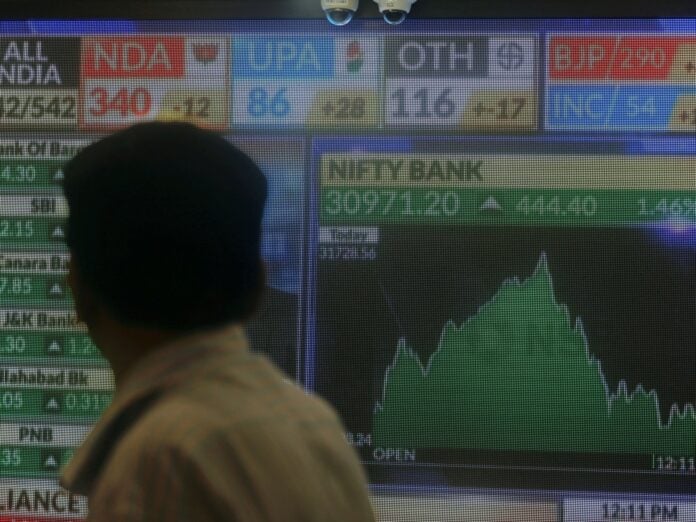
The markets are reading the capex picture with some ambivalence. The Sensex fell 205 points to 77,267.73 on Wednesday and the Nifty 50 shed 51 points to 24,156.05, dragged by PSU bank shares, FMCG names, and cement stocks — the last of which are direct proxies for infrastructure spending. Weakness in cement signals that while investment announcements are accumulating, actual project commencement and material offtake have not yet accelerated at the pace the proposals imply.
That gap — between announcement and execution — is the question the FY27 capex story has not yet answered. India’s historical completion rate on large private-sector investment announcements is uneven, and the Rs 26.75 trillion figure captures proposals, not commitments that have reached financial close. Data-centre and AI infrastructure projects typically do reach financial close at high rates once announced, because the business case is demand-driven and the technology decision cycle is short. Nuclear power announcements are a different matter: regulatory pathways, land acquisition, and technology partnerships each introduce delays measured in years.
What is visible and measurable is that the government’s share of the investment agenda is executing on schedule. CPSEs are running ahead of last year’s pace. NHAI is converting budget allocations into physical construction. The Railway Board’s 33-percent Q1 draw-down on a record budget reflects an operationally improved project pipeline, and that represents a structural improvement over the FY22-24 pattern of back-loaded government spending.
India’s listed companies delivered their strongest earnings quarter in two years in Q1 FY27, and much of that growth was built on credit expansion and demand that government capex sustained. Whether the Rs 12.2 trillion public programme and Rs 26.75 trillion in private investment proposals translate into a sustained investment cycle — the kind that lifts manufacturing employment alongside data-centre rack counts — is the structural question FY27 will begin to answer. The first chapter suggests the groundwork is being laid, faster than today’s market sentiment implies.