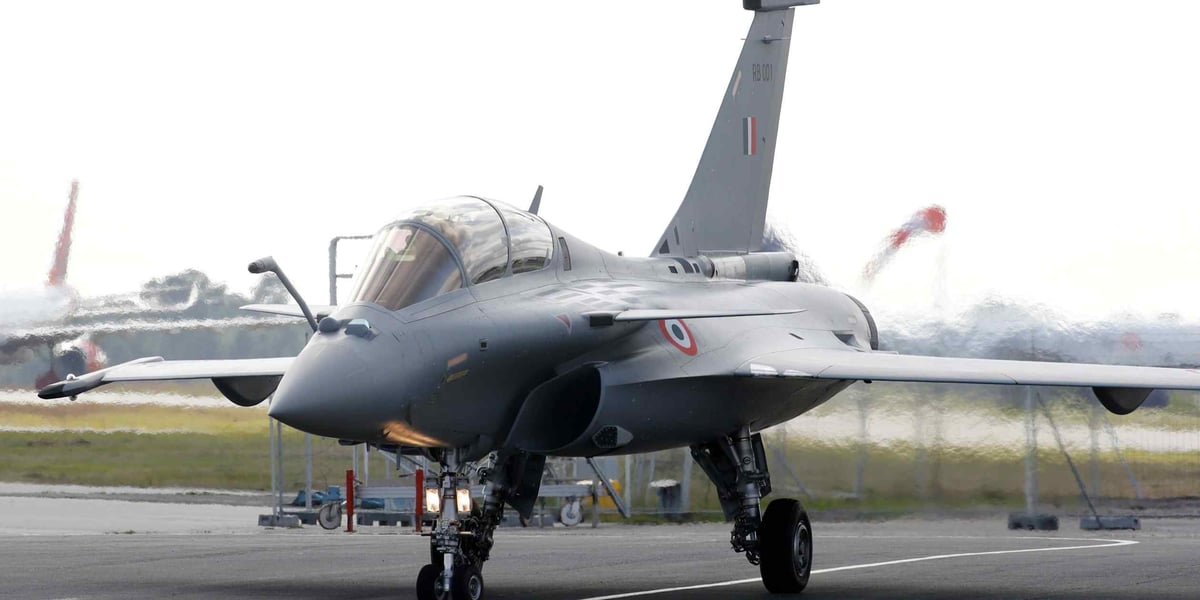

MUMBAI — The first Tejas Mk1A fighter jet HAL delivered to the Indian Air Force in August 2026 cost the government approximately INR 310 crore. What it cost HAL’s stock was nothing. The delivery of India’s indigenously designed light combat aircraft, years behind schedule, confirmed that one of the world’s largest and most complex defense procurement programs is finally operational, and equity markets priced that confirmation at a premium.
HAL’s stock has returned 28.4% year-to-date, making it the best-performing Navratna public sector undertaking on the Nifty by a wide margin. The broader Nifty India Defence index, which tracks eighteen defense and aerospace manufacturers, is up 24.0% over the same period, roughly doubling the Nifty 50’s 12.4% YTD return. Three stocks explain most of that outperformance: HAL, Bharat Electronics Limited, and Mazagon Dock Shipbuilders.
| Company | YTD Return | Order Book (INR cr) | FY27 Revenue Guidance (INR cr) | ||||||
|---|---|---|---|---|---|---|---|---|---|
| HAL | +28.4% | 94,000 | 32,000 | ||||||
| Bharat Electronics Limited | +22.1% | 75,000 | 22,000 | ||||||
| Mazagon Dock Shipbuilders | +41.3% | 52,000 | 12,500 | ||||||
| Nifty India Defence (Index) | +24.0% | N/A | N/A | ||||||
| Source: BSE/NSE filings, company Q1 FY27 earnings reports. | |||||||||
The HAL thesis rests on order book geometry. The company’s confirmed order book stands at INR 94,000 crore, nearly three times its FY27 revenue guidance of INR 32,000 crore, giving it almost three years of revenue visibility at the current pace of execution. The Tejas program is the largest single line item: 83 Tejas Mk1A jets were ordered by the Ministry of Defence in 2021 at a contract value of INR 48,000 crore, the largest-ever single defense contract in India’s history. Deliveries of the first batch in August 2026 triggered the milestone payment clause under the contract, providing a cash flow event that analysts at several domestic brokerages had been watching as the near-term earnings catalyst.
HAL’s longer-term thesis is more complicated. The company is the sole Indian manufacturer of military aircraft, helicopters, and aircraft engines, which gives it a monopoly position that is simultaneously a competitive moat and a vulnerability. India still imports the GE414 jet engine powering the Tejas Mk2 variant under a technology transfer arrangement that the Ministry of Defence renegotiated in late 2024. The domestic Kaveri engine program, run by DRDO, has not yet met the thrust-to-weight specifications required for the Mk2 airframe, and HAL’s revenue is therefore partly contingent on a foreign supplier relationship that is outside its control. The market has priced that dependency as a known risk, not a near-term one.
BEL’s 22.1% YTD return reflects a different structural driver: the digitization of India’s armed forces. Bharat Electronics is the primary supplier of radar systems, electronic warfare suites, communication equipment, and missile guidance systems to all three branches of the Indian military. Its INR 75,000 crore order book includes INR 22,000 crore in new orders received in FY27 alone, a booking pace that, if sustained, would give BEL order book growth of 30% per annum. The Akash missile defense system, the Quick Reaction Surface-to-Air Missile program, and the naval combat management systems for the P17A frigates are BEL’s three largest active programs, each multi-year with milestone-based payments providing predictable cash flow.
The FPI inflows into India’s equity market in August included BEL among the PSU defense names attracting consistent buying from global defense sector ETFs, which increased their India allocations following the reclassification of HAL and BEL into the MSCI India Index’s industrials sector weight in the May 2026 rebalancing. The weight shift was mechanical but it triggered passive buying at scale.
| Segment | FY27 Allocation (INR lakh cr) | YoY Change | Domestic Mandate | ||||||
|---|---|---|---|---|---|---|---|---|---|
| Capital expenditure | 1.80 | +9.4% | 75% | ||||||
| Revenue expenditure | 4.41 | +4.8% | N/A | ||||||
| R&D (DRDO) | 0.26 | +11.2% | 100% | ||||||
| Total defense budget | 6.21 | +6.2% | N/A | ||||||
| Source: BSE/NSE filings, company Q1 FY27 earnings reports. | |||||||||
Mazagon Dock’s 41.3% YTD return is the most spectacular performance in the defense complex and the most concentrated in its source. The Mumbai-based shipyard holds the contract for six P75 (India) Alpha-class submarines under a program worth approximately INR 35,000 crore. A project of that scale represents more than four years of Mazagon Dock’s historical annual revenue capacity, and the company reported its highest-ever quarterly revenue in Q1 FY27 on the back of P75 milestone payments. The market is pricing Mazagon Dock on the expectation that a P76 follow-on program, for which the Ministry of Defence issued a preliminary Expression of Interest in July 2026, will keep the submarine build pipeline full through FY35. That expectation is reasonable but it is an expectation, not a contract.
The structural tailwind underpinning all three companies is the budget. India’s FY27 defense allocation of INR 6.21 lakh crore represents 13.04% of the total Union budget and sets a new absolute record. Within that, the capital expenditure sub-head stands at INR 1.80 lakh crore, up 9.4% from FY26. The indigenization mandate embedded in the Defence Acquisition Procedure 2020 requires that a minimum of 75% of the capital budget be spent on domestically produced equipment, effectively guaranteeing a minimum floor of INR 1.35 lakh crore of annual domestic defense procurement. HAL, BEL, and Mazagon Dock are the three largest beneficiaries of that floor.
The export dimension adds a second growth vector that the domestic budget alone does not capture. India’s defense exports crossed $3.5 billion in FY26, up from $290 million in FY20, driven by HAL’s Tejas Mk1 export interest from Egypt, Malaysia, and Argentina, and BEL’s radar and missile system exports to Mauritius, Sri Lanka, and Armenia. The government’s target is $5 billion by FY29, a figure that implies a near-doubling of the current export run rate over three years without any confirmed buyers at that scale.
What the 24% YTD index return does not resolve is execution risk. DRDO’s project delay record is long and well documented: the Arjun tank program ran two decades behind schedule, and the Kaveri engine program remains technically unresolved after thirty years of development. The defense stocks are being priced on the assumption that DAP 2020’s indigenization mandate will produce faster, more disciplined execution than India’s historical record suggests. The midcap premium embedded in Mazagon Dock’s valuation, which trades at 38 times trailing earnings, presupposes a P76 contract that has not been awarded and a submarine delivery schedule that has no precedent in Indian naval procurement history.