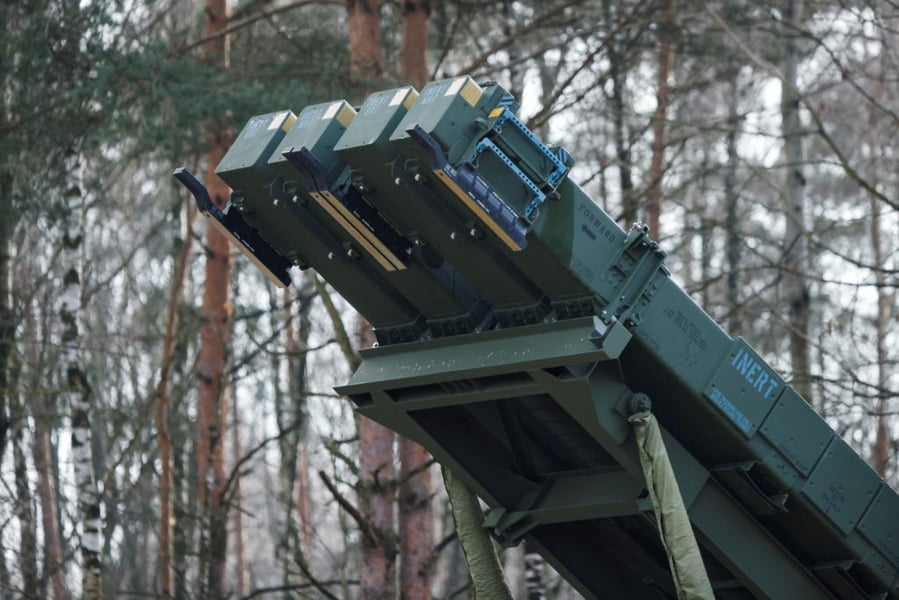

BRUSSELS — The governments of Poland, Romania, and the Baltic states signed the contracts, paid the invoices, and watched the systems arrive. The Patriot missile batteries are on European soil. The interceptors to fire from them are not.
An investigation by The Associated Press, published Thursday by PBS NewsHour, has put precise figures to what multiple U.S. defense officials describe as a “beyond critical” shortage of Patriot interceptors in Europe — a shortfall created directly by the Iran war, which has consumed roughly 65 percent of the American stockpile and drained a supply that was already inadequate to cover the continent against the threat Russia poses.
Of approximately 2,330 Patriot interceptors the United States held at the start of the Iran conflict, around 1,500 have been expended. American production is running at roughly 600 missiles a year. The goal of 2,000 annual interceptors by 2030 sits four years away. Europe’s first Patriot manufacturing facility, opening in Germany this September, may begin delivering ammunition in early 2027 at the earliest — if the timeline holds.
One defense official, speaking to the AP on condition of anonymity because they were not authorized to discuss classified inventory, framed the situation with blunt economy: the alliance is being asked “to take punch after punch in the mouth” while the systems that could stop those punches are committed elsewhere.
NATO’s official position is that the AP’s characterization is inaccurate. U.S. Army Col. Martin O’Donnell, the alliance’s military spokesperson, said the “beyond critical” description was “simply not the case.” That denial sits uneasily alongside a statement from Pentagon spokesman Sean Parnell, who did not dispute the shortage so much as redirect the question: “We have everything required to strike at the time and place of the President’s choosing.” That is a statement about offensive capability. It says nothing about the defensive gap the investigation described.
The distinction matters in ways that are not subtle. Patriot systems exist to intercept incoming ballistic missiles — the kind Russia has been firing at Ukrainian cities, and the kind any serious escalation scenario in Eastern Europe would involve. Striking back is a different capability from stopping what arrives first. A second anonymous defense official told the AP that the United States “definitely” does not have enough Patriots to stop any sustained ballistic missile attack on its European partners.
Ed Arnold, a senior associate fellow at the Royal United Services Institute in London, stated the uncomfortable logic plainly. “The uncomfortable truth is possibly the best air defense that we have is Russian constraints,” he said — meaning NATO’s defensive posture depends partly on Moscow choosing not to test it. Arnold also described as “ridiculous” the position several NATO members now occupy: they have purchased Patriot systems, the hardware is in country, and they lack the ammunition to operate it. Germany, the Netherlands, Romania, and Spain are among those nations. They paid for protection. The protection cannot be deployed.
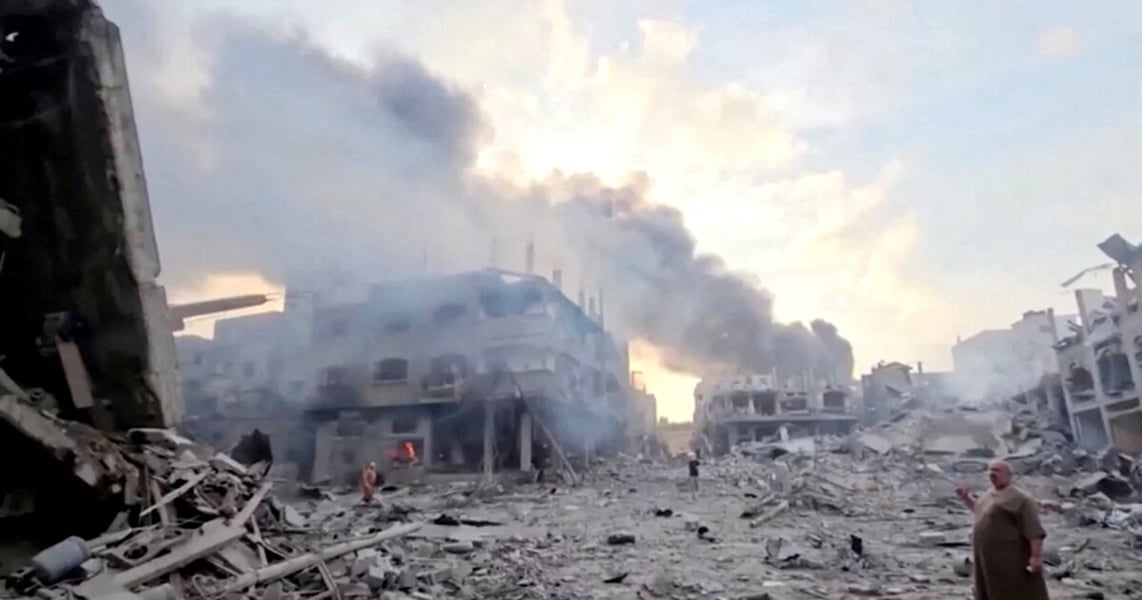
That pool was further reduced before the Iran war began. The Biden administration transferred approximately 600 Patriot interceptors to Ukraine, supporting Kyiv’s air defenses during the Ukraine war against Russian ballistic missile attacks. Those missiles are also gone. The cumulative subtraction — Ukraine transfers, then Iran consumption — has left the European inventory at a level that multiple officials at different points in the chain of command are now willing to describe in terms the alliance’s official spokesperson directly contradicted.
President Donald Trump, asked about the shortage Thursday, responded: “I don’t want to comment on that, but they’re not going to attack.” That confidence may rest on intelligence not available to the public. The gap between a presidential assurance that Russia will not attack and an official finding that the United States cannot stop a sustained Russian ballistic missile campaign is not a gap Thursday’s report resolves.
The production trajectory offers some reassurance — and some arithmetic. RTX, the manufacturer, is expanding output. The German facility adds European capacity. But 600 missiles a year against a current deficit of roughly 1,500 is a recovery timeline measured in years. The Strait of Hormuz shipping corridor the Iran conflict has reshaped continues to carry strategic costs forward, including costs that show up in European ammunition inventories.
What the AP investigation documents is not a projection or a think-tank scenario. It is a current inventory condition — described by officials responsible for managing it, confirmed by the specific figures they provided, and denied by a spokesperson whose denial does not include the inventory numbers. Spokespeople deny characterizations. They rarely deny figures.
Someone in the U.S. defense establishment decided this information should be on the record. The timing — as CIA Director John Ratcliffe travels to Moscow carrying Trump’s stated openness to meeting Russian leadership — suggests the disclosure is not incidental. What it is meant to communicate, and to whom, is the question Thursday’s report leaves open.